Mitel, Vidyo and VMware to Unveil Unified Communications Enabled Telepresence with VMware View
 Mitel, Vidyo and VMware to Unveil Unified Communications Enabled Telepresence with VMware View by Paul Robinson
Technology trends such as datacenter virtualization, cloud computing and UCC are fast becoming a viable way to drive efficiencies and benefits into the workplace. These three elements present a powerful proposition for a new workplace where UCC, operating entirely in the cloud, can drive a consistent communication experience across locations for every user. Desktop virtualization has taken the workplace one step further into the “personal” cloud by moving operating systems, configuration settings, and applications from PCs, on which they have traditionally resided, to virtual servers where IT can manage them centrally. Users now become instantly productive anywhere, anytime, accessing personalized desktops on a wide array of devices, from simple terminals to the latest smart devices.
Today, using Mitel's Freedom Architecture, organizations can run UCC applications in VMware’s vSphere 5 virtualized environment co-resident with any other software applications in their datacenter without needing manufacturer-dependent hardware or relying on one vendor for an end-to-end, single source UCC solution. Video conferencing, the missing piece in Mitel’s UCC portfolio, was put in place earlier this week when Mitel, Vidyo, and VMware (MVV alliance) jointly unveiled a new integrated solution combining Mitel’s UCC and Vidyo’s video conferencing with VMware’s View desktop virtualization. The new solution focuses on the SMB space defined here as 100 to 2,500 employee-sized businesses.
The SMB segment has been underserved by traditional video conferencing solutions that require proprietary hardware and are restricted by MCU- or “video bridge”-based architectures. These legacy solutions are typically too costly for SMB budgets and are challenging to deploy and maintain. Vidyo’s industry-disruptive architecture allows the company to provide enterprise-grade, mobility-focused video conferencing solutions with a tangible price/performance advantage through utilization of its H.264 SVC (Scalable Video Coding) routing architecture which shifts the heavy signal-processing power from MCU hardware appliances to the endpoints, significantly reducing the cost per port to deploy video conferencing.
Vidyo’s brand of H.264 SVC codec – which it licenses to Teliris and Google, among others – maximizes quality according to network conditions, and provides a better user experience on low-bandwidth endpoints like tablets. The alternative H.264 AVC (Advanced Video Coding) MCU requires transcoding in order to deliver video conferencing when multiple endpoints are involved. Transcoding introduces latency and jitter, reducing the overall quality of the experience. In order to correct the issues, often error resiliency algorithms are employed, which further increase bandwidth requirements. Vidyo’s new approach delivers a high quality, highly scalable video conferencing solution that provides seamless interoperability with legacy solutions. The integrated MVV alliance solution will provide SMB customers with a UC-aware personal telepresence solution that is both economically and technologically well-suited for this market’s needs.
IDC anticipates that eventually H.264 SVC will become the industry standard, along with the current H.246 AVC standard. In addition to the elimination of MCUs, SVC runs on the standard Internet and is able to adapt flexibly and in realtime to bandwidth availability, rather than require a separate QoS network, removing the need for expensive network upgrades. By shifting video conferencing solutions to more software-centric models and allowing them to run over the Internet, SVC technology unleashes the ability for high-volume video conferencing on non-room-system devices.
In addition, desktop virtualization using VMware View will enable the IT department to dynamically assemble and deliver, on demand, personalized views of user desktops (encapsulating the OS, applications, profiles, and user data) with full UCC feature/functionality into its BYOD environment.
What This Means to You
To Customers: Mitel offers a full UCC suite with strong integration and mobility options. Its increased focus on the 100 to 2,500 user market during the past 18 months has been improving the company's ability to be more responsive to the requirements of the SMB market; and it is providing very cost-effective UCC pricing bundles. Moreover, its support for a virtualized environment can streamline communications infrastructure costs, simplify the implementation and reduce ongoing operating costs.
Vidyo, founded in 2005, is a disruptive, relatively new entrant to the video conferencing market offering SVC-based solutions at significantly lower price points than traditional solutions. The company is winning large competitive deals in both hybrid (desktop and conference room) and room-only accounts. Vidyo’s video conferencing solutions are based on its software Intellectual Property (IP) which utilizes the H.264 SVC standard, which enables high-quality video conferencing over the standard Internet. The patented VidyoRouter architecture enables Vidyo’s intelligent Adaptive Video Layering (AVL) technology. AVL dynamically optimizes the video for each endpoint by leveraging H.264 SVC-based compression technology and Vidyo’s IP. This unique approach eliminates costly MCUs while offering exceptional error resiliency and low latency rate matching. Vidyo also recently announced a solution that allows service providers to virtualize its VidyoRouter architecture, enabling massive deployment through a Video-as-a-Service model.
Vidyo charges licensing fees for endpoints but not for room systems, as the company is willing to forego revenue in the room market to go after the larger opportunity. This pricing scheme is enabled by the company's software-based offering that does not require a dedicated network or MCU.
Bottom line: The MVV alliance solution’s focus on supporting any device on any kind of network allows them to offer a very competitive SMB solution because it not only now brings scale and affordability but also high quality from a UCC perspective.
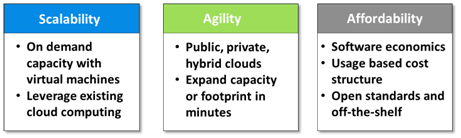
Although Mitel, Vidyo and VMware offer a compelling SMB UCC solution, they are not alone in doing so. And due diligence mandates that prospective customers carefully scrutinize and compare the MVV alliance offering with others on the market for the right fit – no one size fits all – in terms of the risk-adjusted benefits and TCO. These benefit/cost assessments of alternative systems need to consider the solution’s impact on productivity improvement, CapEx and OpEx, business continuity, data security, etc. Risk considerations need to cover such items as: the impact of the new system on competitive differentiation; ability to scale to meet demand; and alignment of future business requirements with currently offered feature/functionality and the solution’s technology roadmap and, of course, interoperability.
To Partners: There are big upsides for all three companies’ channel partners related to:
- A deeper “kit bag” for partners in each of the three channels
- Collaboration across the channels on individual deals
- Higher attach rates for UCC apps beyond basic call control and voicemail with attendant integration points and pro services. Mitel channel partners who have embraced virtualization as a differentiator are seeing upwards of more than 20% growth in average revenue per customer.
-
New opportunities to engage in sales to CIOs and IT management around the benefits of deploying and managing a single virtualized infrastructure that unites the worlds of data and voice in the datacenter and on the desktop resulting in:
- Lower capital expenses
- Lower operating expenses
- Easier business continuity and disaster recovery
- Increased security and data integrity
- Full mobile flexibility with in-office experience
- Improved collaboration and productivity.
Since the Vidyo partnership was announced in June a number of early adopter channel partners have indicated their strong interest in the MVV alliance and were formed into a Council. Mitel, Vidyo and VMware are watching these early adopter channel partners very closely in order to distill best practices on deployment and the most effective and efficient methods for training channel partners and getting them up to speed so they can focus on selling while the three vendors focus on backend support. There will be some changes on the channel side in the months ahead as the alliance expands aggressively in these markets in terms of pricing, packaging and overall go-to-market support leveraging regional strengths.

Also on UCStrategies.com on this topic: