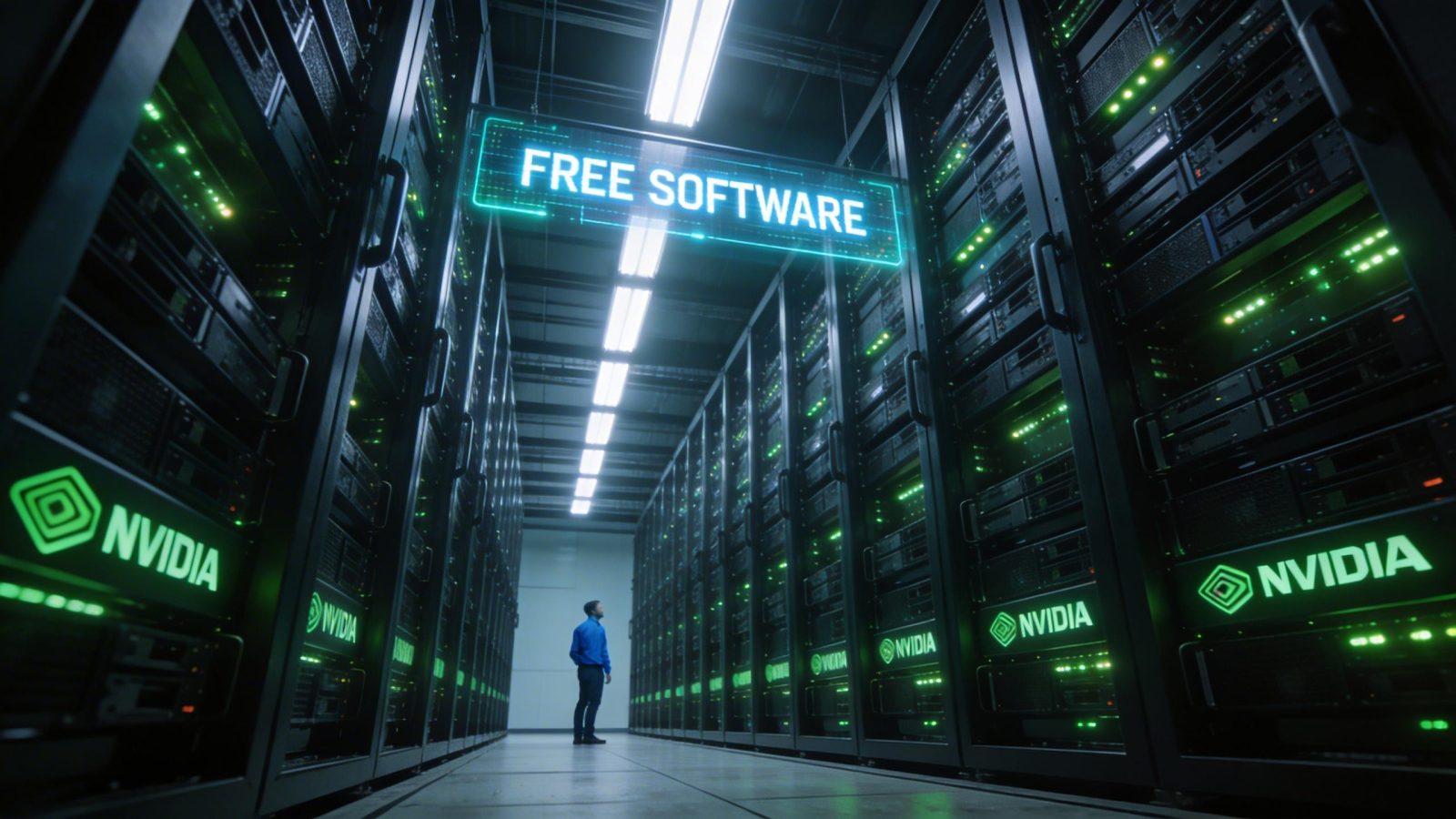
NVIDIA gave away the AI agent toolkit for free on March 16. The hardware bill comes later—and it’s non-negotiable if you want it to actually work.
The Agent Toolkit launched at GTC 2026 with OpenShell runtime, NemoClaw secure agent runtime, and the AI-Q research blueprint. Adobe, Salesforce, and SAP signed on within 10 days. The pitch: open-source infrastructure that finally sandboxes rogue agents, cuts query costs by more than 50%, and solves the fragmented tooling nightmare that’s kept enterprise AI agents stuck in pilot purgatory. The catch: optimal performance requires DGX hardware—turning “free” into a multi-million-dollar compute commitment most enterprises haven’t budgeted for.
This isn’t a product launch. It’s NVIDIA’s infrastructure play disguised as open-source altruism.
The enterprise AI agent market was broken before NVIDIA showed up
The demand is real. LangChain frameworks have crossed 1 billion downloads as of March 16, proving enterprises are desperate for agent infrastructure. But execution is a mess. Salesforce’s Agentforce hit $1.4 billion in ARR last year, yet only 52% of 18,500 deals are actually monetized—most companies can’t get agents into production without breaking something.
NVIDIA’s timing is surgical. With enterprises racing to deploy agents before AI targets high-skill jobs, the toolkit solves three problems simultaneously: standardized runtime (OpenShell), sandboxing that doesn’t kill speed (NemoClaw), and a blueprint that actually works at scale (AI-Q). As autonomous agents make governments nervous, NVIDIA’s sandboxing pitch becomes a compliance selling point.
The partner list reads like a who’s-who of enterprise software. Adobe for creative workflows. Salesforce for CRM agents. SAP for supply chain automation. These aren’t pilot programs—they’re production commitments backed by NVIDIA’s record $215.9 billion FY26 revenue. The company can afford to give away software because it owns the compute layer.
AI-Q’s 50% cost cut is real—but it’s also bait
Here’s the surprise: AI-Q doesn’t rely on frontier models for everything. The hybrid approach uses open models like Nemotron for heavy lifting—data processing, context retrieval, iterative reasoning—and only calls expensive models like GPT-4 or Claude for edge cases requiring nuanced judgment. This contradicts the “bigger is better” narrative dominating AI discourse. And it works. AI-Q topped both DeepResearch Bench leaderboards on launch day.
Nemotron 3 Nano handles 1 million token context windows—enough to process entire codebases or multi-quarter financial reports in a single pass. The cost savings are legitimate. But they only materialize at scale on DGX hardware.
This aligns with NVIDIA’s post-GPU strategy—own the full stack, not just the silicon. The toolkit runs on AWS, Azure, and GCP. But the 18% power draw reduction and 30% faster context switching? DGX-only optimizations. Non-NVIDIA infrastructure users get the software but lose the performance edge that justifies the agent deployment in the first place.
The open-source promise has a proprietary anchor
The honest trade-off: NemoClaw’s sandboxing is genuinely better than vanilla OpenClaw. Developers on Hacker News are calling it “finally, something that sandboxes these rogue agents without killing speed.” The policy guardrails address real enterprise fears—with AI agents finding cyber flaws faster than humans, governance isn’t optional anymore.
But Reddit skeptics aren’t wrong. “Salesforce + Nvidia sounds hype, but 52% monetization? Still vaporware for most SMBs,” one user posted in r/MachineLearning on March 20. The toolkit solves problems for enterprises already running DGX infrastructure or willing to commit. For everyone else, it’s a Trojan horse.
NVIDIA hasn’t released exact DGX pricing for the Agent Toolkit stack. The silence is strategic. Once you’ve built agents on OpenShell, trained teams on NemoClaw, and optimized workflows around Nemotron’s 1 million token context windows, the switching costs make AWS look cheap. The software is free. The compute layer isn’t. And the performance gap between DGX-optimized and generic cloud infrastructure turns “open source” into a very expensive lock-in.
The toolkit is free. The compute layer isn’t. And once you’re in, the switching costs make migrating to competitors feel impossible.