STEM Agent’s paper dropped in March 2026 with a bold claim: 413 tests passed in under three seconds across five agent protocols. Impressive, technically. But while researchers were perfecting multi-protocol architectures, the market already picked its winner. MCP hit 97 million monthly SDK downloads by April 2026, and most companies building agents missed the moment the protocol war ended.
The shift from chatbots to autonomous AI agents created protocol fragmentation that MCP quietly solved by becoming infrastructure instead of competing on features.
MCP already won and most companies missed it
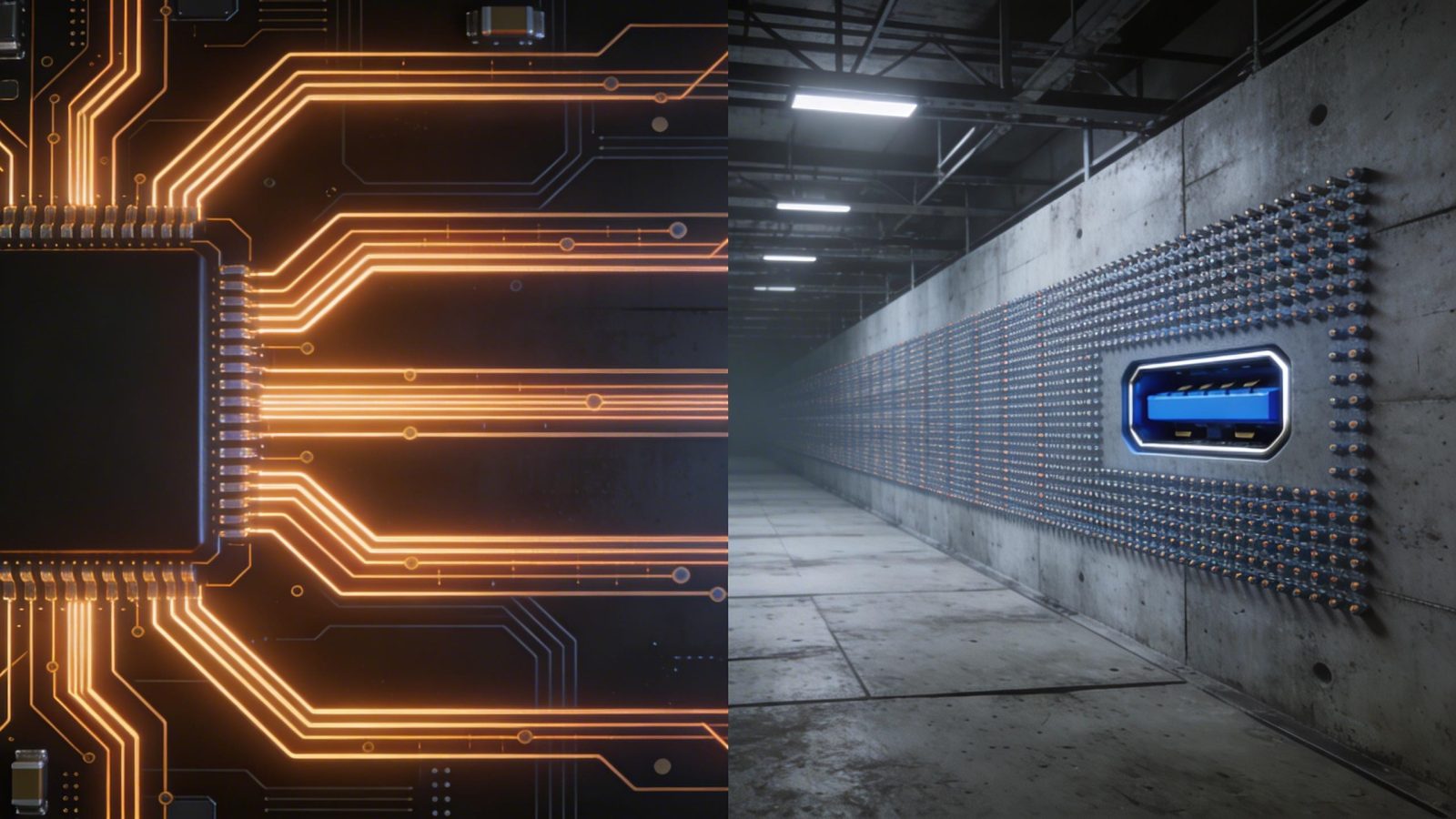
Infrastructure beats innovation when adoption hits critical mass. Developer communities now describe MCP as “the USB-C of agents” — finally, no more custom glue code hell connecting tools to models. That’s not marketing speak. It’s relief.
97 million monthly downloads. That’s infrastructure.
Compare that to STEM Agent’s elegant five-protocol unification (A2A, AG-UI, A2UI, UCP, AP2). The architecture is genuinely impressive — a biological metaphor where agents differentiate like stem cells, learning caller preferences across 20+ behavioral dimensions through its Caller Profiler. But elegance doesn’t matter if you’re building on protocols the ecosystem abandoned.
MCP’s ecosystem shows 5,800+ servers available as of April 2026. A2A protocol, launched April 2025, has 50+ partners. The gap isn’t close. Developers chose simplicity — one protocol, predictable behavior, debuggable failures — over the promise of multi-protocol flexibility that demands mastering competing standards.
STEM Agent’s biology lesson reveals what breaks at scale
The cell differentiation metaphor isn’t just academic. It’s a warning.
STEM Agent’s approach to agentic AI architectures uses biological concepts to solve technical problems: episodic pruning, semantic deduplication, memory “apoptosis” to prevent unbounded growth. Organizations report 70-80% reductions in process cycle times with multi-agent patterns, and STEM’s test suite completion proves the speed claims hold under synthetic loads.
But here’s what the paper doesn’t test: what happens after 10,000 hours of runtime?
Apoptosis — programmed cell death — works in biology because organisms have redundancy. Production agents don’t. When STEM Agent’s memory pruning decides a skill is obsolete based on usage patterns, it deletes capabilities that might be mission-critical but infrequently invoked. A compliance check that runs quarterly. An error handler for edge cases. The paper offers no recovery path when apoptosis kills the wrong skills.
And the complexity compounds. Multi-protocol agents promise flexibility, but they demand teams master MCP’s context-sharing model AND A2A’s agent-to-agent communication AND three other standards simultaneously. The 413-test suite validates interoperability. It doesn’t validate whether your team can debug why an agent forgot how to escalate fraud alerts after six months in production.
The 40% failure rate isn’t about code quality
Gartner forecasts 40% of AI agent projects will fail by 2027. That’s not pessimism — it’s math based on current deployment patterns and interoperability walls.
Companies building on single-protocol frameworks face integration dead ends when they need to connect to the broader ecosystem. But multi-protocol architectures like STEM demand expertise most teams don’t have. The real cost isn’t compute or developer hours (no 2026 data exists comparing frameworks). It’s betting on protocols that can’t talk to the 97 million developers already standardized on MCP.
The risk isn’t theoretical. Production data loss from autonomous agents is already happening at scale, and memory pruning adds another failure mode. Understanding protocol interoperability is now a core skill for working with AI agents in production environments, but most organizations are still treating it as an implementation detail.
STEM Agent proves multi-protocol agents can pass 413 tests in under three seconds. MCP’s 97 million monthly downloads prove developers already chose their standard. What happens when the elegant architecture can’t talk to the infrastructure everyone’s already using?