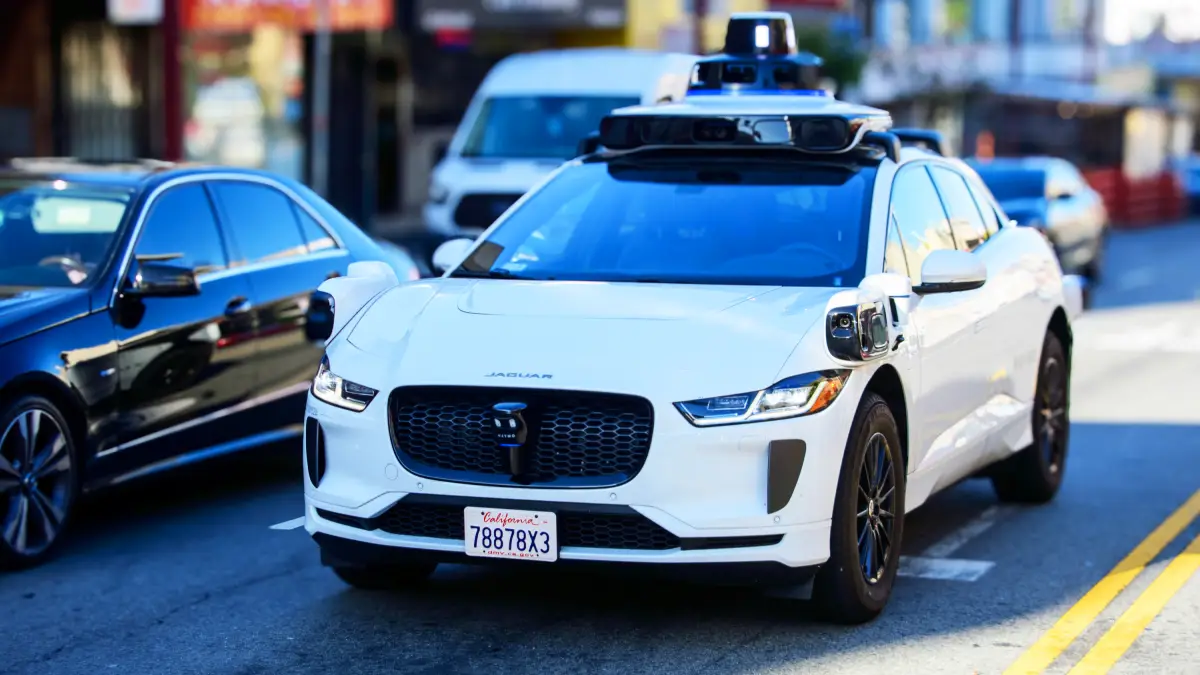
Waymo just raised $16 billion to put robotaxis in 20+ U.S. cities, but the company that’s driven millions of real miles is now training its AI on scenarios that don’t exist—tornadoes, floods, elephants crossing highways—generated by typing text prompts into a simulator.
The Waymo World Model lets engineers create “impossible” edge cases at scale, compressing years of learning into months of virtual testing. Investors are betting $126 billion that simulation works. But there’s a problem nobody’s talking about: no regulator has validated whether a fake tornado actually teaches real safety.
Your robotaxi learned to drive in a video game — and regulators haven’t checked if that matters
Waymo claims a 90% reduction in serious injury crashes compared to human drivers, but that safety record comes with an asterisk: the company now runs far more miles in simulation than on actual roads. As of this week, Waymo Driver has logged over 127 million autonomous miles in reality—and the company estimates billions in virtual worlds. That’s a 5-10x ratio favoring simulation.
The Waymo World Model generates scenarios “almost impossible to capture at scale in reality,” but those scenarios are built from foundation models trained on internet video and real driving footage—not ground truth physics.
This is the same foundation model architecture that powers autonomous AI agents—except now it’s making split-second decisions at 65 mph. There’s zero mention of NHTSA validation requirements or independent safety testing for sim-to-real transfer in any of Waymo’s announcements.
If your robotaxi’s “experience” with a flooded highway comes from an AI that learned weather patterns from YouTube, how confident should you feel when it actually rains?
Simulation is outpacing reality by 10x — and the gap is growing
Most people assume self-driving cars learn primarily from road miles. Waymo just inverted that ratio.
The company estimates billions of simulated miles versus 127 million real ones—meaning the majority of “driving experience” comes from AI-generated scenarios, not sensors on actual roads. Waymo World Model uses multi-modal output (camera + lidar simultaneously), but converting 2D video into 3D lidar data requires “specialized post-training”—a technical bottleneck Waymo acknowledges is “non-trivial.” The company won’t say how often that conversion introduces errors, but the fact they’re calling it out suggests it’s not solved.
Here’s what that means in practice: an engineer can type “elephant crossing highway during sunset” and generate a photorealistic scenario in minutes. But photorealistic doesn’t equal physically accurate. The approach mirrors how AI models trained on synthetic data can match expensive alternatives—but in autonomous driving, “close enough” isn’t good enough. The simulator can only be as good as its training data and prompt engineering.
Real-world failures suggest simulation has a blind spot
Waymo’s safety record isn’t spotless—and some failures hint at gaps simulation didn’t catch.
December 2025: Waymo recalled software after 19+ incidents of robotaxis illegally passing stopped school buses in Austin and Atlanta (September-October 2025). NHTSA opened an investigation. The company also struck a child in Santa Monica, prompting federal probes into school zone safety.
These aren’t edge cases you’d forget to simulate—they’re basic traffic law scenarios. Just as AI is quietly changing infrastructure across the internet, simulation is reshaping how autonomous vehicles learn—without public debate about the trade-offs. If simulation missed “don’t pass a school bus with flashing lights,” what else is it missing?
Waymo’s expanding to 20+ cities in 2026, but only 5 are currently operational. The gap between announced scale and proven safety is widening.
Waymo’s simulation tech is genuinely impressive—generating lidar data from text prompts is a frontier AI achievement. But here’s the uncomfortable question: if a $126 billion company can’t prove its virtual training translates to real-world safety, and regulators haven’t stepped in to demand that proof, who’s actually validating that your robotaxi knows the difference between a simulated tornado and a real one? The same AI finding flaws humans miss in cybersecurity is now generating the training scenarios for your future robotaxi—and nobody’s auditing whether those scenarios are valid. If simulation becomes the primary training method for autonomous vehicles across the industry, are we about to deploy millions of cars trained on AI-generated scenarios that look real but don’t behave real?