

One of the loudest post–Super Bowl debates wasn’t about the score—it was about a Dunkin’ commercial.
The brand’s spot, framed as a lost ’90s sitcom pilot called “Good Will Dunkin”, packed a ridiculous amount of star power and nostalgia.
But within minutes, social media started asking the same question: was this made with AI?
A ’90s sitcom fantasy with a stacked cast
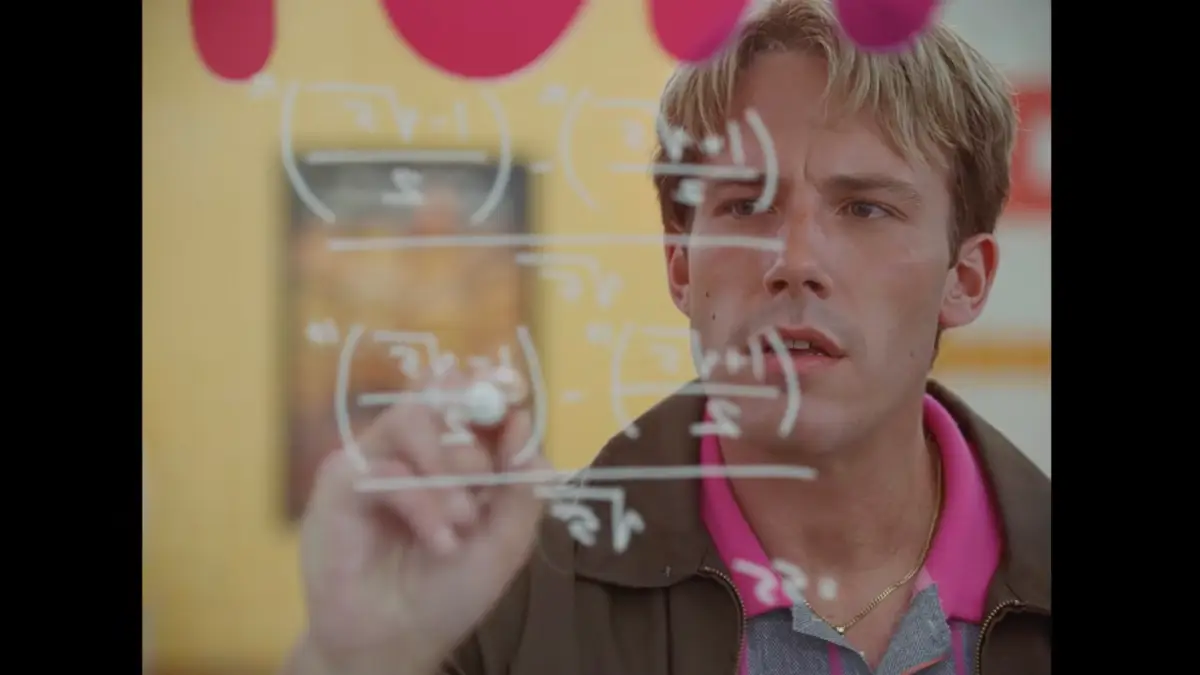
The premise is a nostalgia maximalist’s dream: a fake, never-aired sitcom set inside a Boston Dunkin’. Ben Affleck plays a math-scribbling employee in a wink to Good Will Hunting, surrounded by sitcom legends and familiar IP vibes (think Friends, Seinfeld, Cheers, and more). A surprise Tom Brady cameo seals the Boston inside joke.
The ad looks intentionally “old”—complete with film-like texture, laugh-track energy, and a VHS throwback aesthetic. On paper, it’s engineered for rewatches, screenshots, and social chatter.
The thing viewers couldn’t stop noticing
Instead of feeling warm and playful, many viewers said the spot felt over-engineered and slightly unsettling. The main reason: the cast appears to look almost exactly like they did 30 years ago.
Not “younger versions”, but something closer to “eerily preserved”.
That’s what triggered the AI talk—an uncanny sheen that pulls attention away from the jokes and into the question of how the images were made.
Reddit’s hot take: “Is this AI? They don’t look like that anymore.”
A Reddit thread quickly picked up steam with viewers pointing to oddly smooth skin, slightly off facial proportions in certain angles, and movements that some described as unnatural. The comments split into a few camps:
1) “Not AI-generated, just heavy touch-up.”
Several users argued that “AI” doesn’t only mean prompting a model to generate footage—modern post-production often uses machine learning–powered tools
for cleanup, lighting adjustments, face refinement, and stabilization.
2) “It’s de-aging.”
Others suggested classic digital de-aging techniques—common in film and TV—possibly with newer AI-assisted workflows.
3) “It’s deepfake / face replacement.”
A smaller group speculated that face-swapping or body doubles could explain why some shots feel “off” in motion.
So… was it AI or not?
The most realistic answer is: it depends on what you mean by “AI.”
There’s a meaningful difference between footage that’s fully generated from prompts and footage that’s traditionally shot but enhanced with modern post-production tools that may use machine learning under the hood.
Based on the public reaction and the nature of what people are describing, the debate isn’t really “AI vs. no AI.” It’s more like: how much digital manipulation is too much before it breaks the illusion?
The bigger story: audiences now “AI-check” everything
This Dunkin’ controversy points to a new reality for brands: viewers are becoming trained to spot (or suspect) synthetic or assisted imagery. Even when a commercial is shot normally, if faces look too perfect, too timeless, or too smoothed out, the internet will call it “AI” and the conversation shifts from the message to the method.
In other words, if the tech becomes the most noticeable thing in the ad, the ad loses.
Dunkin’ aimed for a comforting, ritual-like nostalgia bomb. Instead, it sparked a modern anxiety: what am I actually looking at? Whether the spot used de-aging, AI-assisted VFX, face replacement, or simply aggressive retouching, it hit a cultural tripwire.
And that may be the most 2026 Super Bowl moment of all.
