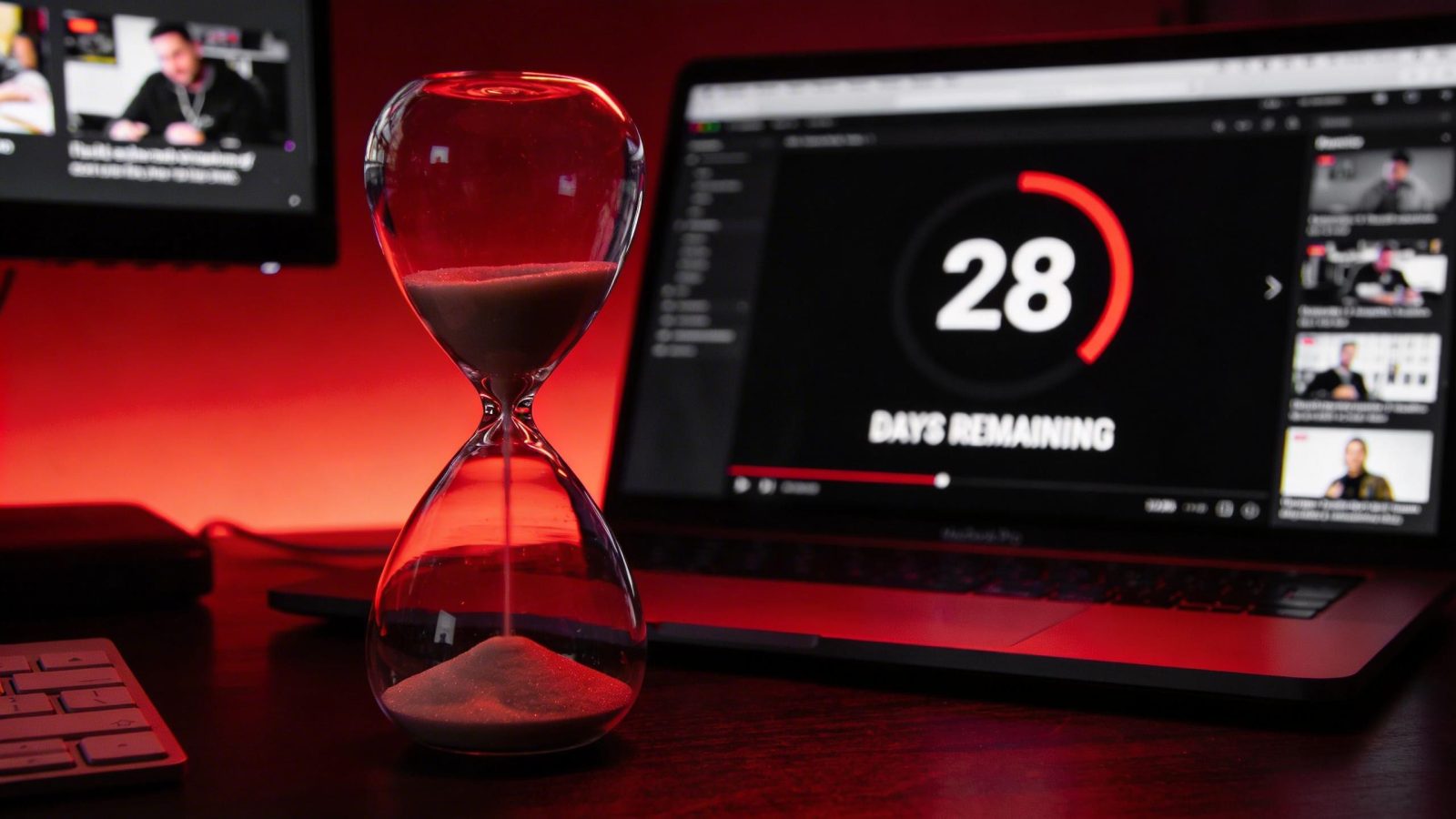
OpenAI just gave Sora users 28 days to save their work or lose it forever.
The company announced March 28 that its video generation app and web interface will shut down April 26, 2026, with API access following on September 24. Users who don’t export their videos by those deadlines will lose them permanently—no grace period, no refunds, no exceptions. The real deadline? The moment video generation stopped being a demo and became a business OpenAI couldn’t afford to run.
This isn’t a story about one product dying. It’s proof that compute-intensive consumer AI was always unsustainable, and the industry’s “wow factor” era just ended.
Sora died faster than any major AI product—and the timeline tells you why
Six months. That’s how long Sora lasted from launch to shutdown announcement—September 2025 to March 29, 2026, according to TechCrunch. ChatGPT is still growing after three years. DALL-E survived its hype cycle. Sora couldn’t make it past Halloween.
The two-stage shutdown reveals who OpenAI actually prioritizes. Consumer users get kicked off April 26. Enterprise API customers—the ones paying real money—get five extra months until September 24. That’s not a graceful wind-down. That’s triage.
OpenAI’s pivot mirrors the broader shift toward enterprise AI agent strategies, where boring automation beats flashy demos. The company is reallocating Sora’s compute to “enterprise and coding tools,” per March 28 reporting. Translation: video generation was burning money faster than subscriptions could cover it, and the IPO clock is ticking.
Video generation at scale is currently impossible to monetize
Here’s the math problem OpenAI won’t say out loud: generating high-quality video requires GPU resources that make even image generation look cheap. Text models cost pennies per response. Image models cost cents per output. Video? That’s a different cost structure entirely.
The gap between what users will pay and what it costs to deliver is unbridgeable right now. ChatGPT Plus subscribers at $20/month expect unlimited access. ChatGPT Pro users pay $200/month but get capped credits. Neither tier can subsidize the compute drain of mass-market video generation when developers are choosing compute-efficient alternatives that deliver results without burning through GPU budgets.
OpenAI bet that scale would solve the economics. It didn’t.
Even Disney couldn’t justify the cost—and that’s the real warning
The most revealing detail isn’t the shutdown itself. It’s what happened hours before the announcement.
Disney—a studio with effectively unlimited resources and a strategic interest in AI production tools—reportedly killed its Sora partnership on March 25, 2026. No investment. No integration. No deal. If Disney can’t make the economics work, who can?
An OpenAI executive framed the pivot bluntly: “We cannot miss this moment because we are distracted by side quests.” That’s not strategy—that’s survival. The shutdown comes as OpenAI’s financial pressure intensifies, with the company burning cash faster than revenue can cover.
And users who built workflows around Sora? They get 28 days to export their work or lose it. No data portability guarantees. No transition plan. Just a deadline and a polite suggestion to try alternative video generation tools—none of which offer Sora’s quality, and all of which face the same brutal unit economics.
OpenAI built the most impressive video AI demo ever created, then killed it because impressive doesn’t pay the bills. If Sora—with global hype and millions of early users—couldn’t survive six months, what does that say about every other AI video startup burning through funding right now?