On March 24, 2026, OpenAI shut down the Sora app without warning, without a migration plan, and without a real explanation.
Three sentences on X, a promise to share details later, and thousands of creators left holding workflows built around a product that no longer exists. If you were one of them — or if you’re seriously evaluating AI video tools right now — this guide covers everything you need to pick the right replacement.
The good news: Sora’s closure happened at a moment when the AI video market is more competitive and capable than it has ever been. The tools available today go far beyond what Sora offered at launch. Some match or exceed its cinematic quality.
Several add capabilities Sora never had — native audio, image-to-video, multi-minute narrative clips, and clean commercial licensing. The question isn’t whether a replacement exists. It’s which one fits your actual workflow.
This guide covers nine of the most capable AI video generators available right now, each profiled by what it genuinely does best. At the end, you’ll find a full comparison table and a direct recommendation matrix by use case.
The AI video market in 2026 is defined by specialization, not a single dominant tool. No one platform leads across all use cases. The smartest approach is matching the right model to the right project — and several multi-model platforms now let you do exactly that from a single dashboard.
1. Google Veo 3.1 — The New Benchmark for Cinematic Quality
With Sora’s standalone app gone, Google Veo 3.1 is now the most widely cited replacement for high-end video generation. Its defining strength is physical credibility: lighting behaves naturally, shadows and reflections are coherent, and camera motion preserves spatial continuity in a way that most competitors still don’t match. The image-to-video pipeline is particularly strong, producing consistent depth and scale with minimal temporal artifacts between frames.
Veo 3.1 also generates native audio — dialogue, ambient sound, and music — produced alongside the visual output in a single pass. The First and Last Frame feature, which lets you upload a starting and ending image and have the model generate a seamless transition between them, opens up creative workflows that text-only tools simply can’t support. For cinematic storytelling, it currently sits at the top of the market.
Pricing runs through Google’s AI Pro plan at $19.99 per month (1,000 credits) and an Ultra plan at $249.99 per month for high-volume production with no watermarks. Render times are on the longer side, and the credit system can feel constraining for intensive workflows, but the visual output justifies the trade-off for hero content.
Cinematic brand films, high-end marketing content, and any project where physical realism and integrated audio matter more than generation speed.
2. Runway Gen-4.5 — The Filmmaker’s Full Studio
Runway has been in the AI video space longer than almost any other major platform, and Gen-4.5 is its most capable release yet. Where Veo and most other generators are primarily generation tools, Runway occupies the middle ground between generation and post-production — functioning more like a full studio that lives in your browser than a simple prompt-to-video engine.
The platform’s defining capability is scene and character consistency. Users can lock in a character’s appearance, a location’s look, and a lighting scheme, then maintain those elements across multiple generated clips. For narrative projects — anything that requires the same character to look like the same character from shot to shot — this is still something most text-to-video models fail at. Runway also offers Director Mode for precise camera control (specific pans, tilts, zooms), robust inpainting for removing objects or swapping elements in existing footage, video-to-video style transfer, frame interpolation, and 4K upscaling. No other tool in this list offers that range in a single workspace. Subscription tiers start around $15 per month, making it notably more affordable than Veo Ultra or ChatGPT Pro for comparable output volumes.
Filmmakers and video editors who need character consistency across multi-clip sequences, or anyone blending AI-generated material with real footage in post-production.
3. Kling AI 3.0 — Photorealistic Humans, Extended Narratives
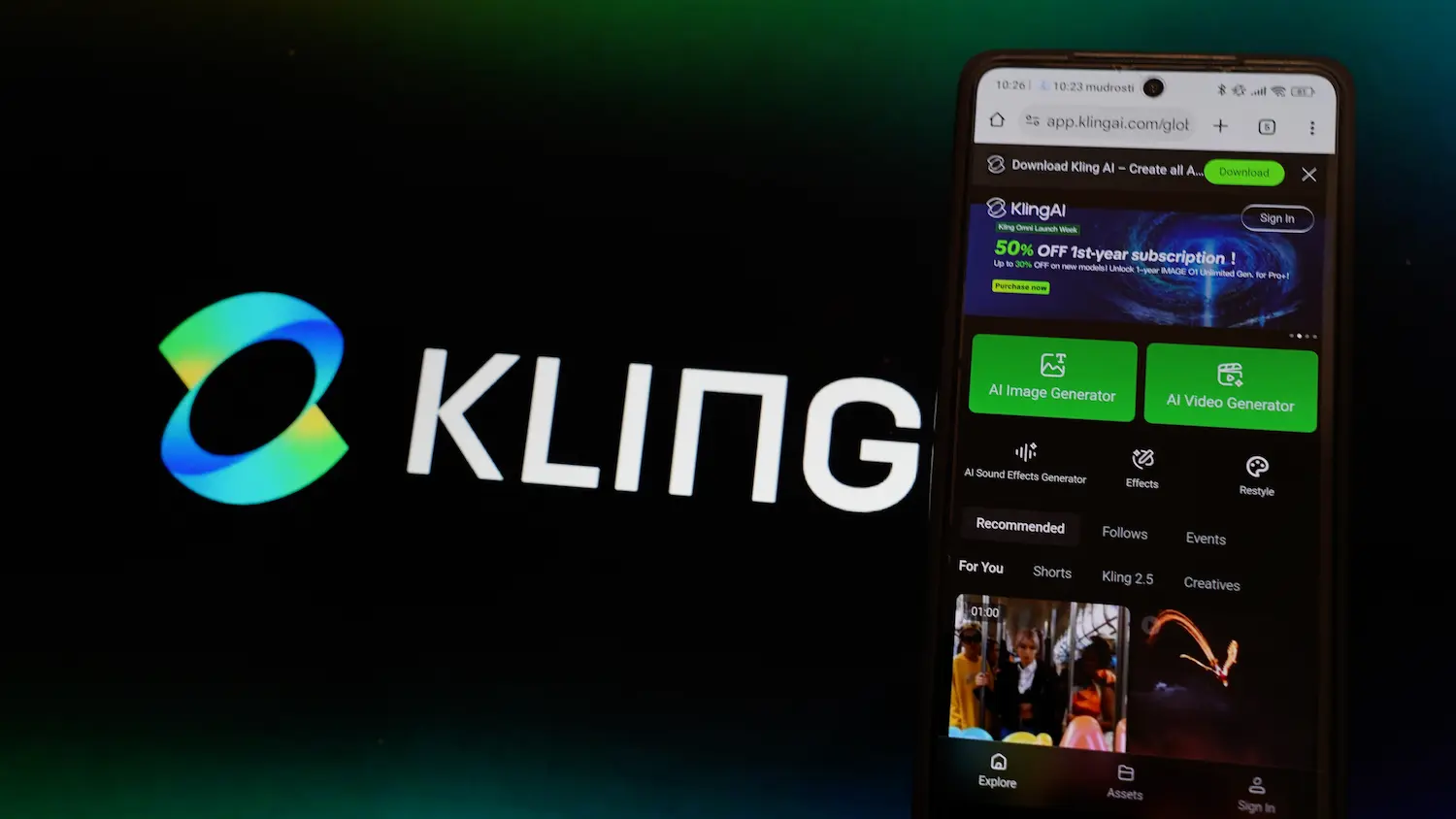
Kling AI, developed by Kuaishou, has carved out two clear niches simultaneously: the most convincing photorealistic human generation in the current market, and one of the few tools capable of sustained narrative clips up to two minutes long. Most AI video models begin to degrade visually after five to ten seconds — character faces shift, environments lose coherence. Kling maintains stable identity across extended sequences in a way that makes long-form storytelling actually feasible.
Version 3.0 brings improved motion realism and stronger prompt fidelity, with facial animation and lip-sync quality that makes it the go-to for any content involving dialogue or human presenters. It handles complex physical movements — walking, eating, expressive gestures — with a naturalness that remains difficult for competing models. Generation speeds are faster than the cinematic tier tools, making iteration practical. Daily free credits lower the barrier to entry for new users.
Long-form narrative content, YouTube explainers, indie film projects, and any marketing video that requires realistic human faces or convincing dialogue.
4. Seedance 2.0 — The Most Immediate Sora Replacement
Released in early 2026, Seedance 2.0 is ByteDance’s entry into AI video generation, and it has moved faster than most expected. The model’s defining feature is its multi-modal reference system: users can feed it up to 12 input references simultaneously — images, videos, and audio — giving a level of director-level creative control over character appearance, camera motion, and scene pacing that no other consumer-facing tool currently matches.
During testing, creators have reported maintaining consistent character identity across multiple shots while synchronizing scene movement with audio rhythm, producing footage that approaches professional film production quality.
Practically speaking, Seedance 2.0 outputs at 1080p with clips up to 12 seconds, supports seven aspect ratios for cross-platform publishing, generates native audio alongside visuals, and runs entirely in the browser with no download or API setup. Commercial licensing is included on paid plans, the free tier is immediately accessible without a waitlist, and clean files with no watermarks are available on pro plans. For a creator who had a client deadline the day Sora went dark, this is the fastest path to getting work done again.
Creators needing an immediate, zero-friction Sora replacement with advanced multi-modal control — and the best free starting point in this entire list.
5. Pika 2.5 — Creative Freedom for Social Content
Where most tools in this list compete on realism, Pika competes on creative range — and that’s a deliberate choice that pays off for a specific audience. The platform’s Pikaffects suite is its most distinctive feature: physics-defying effects designed for engagement, from melting objects to surreal environmental transformations that catch the eye instantly on social feeds. These aren’t photorealistic, and they’re not meant to be. They’re made to stop the scroll.
Pika 2.5 also delivers accurate lip-sync for talking avatars, making character-driven short-form content genuinely fast to produce. The interface stays clean and accessible — no deep prompt engineering required — and the mobile-first design integrates naturally with TikTok and Instagram publishing workflows. Generation times can slow under peak demand, and Pika won’t satisfy anyone looking for cinematic realism. But for social media creators who need expressive, fast-turnaround content, it remains one of the most creatively flexible tools at its price point. Refining your text prompts with tools like ChatGPT audio transcription can help get sharper, more consistent results from Pika’s generation engine.
Social media creators, digital marketers, and anyone producing short-form content where visual impact and fast iteration matter more than physical accuracy.
6. Hailuo AI — Uncanny Human Realism
Hailuo AI, powered by the MiniMax engine, occupies a specialized position in the market: the tool that gets closest to resolving the “shifting face” problem that has plagued AI video since the beginning. Subject identity stays consistent across camera angle changes — the same person looks like the same person whether you’re shooting them in close-up or wide shot. Skin texture rendering is detailed, eyes look alive, and lighting mimics natural sunlight in a way that adds depth to scenes without requiring complex prompt engineering.
The platform is currently in a generous free-to-use phase with daily credit resets, making it accessible for testing without upfront commitment. Rendering speed is faster than its quality level would suggest. Content moderation filters are strict on deepfakes while keeping artistic use cases open. One significant note: Hailuo’s parent company MiniMax is currently facing copyright lawsuits from Disney and Universal, which adds a degree of platform risk worth monitoring for commercial use cases.
Projects requiring consistent human faces across multiple shots — with the caveat that commercial use should be evaluated carefully given current IP litigation.
7. Adobe Firefly Video — The Only Enterprise-Safe Option
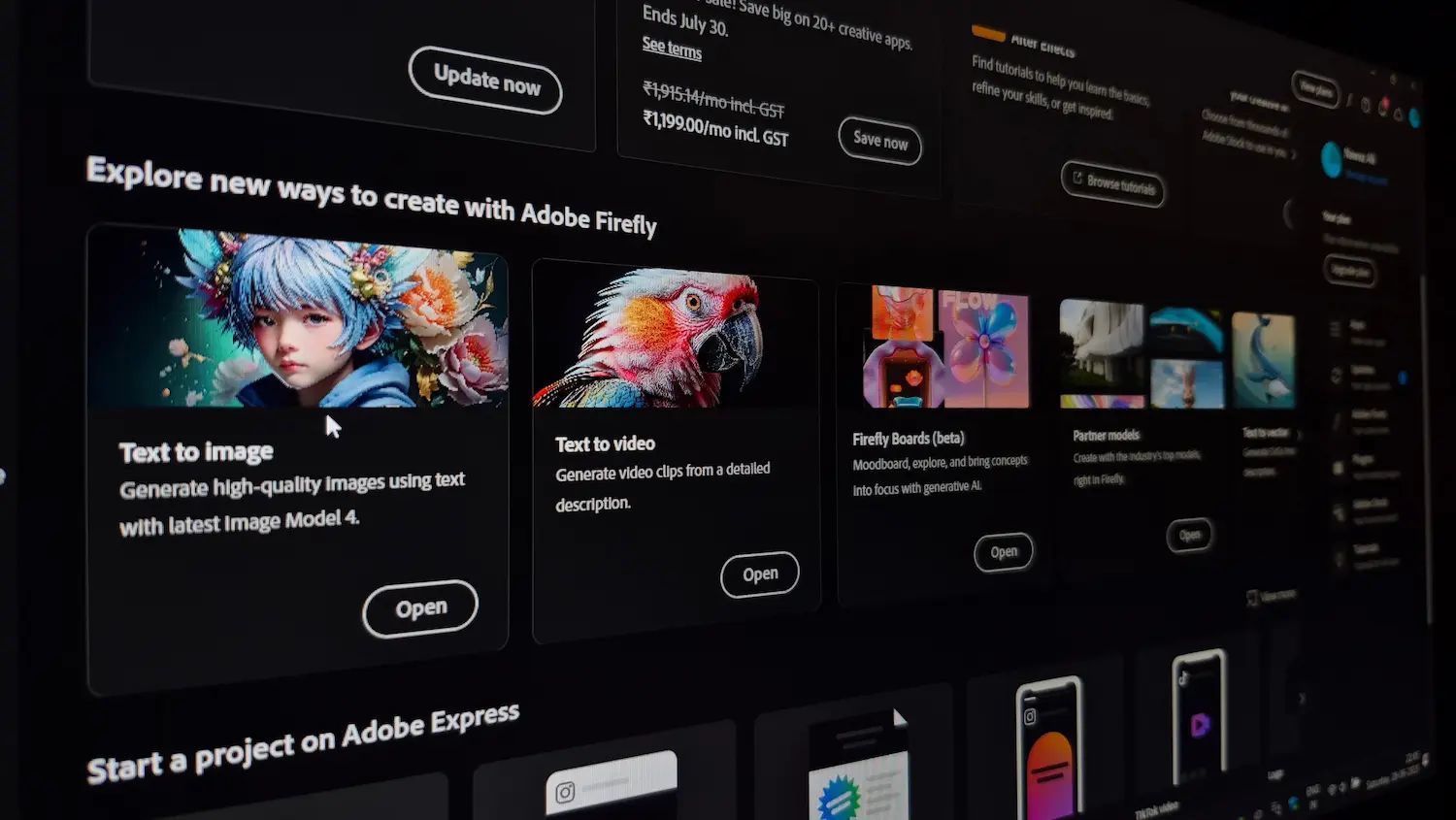
Adobe Firefly Video occupies a unique position that none of the other tools on this list can match: it is the only major AI video generator offering formal IP indemnification. Adobe legally backs the commercial use of content generated with Firefly, protecting brands and agencies from intellectual property claims related to training data. In a market where copyright lawsuits against AI companies are multiplying, this distinction matters enormously for any organization publishing AI-generated content commercially.
The free tier includes two video generations. The Firefly Standard plan runs $9.99 per month for 2,000 generative credits, with IP indemnification available as an additional entitlement. The output quality sits in the solid mid-tier — not matching Veo or Runway at the cinematic ceiling, but consistent and commercially clean. For understanding how to work precisely within platform guardrails, our boolean search operators guide offers techniques applicable to AI prompt refinement as well.
Brands, agencies, and enterprises that need full legal protection on commercially published AI-generated video — non-negotiable for regulated industries.
8. Synthesia — Enterprise Video at Scale
Synthesia operates in a fundamentally different category from the text-to-video generators above. Rather than generating footage from creative prompts, it specializes in AI avatar-based video production: photorealistic digital presenters that deliver scripted content in over 160 languages, with consistent appearance and professional finish across every update. The platform now integrates both Sora and Veo models for B-roll generation, allowing teams to combine avatar-led sequences with AI-generated cutaways inside a single workflow.
More than 90% of Fortune 100 companies use Synthesia for training materials, onboarding videos, product explainers, and internal communications. The output is controlled and repeatable — exactly the qualities that matter in enterprise contexts where creative ambiguity is a liability rather than an asset. It earned the Best AI Video Generator (Winter 2026) designation from G2, reflecting its dominance in the business segment.
Enterprise teams producing training content, onboarding videos, product demos, and multilingual corporate communications at scale with no creative overhead.
9. Wan 2.6 — Open Source, Zero Platform Risk
Wan 2.6 is the only open-source model in this list, and for a specific category of user it’s the most compelling option available. It runs locally on your own hardware, produces clean 720p and 1080p clips at near-zero per-video cost, and gives developers and technically confident creators complete control over the generation pipeline — no API rate limits, no subscription management, no data privacy exposure to third parties. Generation speed is fast and motion stability is solid.
The trade-off is setup overhead. Running Wan requires a capable GPU and comfort with command-line tooling. For anyone who can clear that bar, the economics are difficult to argue against. And crucially: there is no platform risk. No company can shut it down on a Tuesday morning. For studios whose production continuity just took a hit from Sora’s sudden closure, that’s not a minor consideration.
Developers, technically advanced creators, and studios that want full pipeline control and zero exposure to third-party shutdown risk.
Full Comparison: Nine Tools at a Glance
| Tool | Cinematic Quality | Max Clip Length | Native Audio | Image-to-Video | IP Safe | Starting Price |
|---|---|---|---|---|---|---|
| Google Veo 3.1 | ⭐⭐⭐⭐⭐ | Minutes | ✅ | ✅ | Partial | $19.99/mo |
| Runway Gen-4.5 | ⭐⭐⭐⭐⭐ | Minutes | Partial | ✅ | Partial | ~$15/mo |
| Kling AI 3.0 | ⭐⭐⭐⭐ | 2 minutes | Partial | ✅ | Partial | ~$10/mo |
| Seedance 2.0 | ⭐⭐⭐⭐ | 12 seconds | ✅ | ✅ | ✅ (paid) | Free tier |
| Pika 2.5 | ⭐⭐⭐ | ~10 seconds | ✅ | ✅ | Partial | Free tier |
| Hailuo AI | ⭐⭐⭐⭐ | Minutes | ❌ | ✅ | ⚠️ Litigation | Free / Paid |
| Adobe Firefly | ⭐⭐⭐ | Short clips | ❌ | ✅ | ✅ Full | $9.99/mo |
| Synthesia | ⭐⭐⭐ (avatars) | Unlimited | ✅ | N/A | ✅ | Enterprise |
| Wan 2.6 | ⭐⭐⭐ | Variable | ❌ | ✅ | ✅ (local) | Free (self-hosted) |
Which Tool Should You Actually Use?
For the closest match to Sora’s cinematic quality: Google Veo 3.1. It now leads the market on physical realism, includes native audio, and carries none of the IPO-driven product-rationalization risk that killed Sora. For filmmakers and editors who need multi-clip character consistency: Runway Gen-4.5 — no other tool handles narrative continuity across scenes as reliably, and its post-production toolset makes it a genuine production environment.
For the fastest possible Sora replacement with zero setup and an immediate free tier: Seedance 2.0. For realistic human presenters, dialogue, and extended narratives: Kling AI 3.0. For social media content where creative impact matters more than realism: Pika 2.5. For enterprise commercial publishing where legal protection is non-negotiable: Adobe Firefly — it’s the only option in this list with formal IP indemnification.
The most resilient approach isn’t picking one Sora replacement — it’s treating AI video as a multi-tool discipline. Use Veo or Runway for hero content, Seedance or Kling for volume and iteration, and Firefly when commercial publication requires legal certainty. The global AI video generator market was valued at approximately $788 million in 2025 and is projected to keep growing fast — the tools here will keep improving, and the platforms that survive will be those that solve the business model, not just the technology.
Frequently Asked Questions
Is the Sora model itself dead, or just the app?
Only the standalone Sora app has been shut down. OpenAI confirmed that video generation capabilities remain within ChatGPT, accessible via Plus ($20/month) and Pro ($200/month) subscriptions — though the free tier was already removed in January 2026. What’s gone is the dedicated product: the app, the community features, and the standalone API.
What happened to content I created in Sora?
OpenAI stated it will publish timelines and instructions for preserving previously created content. No migration tool or export deadline had been communicated at the time of announcement. If you have content in Sora, download it as soon as export options become available.
Which Sora alternative is free right now?
Seedance 2.0, Pika 2.5, Hailuo AI, and Adobe Firefly all offer free tiers with varying generation limits. Kling AI provides daily free credits. Wan 2.6 is completely free if you self-host it on your own hardware. For most creators, Seedance 2.0’s free tier is the most capable starting point given its multi-modal input system and zero setup requirement.
Which tool is best for creating viral social media content?
Pika 2.5 is built for this use case. Its Pikaffects suite produces the kind of physics-defying, scroll-stopping visuals that perform on TikTok and Instagram, with fast generation times and accurate lip-sync for talking-avatar formats. The mobile-first interface and accessible prompt system mean you don’t need deep AI expertise to get usable results quickly.
Is there a tool specifically strong for human realism?
Kling AI 3.0 and Hailuo AI are the two strongest options for photorealistic human generation. Kling leads on narrative consistency across extended clips and lip-sync quality. Hailuo leads on skin texture detail and its ability to maintain facial identity across changing camera angles. Given MiniMax’s current IP litigation, Kling is the safer commercial choice for client work.
What’s the risk of building a workflow on any of these tools after what happened to Sora?
Platform risk is real, and Sora proved it dramatically. The most resilient mitigation strategies are: using tools from companies where AI video is strategically central (Runway’s entire business is AI video; Veo is core to Google’s AI strategy); maintaining portable source assets and prompts not locked to any single platform; and considering open-source tools like Wan 2.6 for workflows where continuity is critical. No cloud-based AI tool is immune to shutdown, but the risk profile varies significantly by provider.
Do these tools let me use their output commercially?
Most paid subscription tiers include commercial usage rights and remove watermarks from output. Always verify the specific terms before publishing — policies differ on training data consent, IP liability, and what “commercial use” covers. Adobe Firefly is the only option with formal IP indemnification, meaning Adobe legally backs your commercial use. For everyone else, you own the output but carry the IP risk yourself.
Sources
MASV / massive.io, “Best AI Video Generator: An Updated Comparison Of 10 Tools” (March 2026)
Hedra, “Best Sora 2 Alternatives in 2026: 10 AI Video Generators Compared” (March 2026)
Zapier, “The 18 best AI video generators in 2026” (February 2026)
ALM Corp, “AI Video Generators in 2026: 10 Tools Tested, Compared, and Ranked by Actual Use Case” (March 2026)
Synthesia, “The 13 Best AI Video Generators (I’ve Actually Tested)” (March 2026)
GlobalGPT, “12 Best Sora 2 Alternatives: Less Content Restrictions, No Invite Codes” (2026)