There has been no shortage of headlines proclaiming that traditional search as known for years is at death’s door.
With language models attracting hundreds of millions of active users, some commentators have rushed to declare the end of SEO and a dramatic shift away from Google.
But do these sweeping predictions match what is actually happening? A closer look reveals a far more nuanced reality. Let us untangle the latest claims and examine just how much the world of search is changing—and where myths persist.
Where does the “search is dying” narrative come from?
The belief that search engines are in decline emerged alongside explosive growth in generative AI platforms. As people increasingly use AI assistants to discover information or shop online, stories spread suggesting this trend spells doom for classic search.
Frequently cited are anecdotal user testimonies and self-reported surveys stating that searching with LLMs is now the norm for most—sometimes quoting figures claiming 60% or more have switched to AI from search.
Media reports contribute to this hype by highlighting personal experiences—statements like “I only use AI nowadays” become shorthand evidence for a society-wide shift. Often, the supposed massive loss of SEO traffic and decreased use of search engines gets linked to new features such as AI Overviews, with claims that such changes drastically impact click rates on search results.
Assessing the numbers: Is search engine traffic really declining?
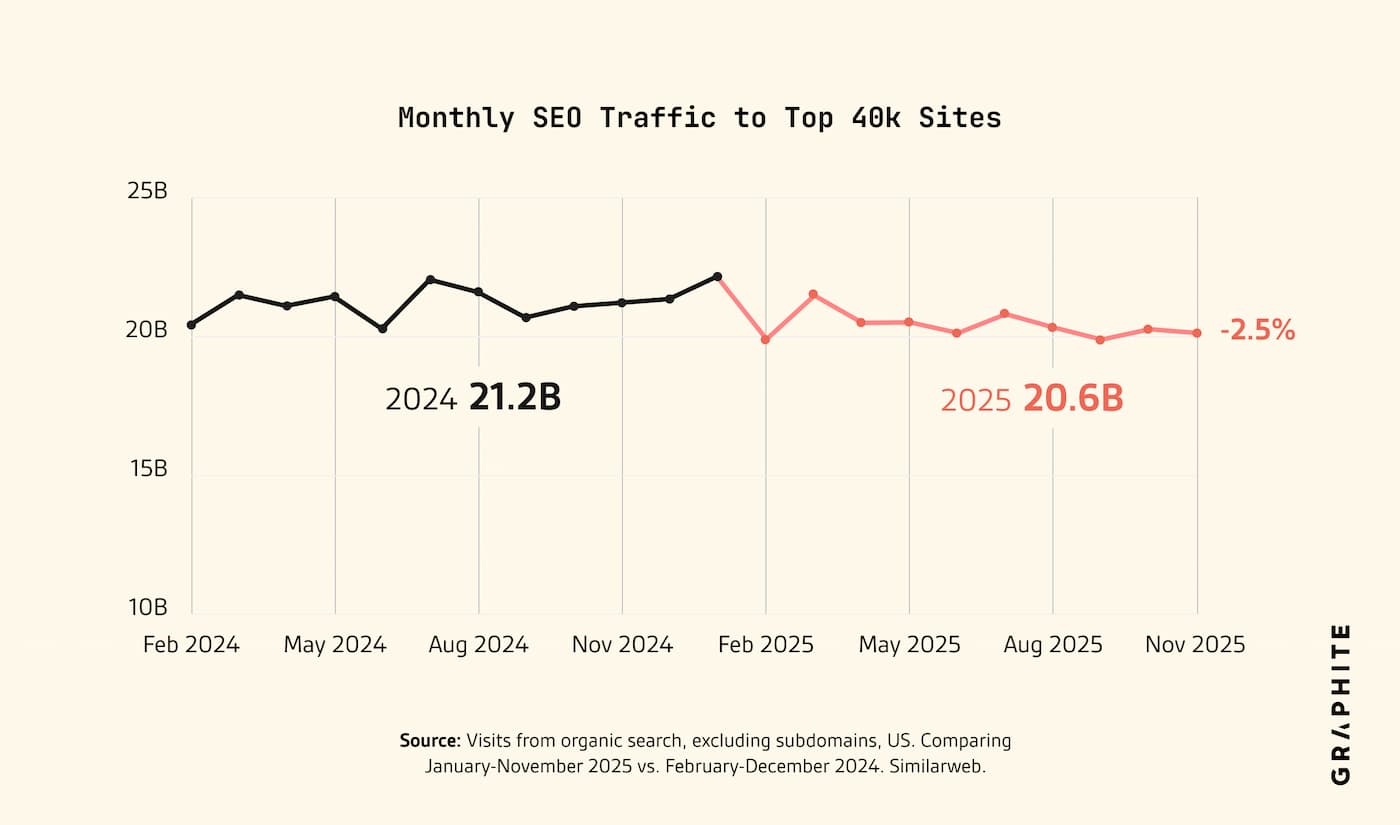
Digging into global site traffic statistics gives a very different impression than the dramatic narratives suggest.
Search volumes increased between 2019 and 2020, then experienced a minor dip in 2022. Since early 2023, overall searches have remained stable, even showing a slight bump in late 2025 compared to the prior year.
On giants like Google, visitor numbers grew by over one percent year-on-year into Q4 2025, rather than seeing any broad collapse.
AI-fueled features alter user paths: About 30% of queries currently display AI-generated previews, but before this, featured snippets were already present in up to 80% of cases.
These snippets themselves shifted clicks away from traditional search results—but significant organic traffic persisted. Data confirms that while some sectors face headwinds, general site visits from search have not plummeted across the board.
Who felt the biggest change?
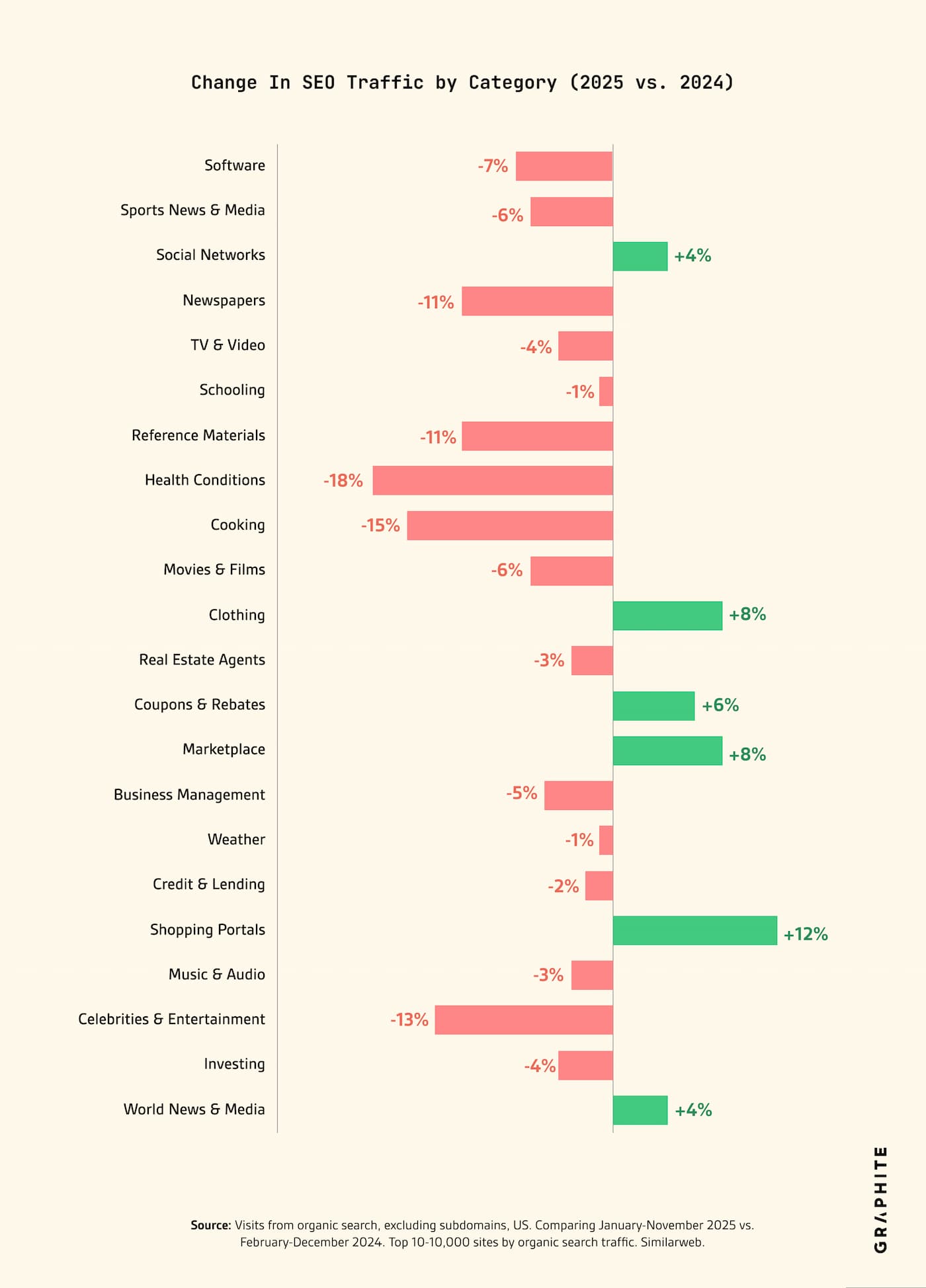
When comparing thousands of leading websites, patterns emerge around which saw the sharpest drop in search referrals.
The largest digital properties—the top ten—actually enjoyed modest increases. Mid-sized sites, however (those ranked approximately 100 through 10,000 by traffic volume), were hit hardest, driving most of the overall decrease.
Not every content category was equally affected. Sectors such as news, health, recipes, and entertainment faced reductions exceeding ten percent, reflecting competitive pressures or shifting consumption habits within those niches.
How many visitors did sites lose?
Looking at aggregated data from a diverse set of sources points to an average loss in SEO-sourced visits of roughly 2.5%.
This is barely a fraction of some headline-grabbing figures, which forecast declines ten times larger. Importantly, these measurements consider both desktop and mobile behaviors worldwide, relying on opt-in panels, partnerships with service providers, and statistical adjustments for coverage gaps.
As for why other studies report far greater losses, research methodology provides part of the answer. Broad consumer surveys and qualitative questioning often inflate negative trends, especially when respondents recall their own experiences rather than objective past behaviors.
The pitfalls of memory and self-reporting
Misconceptions about declining search usage grow due to human cognitive bias. People tend to assume that their preferences apply to the population at large, a phenomenon known as egocentric bias. For example, someone who stopped using Google believes everyone else must be doing the same.
Self-reported historical behavior is also unreliable; few can accurately remember frequency or detail over time. So when asked such questions as “How often do you turn to AI instead of Google?” estimates offered rarely correspond to actual activity logs or digital footprints.
- Anecdotes collected in group settings can give a misleading impression
- Survey design influences outcomes: vague or leading questions skew responses
- Objective measures—such as direct analytics data—paint a very different picture
Understanding how data is collected and analyzed
To measure real shifts in web usage, researchers combine multiple streams of first-party and third-party data. A typical dataset draws on everything from direct site analytics (such as internal tracking tools) to broad-scale signals harvested from ISPs and carrier partners, blended via machine-learning models.
Sophisticated techniques enable cross-checking between independent measurements. For instance, monthly analytics from major sites can correlate closely with broader market estimations, offering stronger confidence. Statistical correlations verify consistency between platform-specific views and total search ecosystem performance.
Why “SEO is dead” remains a myth (for now)?
What emerges strongly from quantitative data is a picture of remarkable stability—not obsolescence. Claims about dramatic drops in search result visits have generally conflated isolated user anecdotes or flawed survey findings with market realities.
While certain verticals see bigger challenges, and the era of pure blue-link rankings has clearly evolved, search engines remain a core driver of digital discovery.
Rather than signaling the end of SEO, emerging AI-powered interfaces mark an evolution in how information gets surfaced and consumed. Marketers and publishers adapting to these shifts will still find opportunity, provided they stay attuned to the complexity behind user choices and the actual dynamics revealed by quality data.