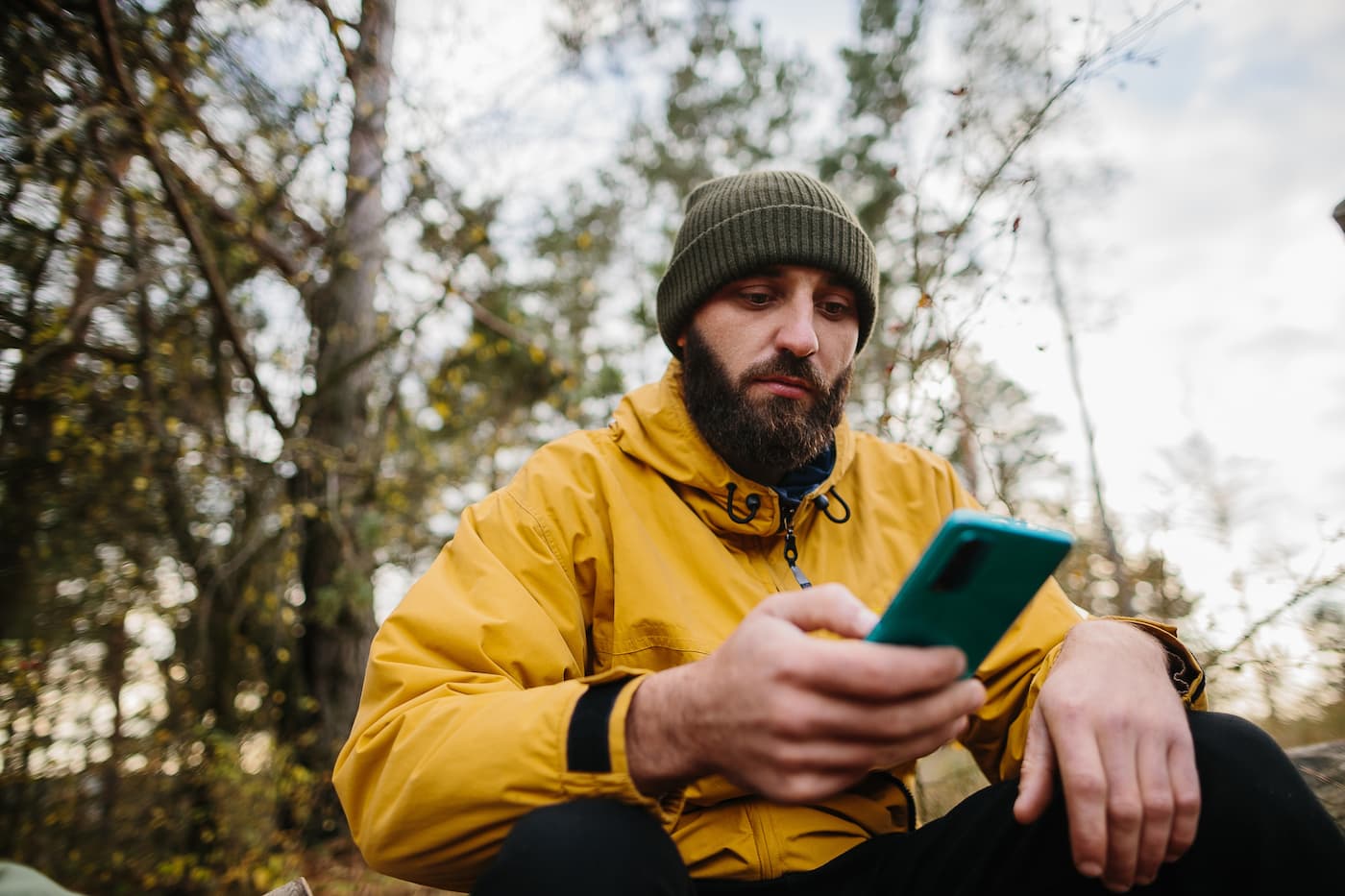
If your phone dies in the backcountry and the last thing you asked an AI was “which berries are safe to eat,” you better hope it was right — because there’s no undo button on poisoning. In the past 6 months, at least 5 different “offline survival AI” apps launched, each claiming to be your emergency lifeline when cell service disappears. Prepper AI, Survivalist.AI, OffGrid: AI, Survival AI – The Ark — they all promise the same thing: expert survival guidance that works without internet. But here’s what nobody’s asking: has anyone actually tested whether this advice could get you killed?
Every app has a legal escape hatch — and that should terrify you
Buried in every single offline survival AI app is the same disclaimer: “for educational purposes only and is not intended to replace professional medical advice.” Translation: if you follow our guidance and something goes wrong, you’re on your own. This isn’t just legal boilerplate — it’s a massive red flag. These apps are marketing themselves as emergency tools, but legally positioning themselves as “educational.” That gap matters when you’re deciding whether to drink creek water or treat a snakebite.
The market went from zero to 5+ competitors in under 6 months (late 2025 to February 2026). That’s not careful development — that’s a land grab. When apps race to ship, quality control gets skipped. And in survival scenarios, “mostly right” can be fatal. The pattern is familiar — as AI health advice is raising alarms in medical contexts, survival apps are repeating the same playbook with even higher stakes.
This should make you uneasy. We’re trusting AI models that have never been field-tested, built by developers racing to capture market share, with legal disclaimers that scream “we’re not confident this works.”
The price collapse reveals the real problem
Most offline survival AI apps cost under $8. Some are completely free. Prepper AI bundles 236 offline maps and 48 survival books at no ongoing cost. Survival AI – The Ark is free with in-app purchases. That pricing tells you everything: these apps are commoditizing survival advice before anyone’s proven the advice is reliable.
Premium products charge premium prices because they’ve earned trust. Dirt-cheap products are racing to scale before competitors arrive. Here’s the technical reality nobody mentions: on-device AI models run with a fraction of the processing power of cloud-based systems. Your phone can’t run the same intelligence as a data center. So when an app promises “expert survival guidance,” it’s running on fundamentally constrained hardware.
This mirrors what happened when AI agents started flooding the market — quantity exploded before quality was proven. The feature arms race (236 maps! 48 books! 13 AI models!) is a distraction from the core question: does the advice actually work when your life depends on it?
Nobody knows which apps work because nobody’s testing them
Survival AI – The Ark has 4.5 stars across 65 reviews. Prepper AI has 5.0 stars from 6 people. That’s not validation — that’s a sample size too small to trust. Real user feedback focuses on “works offline” and “nice interface” — not “this advice saved my life” or “I tested this against wilderness medicine protocols.” One Survivalist.AI reviewer called it “the best design I have seen yet for a fully local AI chat app.” Design ≠ accuracy.
The honest limitation: these apps have never been stress-tested in actual emergencies. No documented cases of someone following offline AI advice during a real survival scenario. We’re beta testing survival guidance in production. Recent studies show AI fails at real-world tasks when stakes are high — and survival scenarios are the highest stakes possible.
If you’re hiking in cell-dead zones, a paper field guide from REI is still more reliable than any of these apps.
The verdict nobody wants to hear
The offline survival AI category exists because the technology can exist, not because anyone proved it should exist. Five apps launched in 6 months, all racing to be first, none proving they’re safe. If the next viral survival story involves someone following AI advice that turned out to be wrong, will we blame the user for trusting it — or the developers who shipped it without testing? Who’s actually liable when offline AI gives deadly advice?