

The pace of technological innovation continues to accelerate, reaching even the most intimate aspects of human existence.
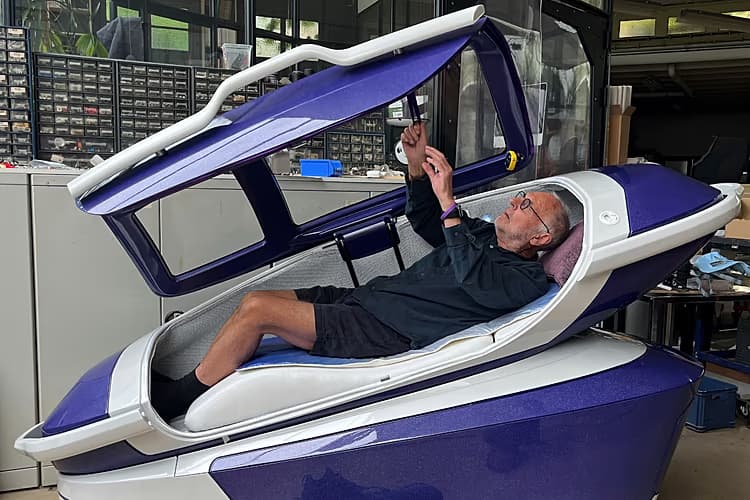
This reality becomes especially striking—and contentious—with the emergence of Sarco: a 3D-printed capsule designed to provide a controlled end-of-life experience and now, potentially, to transfer crucial decision-making power to artificial intelligence.
As assisted suicide shifts from doctor-led protocols toward possible automation, society faces pressing questions about what might be lost when humanity yields its role to algorithms.
How does AI fit into assisted dying procedures?
The process leading to assisted suicide has historically required thorough assessments, with mental capacity at the forefront. Traditionally, these evaluations are performed by medical professionals such as psychiatrists, individuals skilled at interpreting the nuances of human emotion and context.
With Sarco’s latest development, this responsibility could shift to an algorithmic system.
No longer would there be a psychologist physically present or engaging in probing conversation; instead, a digital form stands between person and death.
This marks a profound change: eligibility may soon be determined by simple checkboxes rather than the rich discussions that currently define mental health evaluations. Supporters claim it streamlines a process sometimes slowed by bureaucracy or limited specialist access. However, many express concern about what remains hidden or unspoken when interaction is reduced to screens and forms.
Human versus AI judgement in end-of-life choices
Substituting psychiatrists with software transcends mere technology—it signals a deep transformation in how psychological pain and moral complexity are understood. While software can identify recurring patterns, real-world suffering rarely fits clean formulas. Fleeting crises or sustained pressures often defy quantification and cannot be neatly summarized through data points alone.
Researchers specializing in digital mental health frequently warn that, although artificial intelligence shows promise as a rapid screening tool, it lacks the contextual insight essential for irreversible decisions. Clinical expertise brings intuition and a sense of interpersonal connection—qualities still far beyond the reach of current algorithms.
Can algorithms truly understand distress?
Mental suffering is deeply personal, shaped by unique stories of grief, trauma, and hopelessness. Experienced psychiatrists learn to read not just words but also subtle cues—a slumped posture, hesitation, or gradual changes across sessions. Algorithms, on the other hand, analyze written answers or audio fragments, reducing complex emotions to scores or categories.
Skepticism is warranted when life-and-death decisions are entrusted to systems built around statistical precision rather than empathy. There is a risk of mistaking temporary turmoil for permanent despair or missing signs of coercion, which could lead vulnerable people towards irreversible actions that might have been avoided with greater support and understanding.
Legal and ethical challenges emerge
Even before the widespread use of AI-driven approvals, legal complications shadowed the field of assisted suicide. Consider a case where a patient with severe illness followed established protocols, undergoing comprehensive psychiatric evaluation by a licensed physician. Despite strict adherence to requirements and the presence of medical professionals, controversy erupted after her passing.
Authorities intervened, leading to detentions and lengthy court proceedings. This example demonstrates that no two end-of-life cases unfold without ambiguity or scrutiny. Automating these processes introduces fresh concerns—not only about fairness, but also about accountability. If errors occur, does responsibility fall on the software designer, the operator, or perhaps slip through the cracks entirely?
From individual capsules to partner options: what’s next?
Innovation in assisted dying continues at a rapid pace, even as public debate grows more intense. New concepts include capsules allowing couples to end their lives together, with AI tasked with evaluating the mental readiness of both individuals simultaneously. Rather than simplifying the landscape, this evolution adds layers of complexity, introducing group dynamics to an already sensitive domain.
Many ethicists highlight the risks of removing human oversight from these situations. Applications involving two people increase the chances of peer pressure or uneven psychological preparedness—subtleties notoriously difficult for machines to detect. While automation may offer efficiency, critical nuances can easily be overlooked.
- Elimination of clinical interviews in favor of online forms
- Potential influence of social context, relationships, and crisis timing
- Challenges in monitoring shifting emotional states through static questionnaires
- Lack of clear accountability for non-human decisions
- Expansion into scenarios complicated by interpersonal dynamics
AI and assisted suicide: what do current studies indicate?
Currently, no solid evidence suggests that algorithms can match the discernment of seasoned clinicians in high-stakes environments like assisted suicide. Machine learning performs well when benchmarks are clear and data is abundant and reliable. Yet, emotionally charged and unpredictable contexts demand judgment capabilities that extend beyond computation.
Experts in digital psychiatry emphasize that technology should serve as a supplement—perhaps as an early warning system highlighting cases in need of deeper review. Entrusting such tools with final decisions, especially where outcomes are irreversible, clearly exceeds their intended purpose.
What does the future hold for assisted dying and artificial intelligence?
As society debates how much trust to place in technology during moments of profound vulnerability, the boundaries between progress and risk become increasingly blurred. Digital assessment tools might improve access and speed, but replacing human expertise with algorithms introduces significant uncertainty, both ethically and practically.
Ultimately, finding a balance between embracing technological advances and preserving the wisdom of face-to-face care is essential, particularly in decisions that allow no room for error. The outcome of this ongoing debate will shape the contours of autonomy and compassion for years to come.
