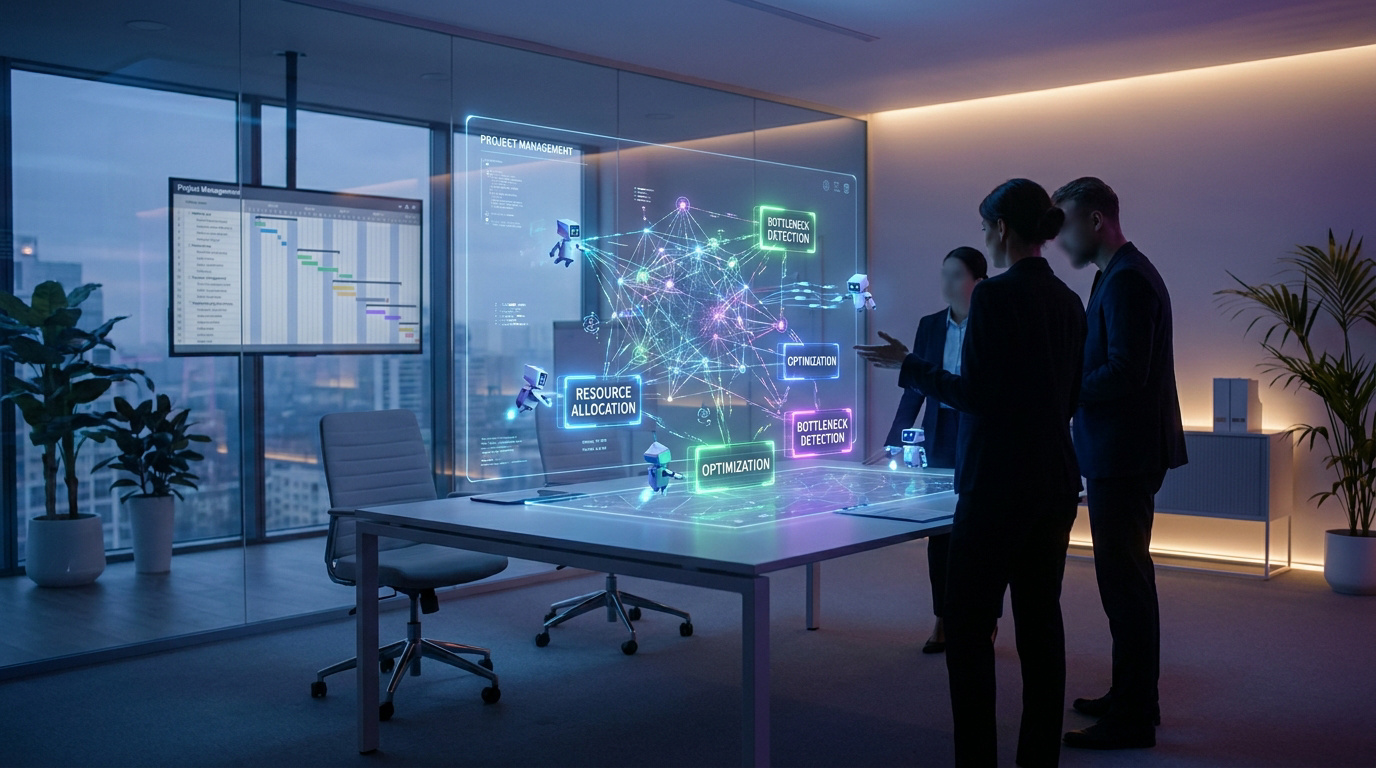
Manual Gantt chart maintenance consumes significant administrative overhead, yet these static visualizations often fail to reflect real-time project volatility. Project managers frequently spend more time adjusting rigid task bars than leading their teams, only to find their schedules obsolete the moment a single delay occurs.
Integrating ai agents for project management solves this friction by replacing manual entry with autonomous workflows that reason, act, and rebalance resources dynamically. This article analyzes how these intelligent systems detect bottlenecks and automate strategic coordination to outperform traditional planning tools.
- AI Agents for Project Management: Defining the Shift From Static Charts
- How Autonomous Agents Outperform Simple Task Automation?
- Strategic Coordination: The Project Manager’s New Role
- 3 Metrics for Measuring ROI in Agentic Ecosystems
AI Agents for Project Management: Defining the Shift From Static Charts
AI agents automate updates, replacing static Gantt charts with dynamic resource leveling. By 2026, 40% of enterprise apps will run these autonomous workflows, shifting managers toward strategic coordination and proactive bottleneck detection.
AI agents are autonomous entities that perceive software environments and execute multi-step tasks with minimal human intervention.
Transitioning from traditional tracking requires understanding the inherent limitations of manual oversight in high-velocity environments.
The Friction of Manual Gantt Chart Updates
Manual entry imposes a heavy administrative burden. Managers waste hours updating bars and dates. This tedious maintenance distracts from leading the team effectively.
Manual schedules become obsolete instantly. A single delay breaks the whole visual plan. Data entry lag creates a false sense of security.
Static tracking fails because most people don’t use AI properly to bridge data gaps. Better habits are required.