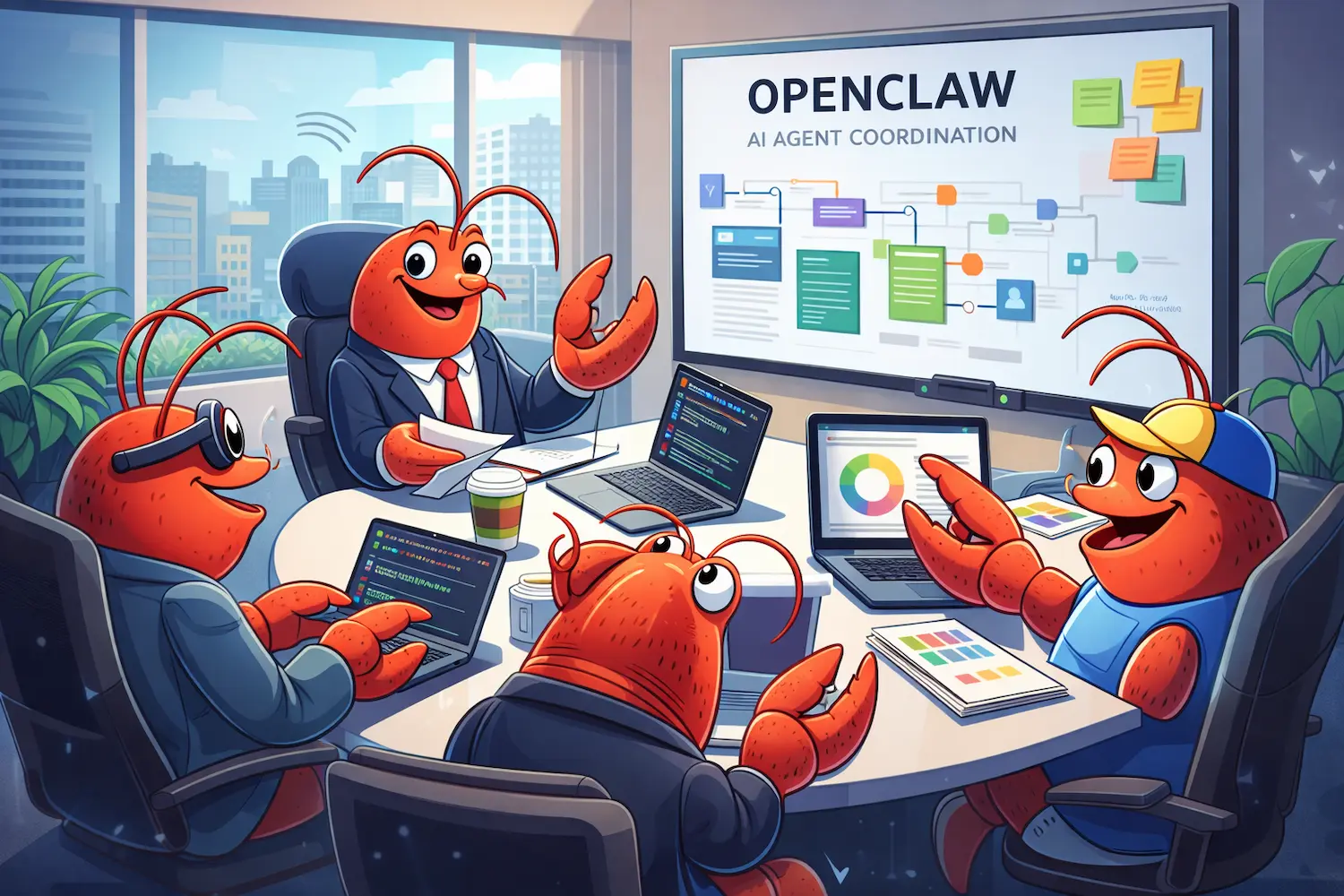
As AI agents become more capable, a new challenge is emerging: how do you coordinate multiple agents working together on a single objective? One promising answer is Paperclip, an open-source project designed to orchestrate teams of AI agents the same way a manager coordinates human employees.
Instead of prompting a single model for isolated tasks, Paperclip introduces a structured environment where several AI agents collaborate, each responsible for a specific role.
The system manages objectives, dependencies, costs, and task cycles, effectively turning AI tools into an organized workforce.
What Is Paperclip?
Paperclip is an open-source orchestration framework for AI agents. Its purpose is simple but powerful: allow multiple AI tools and scripts to work together toward a shared goal.
In practice, this means you can deploy several AI agents — powered by models like Claude or Codex, combined with scripts, APIs, and automation tools — and let Paperclip coordinate their work.
The project acts almost like a management platform for artificial intelligence. Instead of manually triggering each step of a workflow, users define objectives and Paperclip organizes how agents collaborate to achieve them.
The Core Idea: AI Agents as Employees
Paperclip is built around a simple analogy: imagine every AI agent as a specialized employee.
Each agent performs a specific job — research, writing, coding, publishing, analytics — while the Paperclip system acts as the manager overseeing the entire operation.
This structure enables complex projects to be broken down into coordinated workflows, where agents operate independently but remain aligned with the same mission.
How Paperclip Works
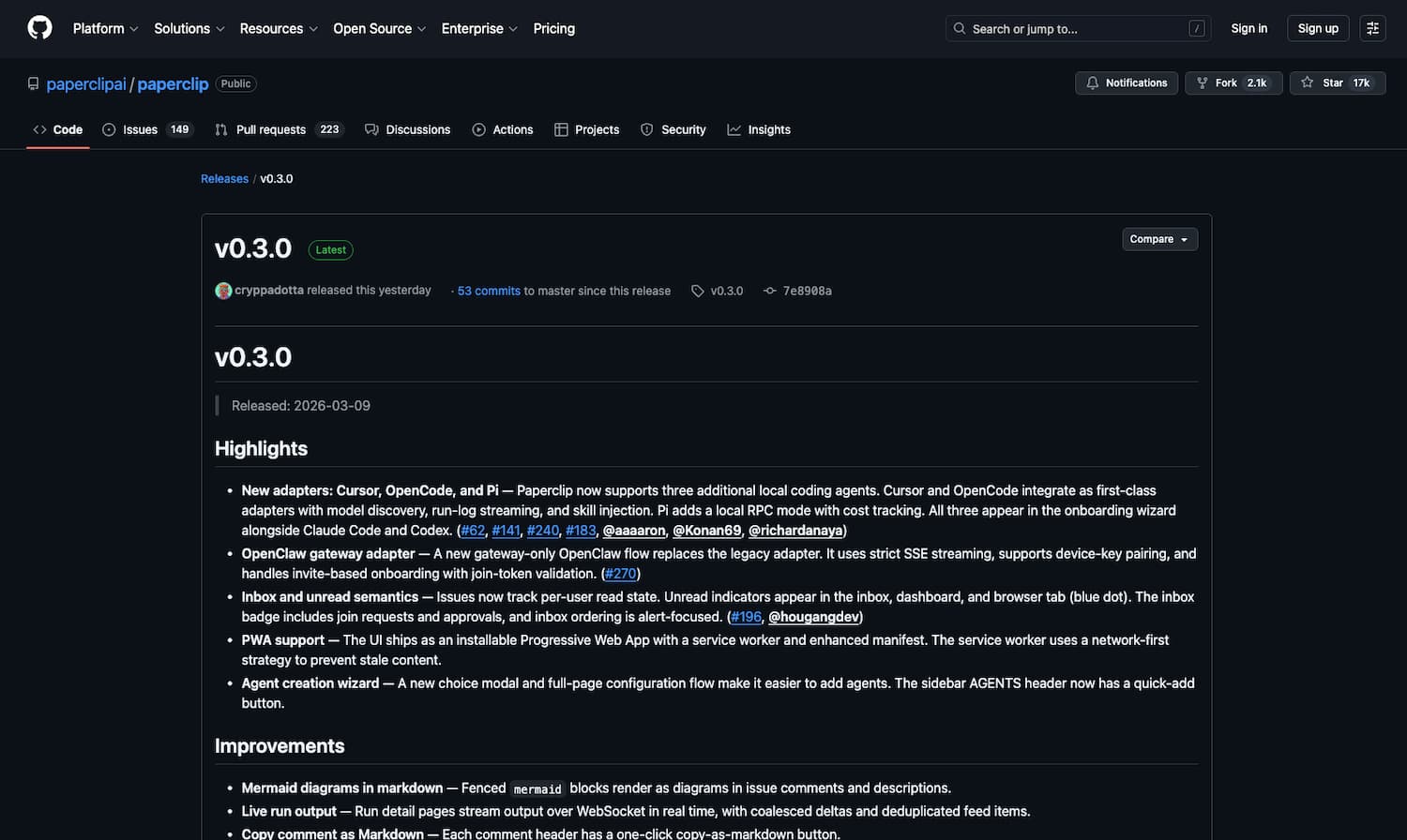
At a technical level, Paperclip provides an orchestration layer that connects AI models, scripts, and automation tools.
The architecture typically includes:
- Backend: Node.js
- Interface: React dashboard
- Core system: an agent orchestration engine
The dashboard allows users to monitor tasks, track token usage, manage dependencies between agents, and observe the progress of ongoing workflows.
A Typical Paperclip Workflow
Using Paperclip generally follows a structured process.
1. Define the Objective
The first step is to establish a high-level goal. For example, you might ask the system to build an MVP for a SaaS product or launch a content strategy for a new website.
2. Deploy the Agents
Next, you assign specialized agents to handle different responsibilities. These agents might rely on various technologies:
- Large language models such as Claude
- Coding agents like Codex
- Python scripts
- External APIs or webhooks
3. Orchestration by Paperclip
Paperclip then coordinates the entire workflow. It manages task assignments, monitors progress, tracks token usage, and ensures agents collaborate efficiently.
This orchestration layer allows complex workflows to run automatically, with agents communicating and updating each other through structured task cycles.
What You Can Build With Paperclip
Because Paperclip focuses on orchestration rather than individual capabilities, it can power a wide range of automation scenarios.
Some common use cases include:
- Launching a startup MVP using multiple AI agents
- Coordinating marketing, support, and content agents
- Automating product development workflows
- Managing complex AI pipelines
In essence, Paperclip transforms individual AI tools into a structured production system.
Example: An AI Content Production Team
A practical example illustrates how this works.
Imagine creating an AI-powered content operation with the following agents:
- Agent 1: SEO keyword research
- Agent 2: article writing
- Agent 3: CMS publishing automation
- Agent 4: analytics and performance monitoring
Paperclip oversees the entire system by managing:
- Objectives
- Dependencies between agents
- Token budgets and costs
- Monitoring and task progress
Instead of manually coordinating these tasks, the platform handles the orchestration automatically.
Why Projects Like Paperclip Matter
Paperclip reflects a larger shift in the AI ecosystem: the move from individual AI tools to autonomous AI organizations.
New systems are emerging that allow AI agents to collaborate, plan, and execute multi-step projects with minimal human supervision.
Tools like AutoGPT, Devin, and OpenDevin have already demonstrated this concept. Paperclip focuses on the orchestration layer needed to make these systems practical.
Instead of relying on a single AI model, the future may involve entire teams of specialized agents working together.
The Beginning of AI-Powered Companies
As frameworks like Paperclip mature, they could dramatically change how digital products are built and managed.
In the near future, startups may operate with small human teams supervising large networks of AI agents that handle research, coding, marketing, and operations.
Paperclip offers a glimpse of that future — a world where AI doesn’t just assist humans, but works as a coordinated workforce capable of executing complex strategies.
And if this vision becomes mainstream, tools that manage AI agents may become just as essential as project management software is today.