
Modern finance teams now automate up to 90% of accounts payable and reconciliation tasks using specialized autonomous tools. Despite these efficiency gains, manual data entry and month-end lags continue to drain resources in traditional departments.
Selecting the best ai agents for automated accounting is essential to bridge the gap between probabilistic AI outputs and strict SOC 2 auditability requirements. This guide evaluates the top performing agents for ERP integration, real-time reporting, and fraud detection.
- Evaluation Framework for Best AI Agents for Automated Accounting
- Digits: Autonomous Bookkeeping and Real-Time Financial Dashboards
- DataSnipper: Intelligent Verification for Audit and Finance Teams
- Vic.ai: Deep Learning for Autonomous Accounts Payable
- MindBridge: Risk-Based Transaction Monitoring and Fraud Detection
- Datarails: AI-Enhanced Financial Planning and Analysis
- Botkeeper: Automated Data Entry and Bank Reconciliation
- Netgain: Purpose-Built Automation for Complex Accounting Cycles
Evaluation Framework for Best AI Agents for Automated Accounting
Agentic AI like Vic.ai and Digits automate 90% of AP and reconciliation. SOC 2 compliance and human-in-the-loop protocols bridge the probabilistic auditability gap in modern financial workflows. This auditability focus leads directly into functional tool categorization.
Functional Categorization and ERP Compatibility
Accounting functions like AP and bookkeeping suit autonomous agents. Legacy ERPs require deep API integration for success. Technical configuration takes four to eight weeks, focusing on ERP compatibility to ensure seamless synchronization and prevent operational friction.
Success relies on knowing what is agentic AI today. These tools transform static records into dynamic assets through autonomous action.
Security Standards and Auditability Requirements
Firms must maintain security standards via SOC 2 and ISO compliance. AI models are probabilistic, creating an auditability gap for sensitive data. Human-in-the-loop protocols remain essential to verify high-risk anomalies manually.
The auditability gap in AI outputs requires a shift from manual entry to rigorous probabilistic oversight and verification.
Digits: Autonomous Bookkeeping and Real-Time Financial Dashboards
While security provides the foundation, platforms like Digits transform that data into immediate, actionable intelligence through autonomous bookkeeping.
Digits uses agentic AI to categorize transactions instantly. It eliminates the month-end lag. Real-time dashboards provide live visibility.
The tool identifies missing receipts automatically. It learns from past behavior to suggest journal entries. This reduces manual bookkeeping by roughly 70%. Accuracy remains a top priority.
- Real-time transaction monitoring
- Automated expense categorization
- Instant financial reporting
Reduces manual bookkeeping by ~70% and integrates with 12,000+ financial institutions.
Effective financial management requires the right stack. Many professionals also evaluate the best AI chatbots for general analysis. Integration remains the primary focus.
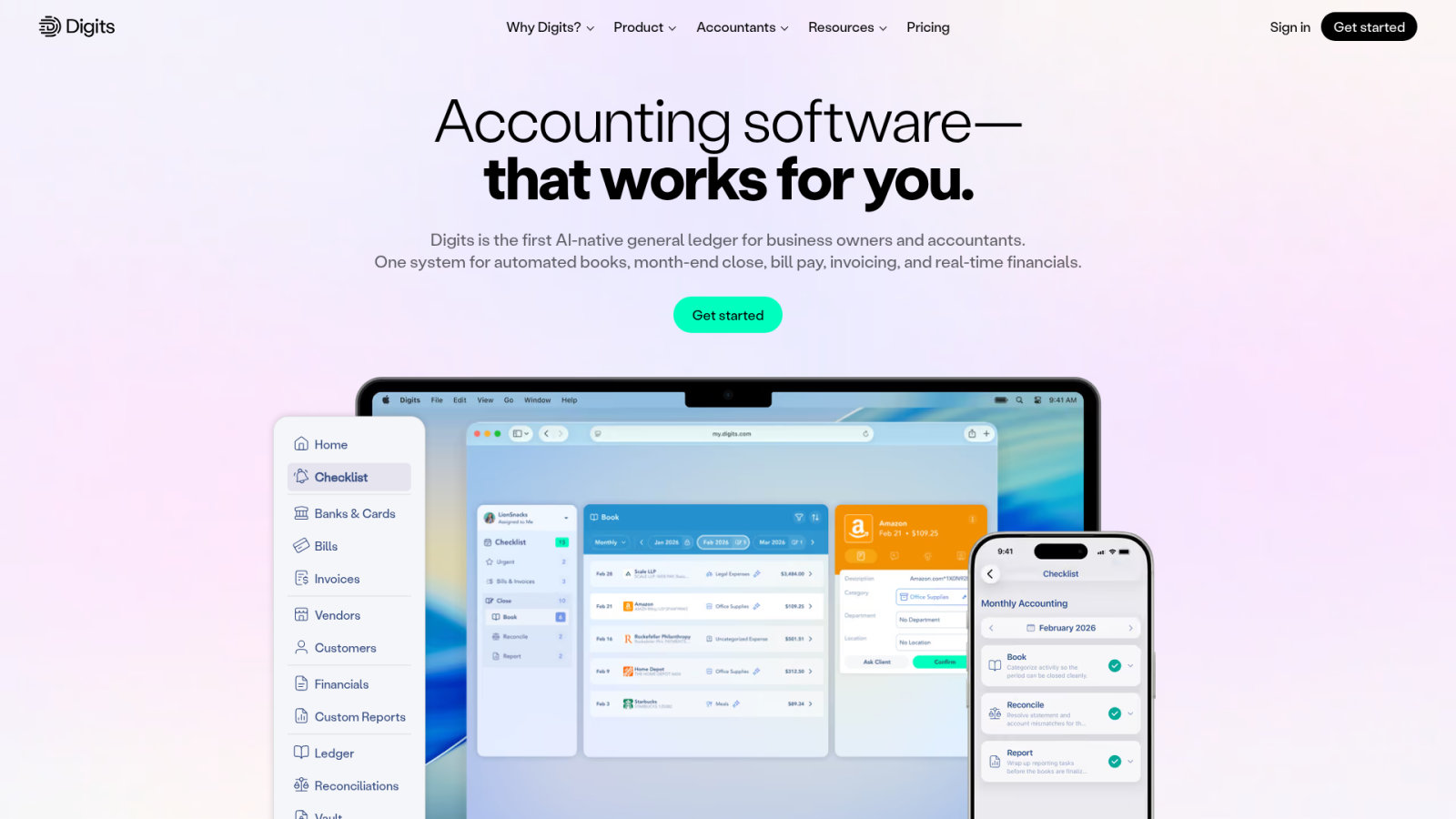
Pricing is transparent and scales with business size. It integrates directly with QuickBooks and Xero for seamless data flow.
DataSnipper: Intelligent Verification for Audit and Finance Teams
Moving from general bookkeeping to the specific rigors of auditing, DataSnipper automates the most tedious verification tasks.
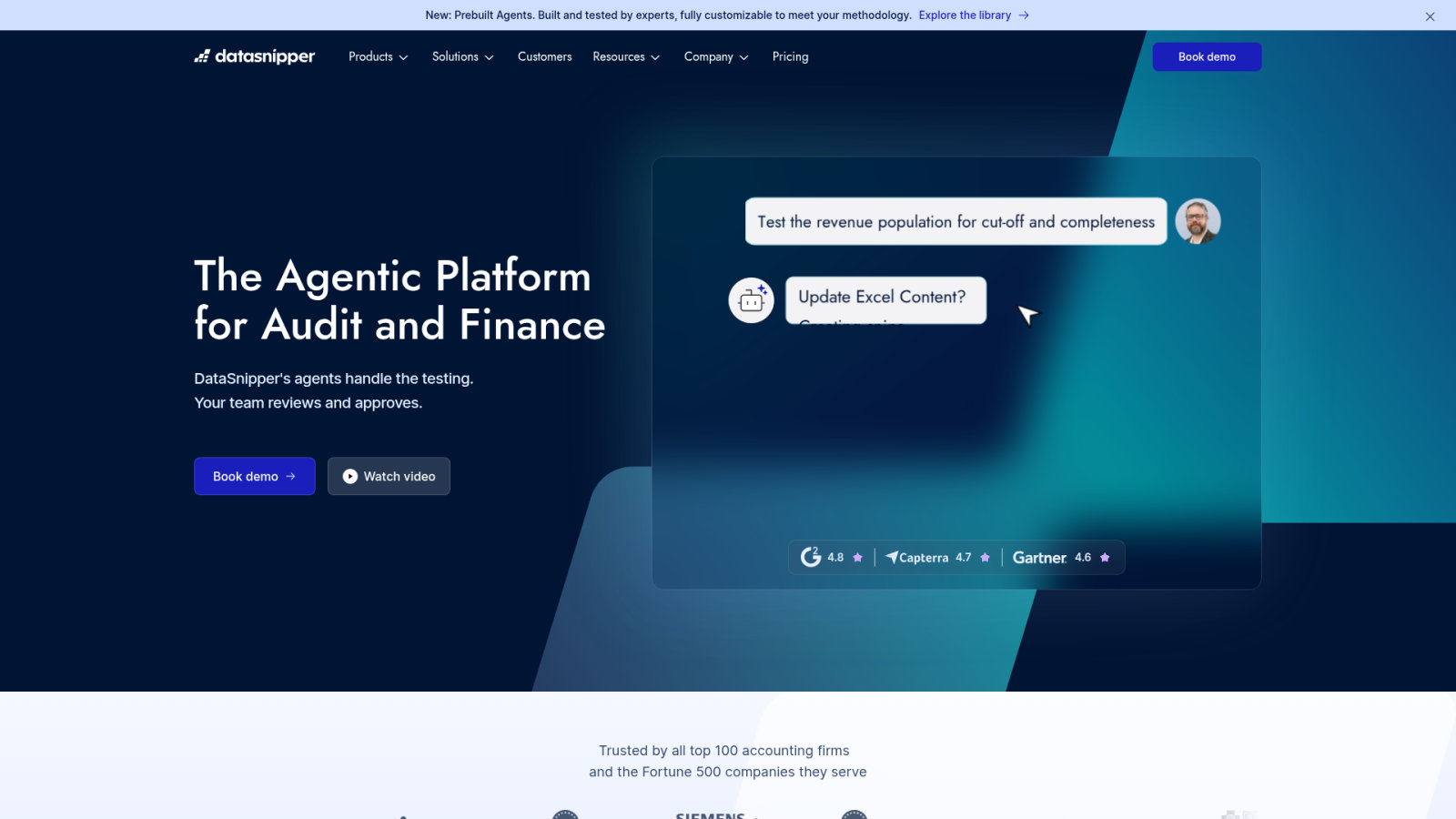
DataSnipper functions within Excel. It uses OCR to reconcile documents with bank statements. Audit teams save hundreds of hours annually.
The “snip” feature links source documents to cells. This creates a clear audit trail. It handles invoices, receipts, and contracts effortlessly. Verification becomes nearly instantaneous.
Precise extraction ensures control over data remains absolute. This integration simplifies complex cross-referencing within spreadsheets. Users maintain full oversight throughout the process.
DataSnipper doesn’t replace the auditor; it removes the friction of manual cross-referencing, allowing for higher-level strategic analysis.
It is widely adopted by the Big Four firms. The platform excels at identifying discrepancies in large datasets quickly.
Vic.ai: Deep Learning for Autonomous Accounts Payable
Beyond simple verification, Vic.ai introduces deep learning to fully automate the accounts payable cycle.
Vic.ai focuses on autonomous AP. It processes invoices without human intervention. The system learns from every single transaction processed.
It handles coding, approvals, and payments. The AI detects duplicates and fraudulent entries. It integrates with SAP, Oracle, and Microsoft Dynamics. Efficiency gains are often immediate.
| Feature | Traditional AP | Vic.ai Autonomous AP |
|---|---|---|
| Data Entry | Manual | AI-driven |
| Approval Workflow | Sequential | Parallel |
| Fraud Detection | Rule-based | Deep Learning |
| Processing Time | Days | Minutes |
Selecting the best AI agents for automated accounting and finance tasks requires prioritizing automatisation. This tech scales without adding headcount. It eliminates legacy OCR templates.
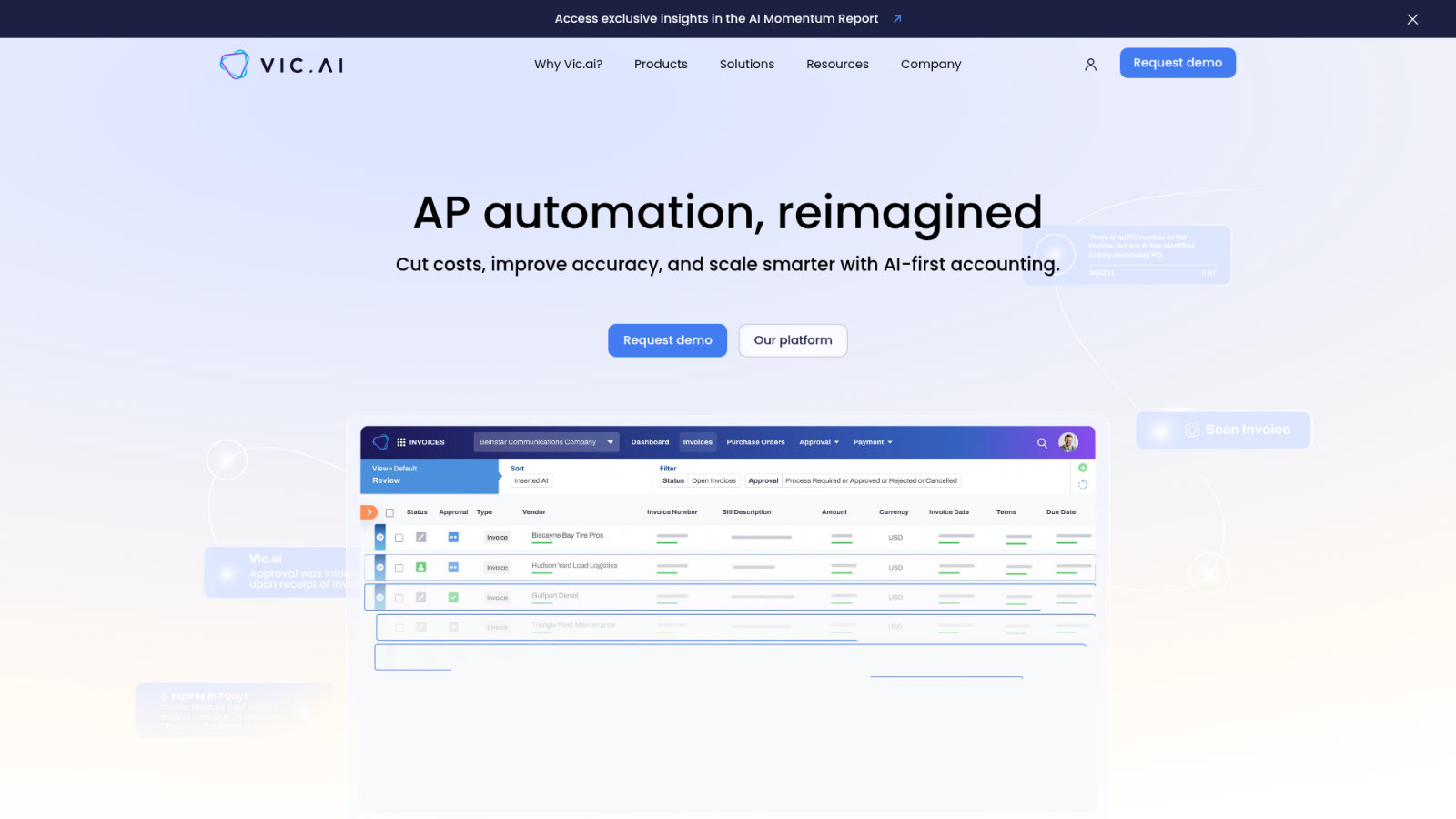
The platform reduces processing costs by 80%. It provides a robust solution for enterprise-level finance departments.
MindBridge: Risk-Based Transaction Monitoring and Fraud Detection
While Vic.ai manages payments, MindBridge scrutinizes every transaction to identify hidden financial risks.
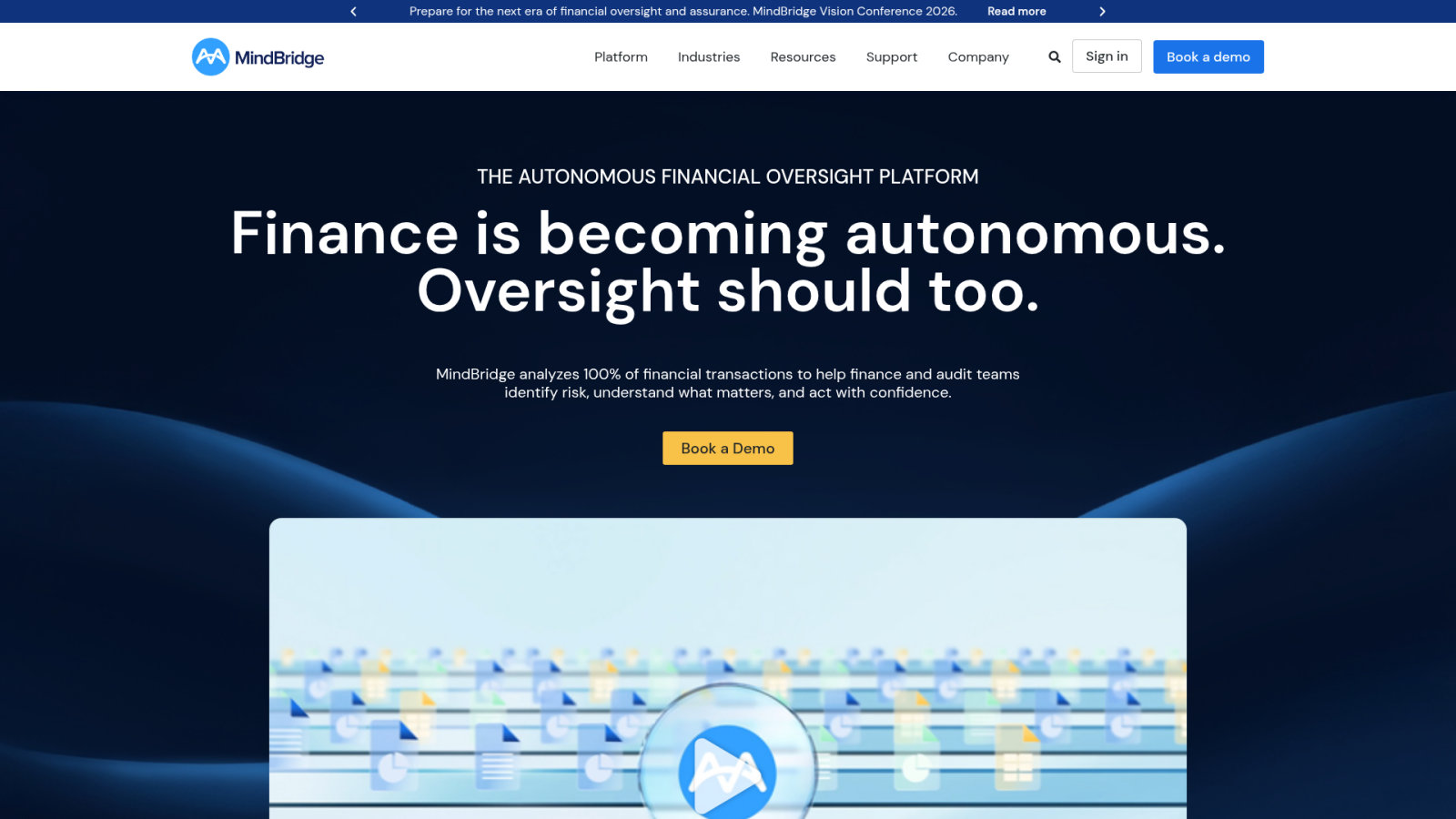
MindBridge uses risk-based monitoring. It analyzes 100% of transactions for anomalies. Traditional sampling methods are now obsolete.
The tool assigns a risk score to every entry. It identifies potential fraud or errors. This enhances professional skepticism during audits. The AI explains why a transaction is flagged.
- Ensemble AI algorithms
- Comprehensive risk scoring
- Anomaly detection at scale
Teams improve their détection de risques through continuous oversight. The platform provides independent validation. It ensures accountability in automated workflows.
It supports compliance with international auditing standards. Finance teams gain deeper insights into their general ledger health.
Datarails: AI-Enhanced Financial Planning and Analysis
Risk detection is vital, but Datarails shifts the focus toward future growth through intelligent financial planning.
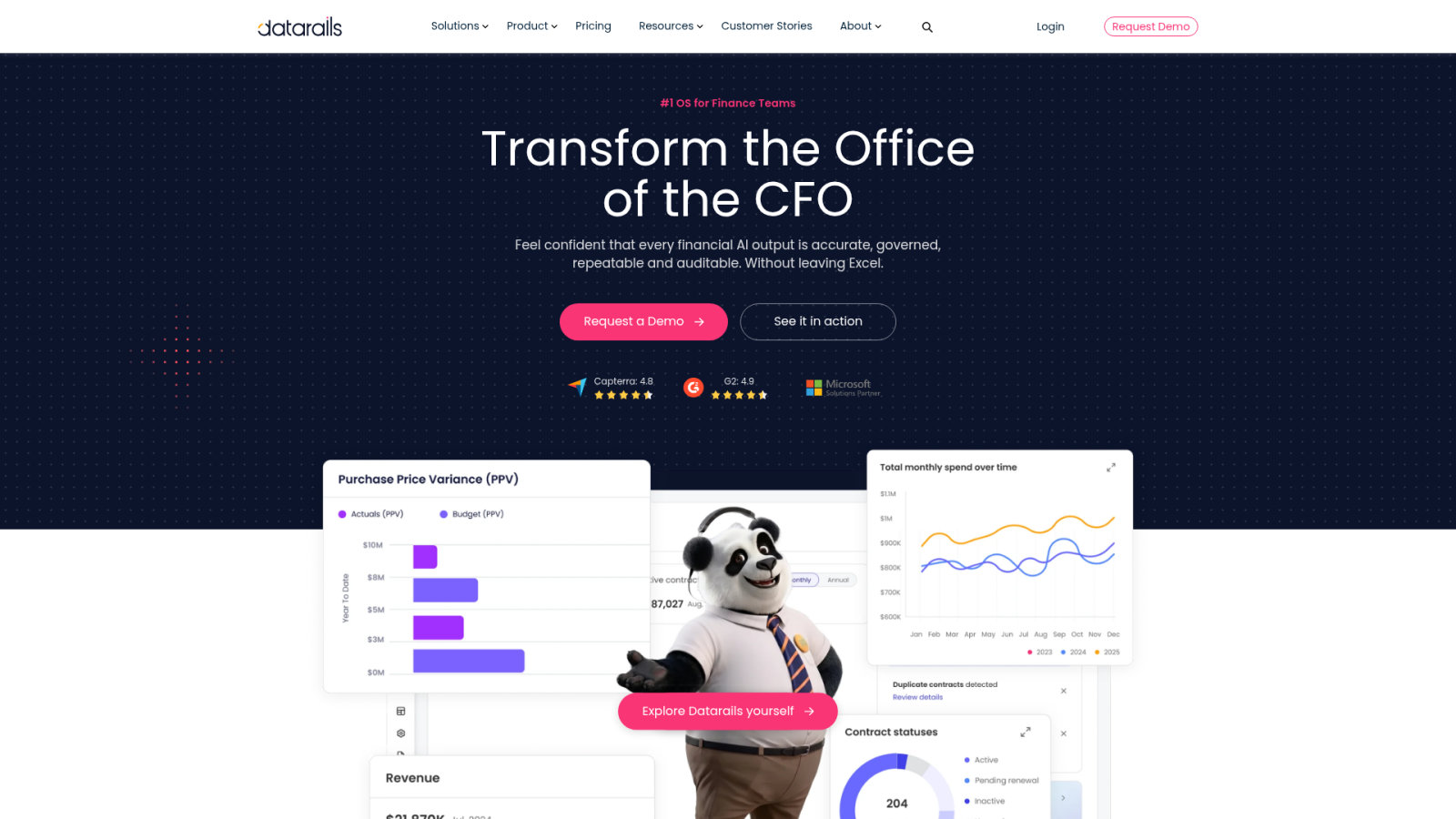
Datarails targets the FP&A function. It consolidates data from multiple sources. Excel remains the primary user interface.
The AI automates budget tracking and forecasting. It generates visual reports in seconds. CFOs get a clear view of performance. Version control issues are completely eliminated.
Finance leaders leverage specific cas d’usage to maximize efficiency. These tools handle complex best ai agents for automated accounting and finance tasks. Accuracy improves across all reporting cycles.
“Datarails empowers finance teams to move from data consolidation to strategic storytelling by automating the underlying data plumbing.”
It bridges the gap between spreadsheets and enterprise software. The platform is ideal for mid-market finance teams.
Botkeeper: Automated Data Entry and Bank Reconciliation
For smaller firms, Botkeeper offers a scalable way to handle high-volume data entry and bank reconciliations.
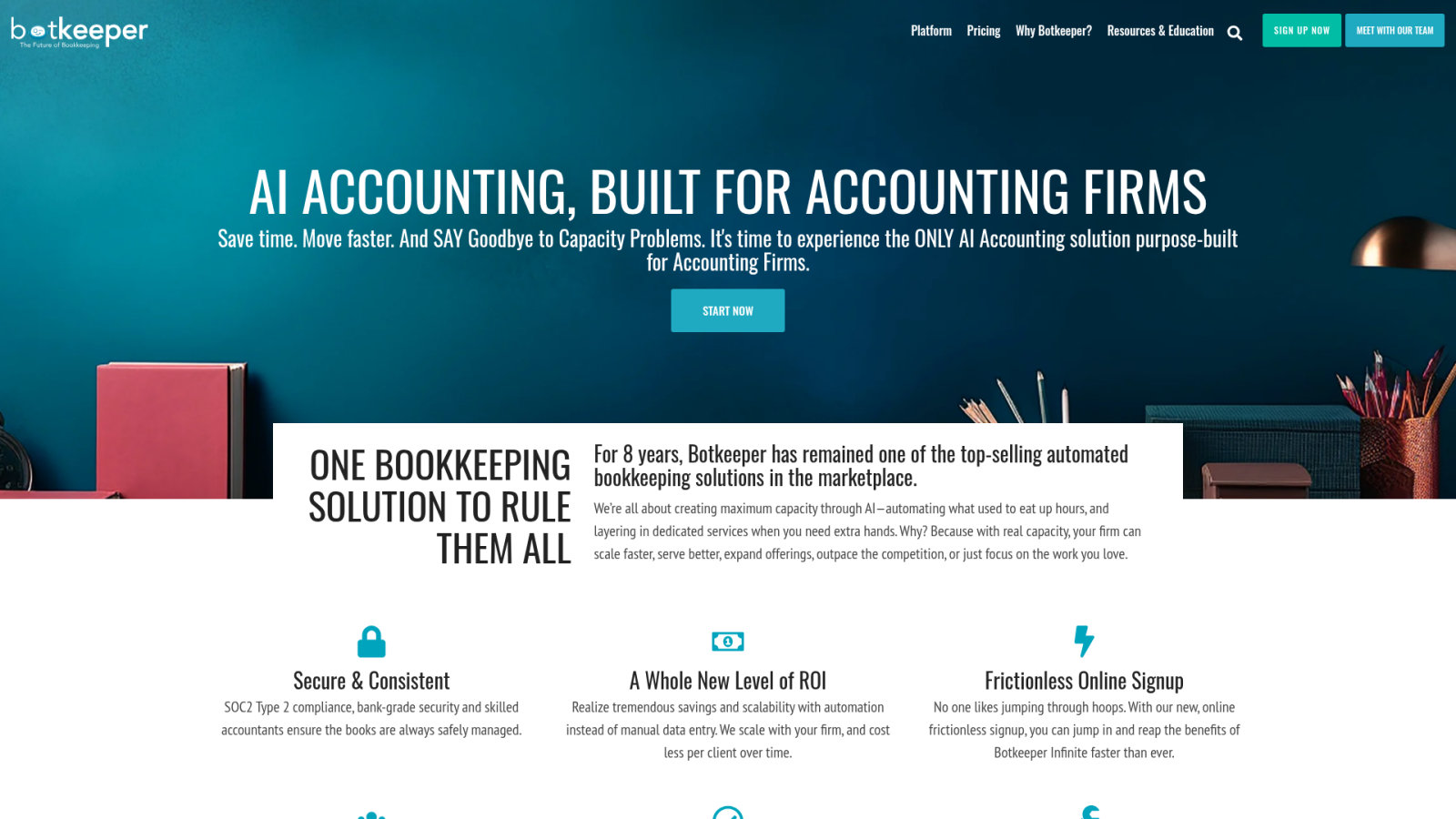
Botkeeper combines AI with human oversight. It automates bank reconciliation tasks. Accounting firms use it to scale their practices.
The platform handles W-9 collection and document storage. It categorizes expenses with high precision. The software integrates with QBO and Sage. It functions as an automated back office.
- Automated ledger entry
- Bank statement fetching
- Human-in-the-loop quality control
Despite these advancements, current research on les limites de l’IA highlights that human verification remains necessary. Pure automation often lacks context. Professional oversight ensures total accuracy.
It reduces the cost of bookkeeping significantly. Firms can take on more clients without hiring more staff.
Netgain: Purpose-Built Automation for Complex Accounting Cycles
Finally, Netgain addresses the most complex accounting cycles that standard tools often overlook.
Netgain specializes in complex accounting cycles. This includes lease accounting and fixed assets. It ensures compliance with ASC 842.
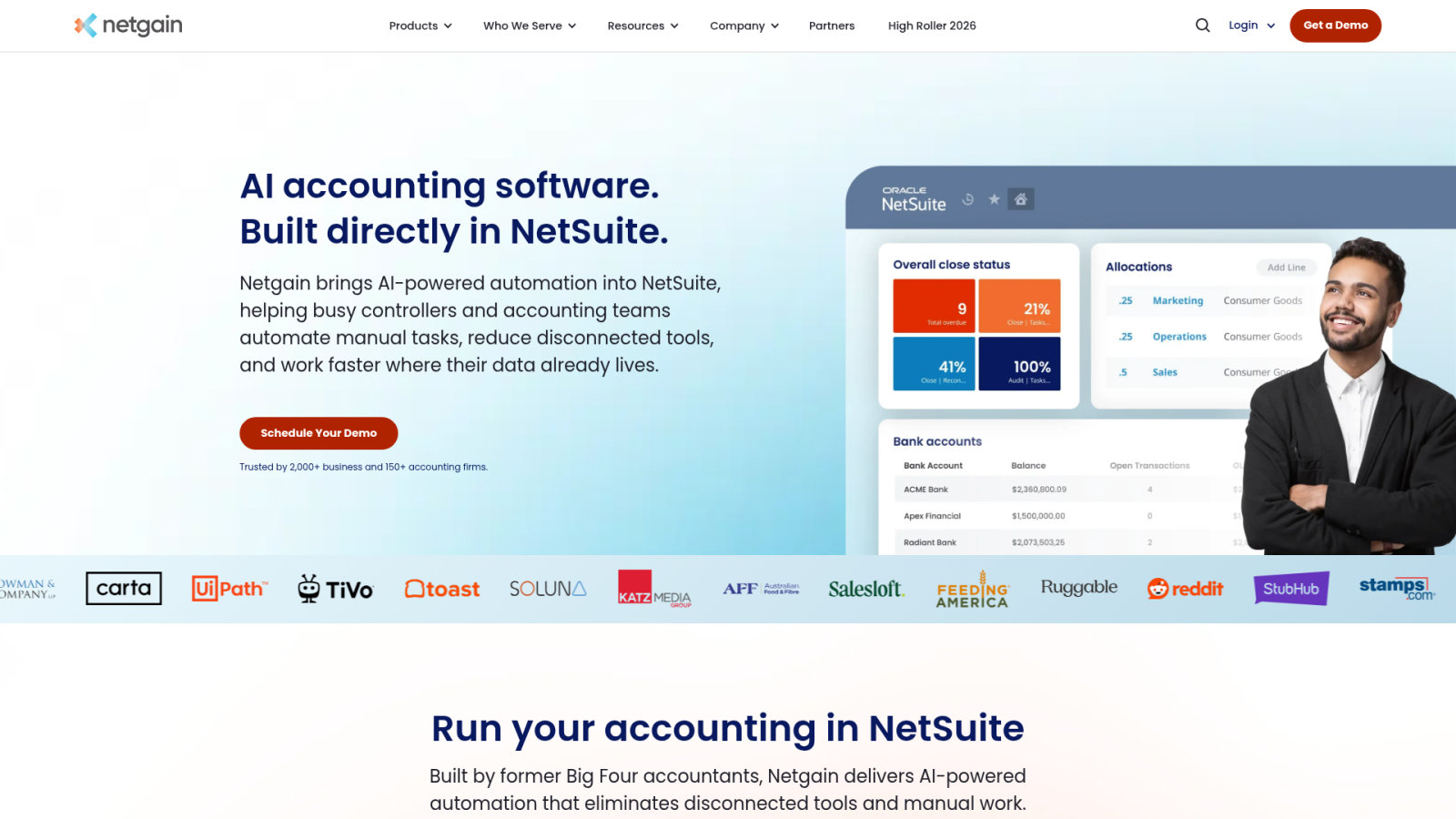
The suite automates the close process. It handles intercompany eliminations and loan management. The accuracy level is designed for public companies. It simplifies the most difficult journal entries.
Efficiency relies on the coordination d’agents. This ensures seamless data flow across modules. Specialized AI tools manage high-volume transaction processing.
The tool provides a single source of truth. It reduces the risk of material misstatements. Audit preparation becomes much smoother for everyone involved.
Netgain is built natively for NetSuite users. It offers specialized modules for specific financial reporting needs.
Agentic AI platforms like Vic.ai and Digits now automate up to 90% of AP and bookkeeping, ensuring real-time visibility and SOC 2 security. Deploying the best ai agents for automated accounting eliminates manual entry and closes the auditability gap through probabilistic oversight. Modernize your financial operations today to secure a scalable, high-precision future.
FAQ
What are the primary functions of AI agents in modern accounting and finance?
AI agents utilize machine learning to streamline repetitive financial workflows. They manage data entry, bank reconciliation, financial reporting, and fraud detection with high precision.
These tools provide real-time visibility into financial health. By automating manual tasks, they allow finance professionals to focus on strategic analysis and high-value decision-making.
How does Digits facilitate autonomous bookkeeping for businesses?
Digits operates as an AI-native platform that automates monthly closes, bill payments, and invoicing. It features real-time integration with over 12,000 financial institutions for immediate data synchronization.
The system uses automated accrual workflows and transaction categorization. Users interact with financial data through a chatbot interface to generate interactive, live reports.
What is DataSnipper and how does it improve audit verification?
DataSnipper is an intelligent verification tool that integrates directly with Excel. It uses OCR technology to extract data from source documents like invoices and bank statements for immediate reconciliation.
The platform creates a transparent audit trail by linking extracted values to their original source files. This process significantly reduces manual cross-referencing and improves total audit accuracy.
How does Vic.ai automate the accounts payable cycle?
Vic.ai provides an autonomous AP suite that handles invoice processing, PO matching, and approvals without human intervention. It integrates deep learning to achieve up to 99% invoice accuracy.
The platform reduces processing costs by roughly 80% and accelerates timelines. It features specialized modules like VicPay for optimized vendor payments and VicAnalytics for process monitoring.
In what ways does MindBridge enhance financial risk detection?
MindBridge employs risk-based monitoring to analyze 100% of transactions within a general ledger. This replaces traditional sampling methods with comprehensive anomaly detection.
The tool assigns risk scores to every entry to identify potential fraud or errors. It provides explanations for flagged transactions, strengthening professional skepticism during the audit process.
How does Datarails assist with financial planning and analysis (FP&A)?
Datarails consolidates data from multiple sources while maintaining Excel as the primary user interface. It automates budget tracking, forecasting, and the generation of real-time visual reports.
The platform eliminates version control issues and provides AI chat capabilities for rapid financial Q&A. It is specifically designed to bridge the gap between spreadsheets and enterprise ERP systems.
What role does Botkeeper play in scaling accounting practices?
Botkeeper combines AI with human oversight to automate high-volume bookkeeping and bank reconciliation. It fetches statements and categorizes expenses with high precision to reduce back-office overhead.
The software integrates with QBO and Sage to manage ledger entries and document storage. This allows accounting firms to increase client capacity without additional staffing requirements.
How does Netgain handle complex accounting cycles like leases?
Netgain specializes in complex cycles such as fixed assets and lease accounting under ASC 842 standards. It automates intercompany eliminations and the month-end close process for public companies.
Built natively for NetSuite, the tool provides a single source of truth for difficult journal entries. It reduces the risk of material misstatements and simplifies audit preparation for finance teams.