

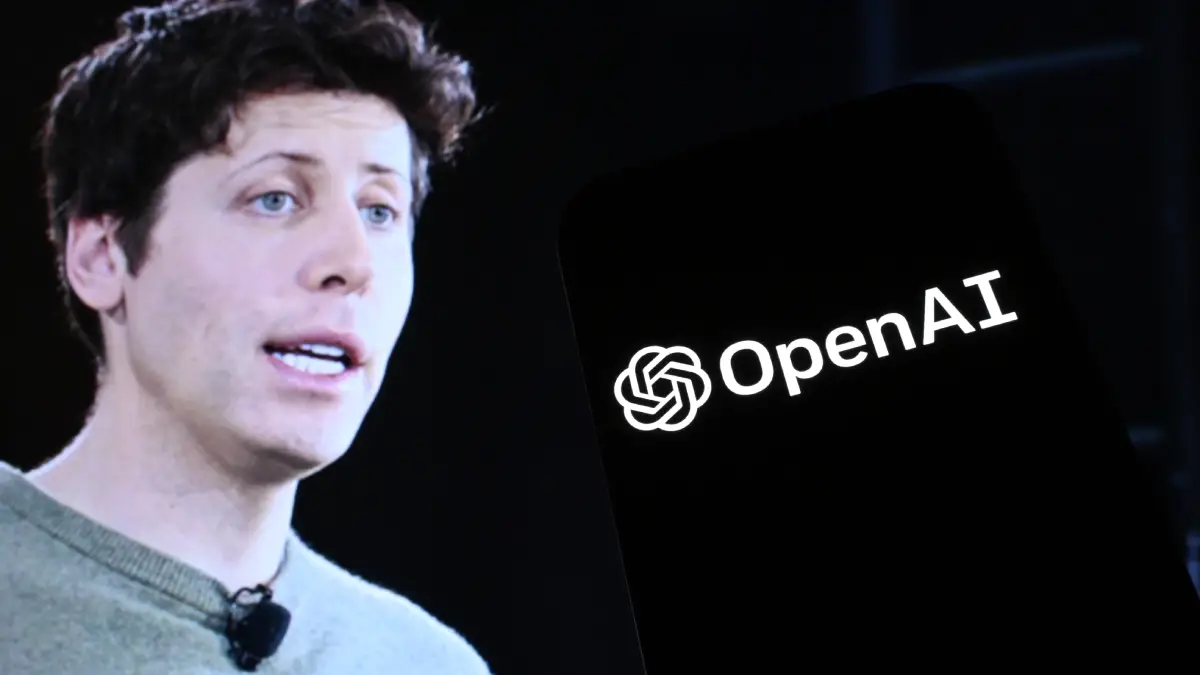
The gloves are officially off between the two giants of conversational AI. Just weeks after Open AI confirmed that advertising would soon appear in the free version of Chat GPT, its main rival Anthropic fired back—loudly.
On Wednesday night, Anthropic unveiled a series of ads aired during the Superbowl and on YouTube, openly mocking the idea of ads inside AI assistants. The punchline was blunt: “Ads are coming to AI. But not to Claude.”
Absurd Ads, Clear Target
youtube.com/watch?v=FBSam25u8O4&embeds_referring_euri=https%3A%2F%2Fwww.lesnumeriques.com%2F
The commercials deliberately leaned into absurdity. In one scene, a man asking an AI how to sculpt his abs is abruptly interrupted by a product pitch for orthopedic insoles. In another, a heartfelt question about communicating with one’s mother suddenly triggers an ad for a dating site aimed at “sensitive bears and roaring cougars.”
The message was unmistakable—and clearly aimed at OpenAI.
Sam Altman Fires Back
First, the good part of the Anthropic ads: they are funny, and I laughed.
But I wonder why Anthropic would go for something so clearly dishonest. Our most important principle for ads says that we won’t do exactly this; we would obviously never run ads in the way Anthropic…
— Sam Altman (@sama) February 4, 2026
Reaction from Sam Altman, CEO of OpenAI, was swift and unusually heated. Posting on X, Altman acknowledged that Anthropic’s ads were “funny,” before immediately calling them “clearly dishonest.”
“We would obviously never show ads the way Anthropic portrays them,” Altman wrote. “We’re not stupid, and we know our users would reject that.”
But Altman didn’t stop there. He escalated the clash by accusing Anthropic of ideological overreach, suggesting the company wants to “control what people do with AI.” He pointed to Anthropic’s restrictions on certain companies—including OpenAI itself—when it comes to using its development tools.
“Anthropic serves an expensive product to the wealthy,” Altman added. “An authoritarian company won’t get us there alone… That’s a dark path.”
Two Visions of AI Monetization
At the core of the dispute lies a fundamental disagreement about how conversational AI should be funded. Anthropic has taken a hard line against advertising, relying instead on paid subscriptions. OpenAI, by contrast, now embraces ads as the only way to keep AI broadly accessible for free.
Altman defended the strategy with scale.
According to him, more people in Texas alone use ChatGPT for free than the total number of people using Claude across the entire United States.
The numbers underscore the gap. In October 2025, ChatGPT claimed 800 million weekly active users worldwide. Claude, by comparison, reportedly had just 18.9 million monthly active users.
Altman also highlighted momentum beyond ChatGPT, noting that OpenAI’s Codex application reached 500,000 downloads within days of its launch earlier this week.
A Credibility Test Ahead
Beyond the public sparring, the episode exposes two irreconcilable philosophies. Anthropic positions itself as the ad-free, premium alternative. OpenAI frames advertising as the price of mass access.
That stance comes with risk on both sides. OpenAI must prove ads won’t degrade the user experience. Anthropic, meanwhile, will be expected to hold its line—because if ads ever appear in Claude, its credibility with paying subscribers could evaporate overnight.
For now, the feud has turned a technical debate into a cultural one—and made the future of AI monetization a very public spectacle.
