

The chatbot wars have officially entered their funniest phase: the one where “better reasoning” stops being the headline, and business model becomes the real battleground.
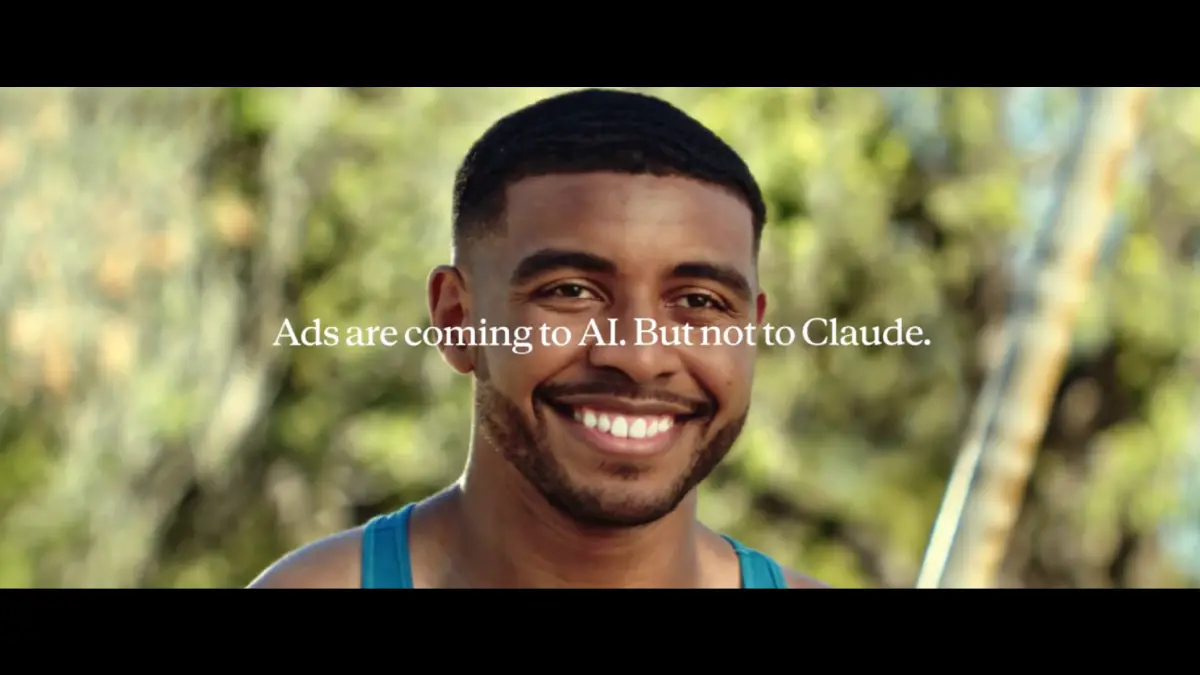
Anthropic just publicly promised that Claude will stay ad-free — and it didn’t whisper the message. It bought a Super Bowl spot to make the point, with a cheeky campaign that basically says: “Imagine getting a helpful answer… and then a random ad in the middle.”
A Super Bowl ad that mocks “AI with ad breaks”
Anthropic’s tagline is about as subtle as a Burger King drive-thru billboard:
“Ads are coming to AI. But not to Claude.”
The ads show human-like assistants interrupting serious conversations with absurd product pitches — a direct parody of what happens when a “trusted assistant” starts acting like a monetized feed.
Anthropic released multiple spots, including a 30-second Super Bowl version and a longer pregame cut.
“Claude should act unambiguously in the user’s interest”
In a blog post that reads almost like a manifesto, Anthropic argues that ads create a conflict of incentives.
If an AI is helping you think, work, or make decisions in sensitive areas (health, stress, sleep, productivity), the assistant becomes harder to trust if its revenue depends on “what monetizes.”
So Anthropic draws a hard line: no sponsored links next to chats, no advertiser-influenced answers, no surprise product placements.
Anthropic does leave the tiniest door open: if it ever changes course, it says it will be transparent about why. But for now, the positioning is crystal clear: Claude = “a space to think,” not a space to be targeted.
OpenAI, meanwhile, is testing ads in ChatGPT
The contrast is sharp because OpenAI has already confirmed it plans to begin testing ads in ChatGPT for logged-in adults in the U.S. on the Free and Go tiers.
OpenAI says ads will appear at the bottom of answers, be clearly labeled and separated from “organic” responses, and won’t influence what ChatGPT says. Higher tiers (Plus/Pro/Business/Enterprise) are expected to remain ad-free.
The real fight isn’t “who’s smartest” — it’s “who pays the assistant”
Under the jokes, this is a serious industry fork: one vision treats the assistant as a product (subscriptions, enterprise licensing),
where the user is the customer and ads feel like contamination.
The other treats the assistant as a platform (mass reach, freemium growth, advertising),
where the free user becomes the inventory.
The tension is obvious: chatbots are more intimate than search results or social feeds. People use them for private work, personal stress, sensitive health questions, and messy decisions. Even if ads are “separate,” the presence of ads changes the vibe — and Anthropic is betting that vibe is the moat.
In other words: the new AI rivalry isn’t just Claude vs ChatGPT. It’s conversation as a trusted space vs conversation as an ad surface.
And yes, it absolutely feels like fast-food marketing — just with fewer fries and more existential dread.
