

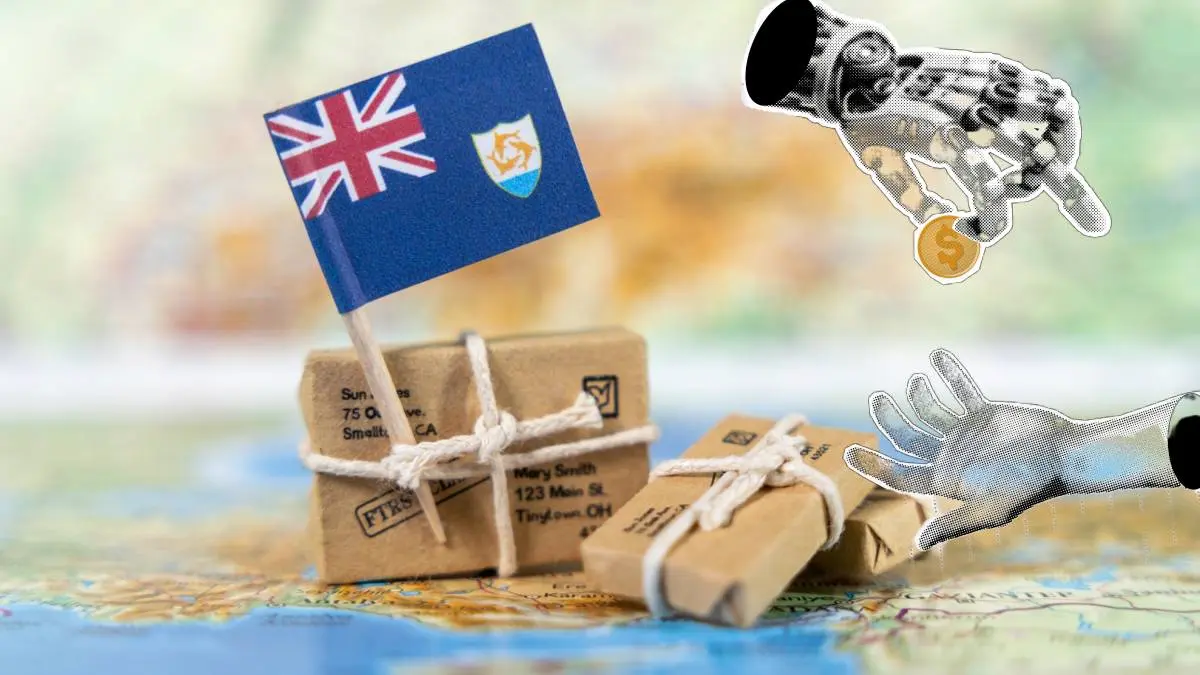
Artificial intelligence is often portrayed as a technology that rewards those who build models, deploy infrastructure, or master complex systems. In one corner of the Caribbean, however, AI created wealth without any of that — almost by accident.
The island of Anguilla, a British overseas territory with roughly 18,000 residents, now collects tens of millions of dollars each year from the global AI boom. Not because it runs data centers. Not because it trains engineers. But because it owns a two-letter domain name.
A windfall hidden in plain sight
Long before artificial intelligence became a household term, Anguilla was assigned the .ai country-code top-level domain — a technical footnote of the early internet.
For years, it was barely used and generated modest revenue at best.
That changed almost overnight after the explosion of generative AI tools. As startups, research labs, and companies rushed to brand themselves around artificial intelligence, .ai domains became one of the most desirable digital assets on the web.
Each registration costs roughly €140 per year. Anguilla takes a cut from every one of them.
The result: more than $30 million in domain-related revenue in 2023 alone, with projections climbing toward €60 million annually.
No infrastructure, no engineers, no AI strategy
What makes this story remarkable is not the amount of money involved — but how little it depends on technology.
Anguilla does not host AI companies. It does not operate cloud infrastructure. It does not even manage the technical side of domain registration itself.
The island has outsourced that responsibility to an external provider, with servers hosted far from the Caribbean.
In other words, this is not an example of local innovation or digital transformation.
It is a pure naming arbitrage — a coincidence of geography and timing, amplified by global hype.
Why this model works — and why it doesn’t scale ?
The success of the .ai domain is often framed as proof that AI wealth can reach unexpected places. That interpretation misses the point.
This model works precisely because it cannot be replicated. Only one territory controls this domain. No amount of policy reform, infrastructure spending, or workforce training will allow another country to copy it.
It also depends entirely on a branding cycle. If the AI narrative shifts — or if companies move away from domain-based signaling — the revenue could decline just as quickly as it appeared.
A lucky break, not an AI blueprint
For Anguilla, the money is real and meaningful. The island’s annual public budget hovers around $100 million, and domain revenue now represents more than half of that.
Funds are being used to rebuild infrastructure damaged by Hurricane Irma, expand airport facilities, and support social programs.
But it would be a mistake to treat this as a lesson in how AI creates prosperity. This is not a roadmap. It is an anomaly.
The broader AI economy still rewards scale, energy access, supply chains, and execution speed — not naming rights.
Anguilla didn’t “win” AI. It happened to be standing under the right letter combination when the money started falling.
The most interesting part of this story is not that a small island got rich. It’s that AI can redirect value in ways that have nothing to do with intelligence, productivity, or automation.
As the AI boom matures, more of these second-order effects will surface. Some will look like miracles. Most won’t last.
