

AI fashion try-on tools are cheaper than before, but adoption is not only a cost problem. Retailers and users still need the results to feel accurate, trustworthy, and useful enough to change buying behavior.
- Lower generation costs make virtual try-on easier to deploy at scale.
- The difficult part is fit, body representation, garment realism, and user trust.
- Retailers will care most about conversion rate, return reduction, and whether the feature improves the shopping journey.
For more context, see the Tools section.
The hardware barrier just collapsed — and brands are still hiding behind it
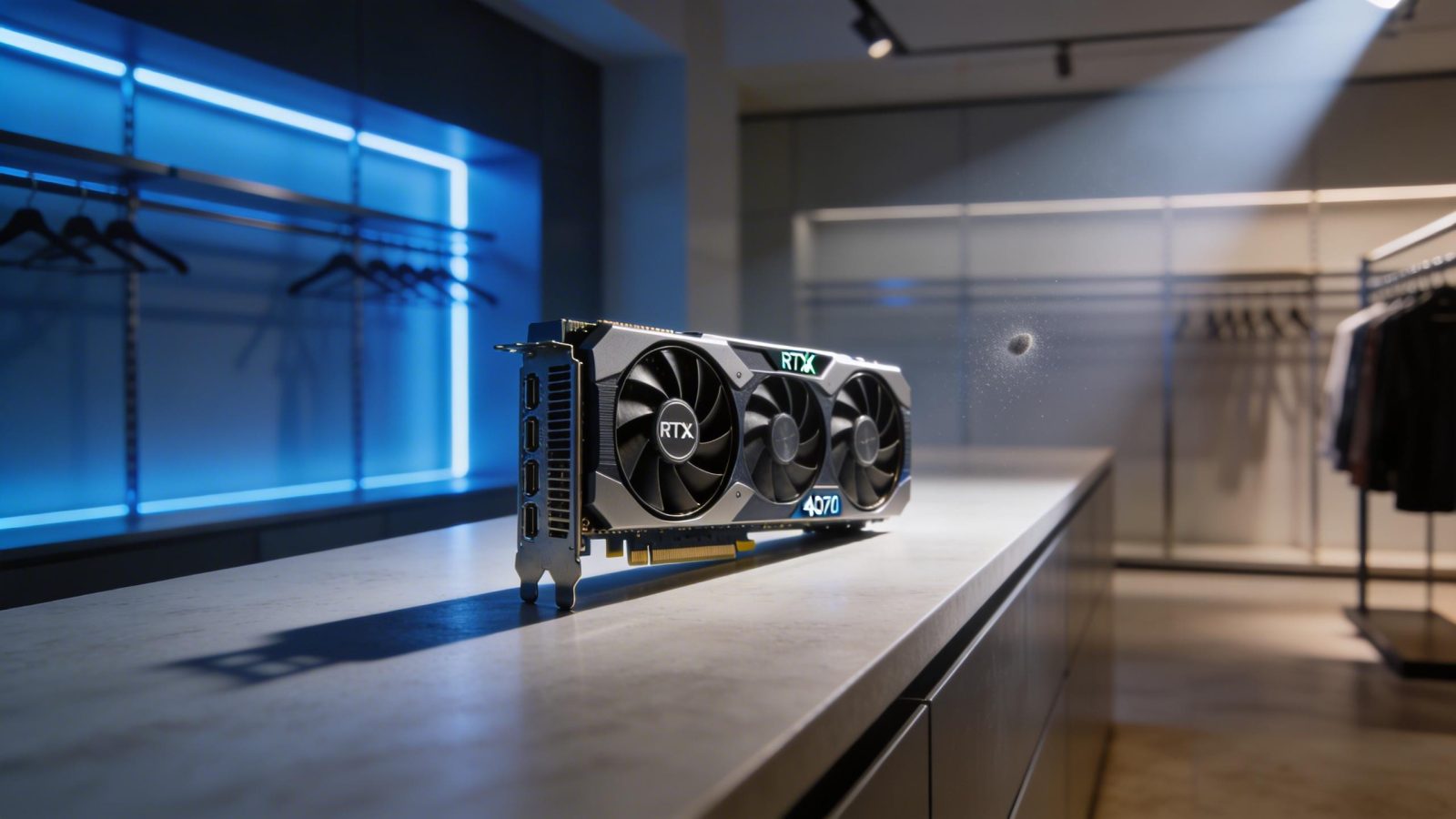
FLUX.2 Klein runs on hardware most developers already own. The 4B model supports up to three custom LoRAs simultaneously and handles four reference images in a single pass. Black Forest Labs released five production-ready LoRAs in early 2026: 360 panoramic rendering, virtual try-on, zoom enhancement, object removal, and outpainting. The company shipped the 4B model under an Apache 2.0 license, meaning anyone can use it commercially without royalties.
The tech is here. The adoption isn’t.
And it’s not like the market is ignoring AI fashion tools entirely. Virtual try-on adoption among mid-to-large retailers reportedly hit 60% in 2026 — but those deployments are running proprietary solutions from vendors who charge per API call and lock brands into multi-year contracts. The open-source alternative costs nothing except compute time. It’s the same pattern playing out across AI tooling: open-source alternatives are matching proprietary quality at a fraction of the cost, yet enterprises keep paying for the comfort of a support contract.
The 4B model does something bigger models can’t: prove efficiency doesn’t mean compromise
This is the counterintuitive finding — smaller model, same quality. Detail preservation on fabric textures and garment drape matches the 9B version in side-by-side comparisons. The model card on Hugging Face shows it handles 1024px resolution with 28-step inference, using a guidance scale of 2.5 for optimal results. Compare that to legacy virtual try-on solutions that required cloud rendering farms and still delivered inconsistent outputs on complex patterns.
The efficiency gains mirror what DeepSeek proved with language models — smaller doesn’t mean worse anymore. Black Forest Labs trained the virtual try-on LoRA over 2,000 steps at a 5e-05 learning rate, optimizing for garment structure preservation rather than raw parameter count. That’s a different design philosophy than “throw more compute at the problem.”
But.
Reddit users report “greasy” outputs when running the base model without additional LoRAs. The split-file architecture requires manual wire reconnection in some workflows. And the 4B model trades minor detail loss for speed — if you need pore-level realism for luxury fashion, you’re stuck with the 9B version and its 19.6GB VRAM requirement. This isn’t plug-and-play yet.
36 GitHub stars tell you everything about real-world trust
The awesome-virtual-try-off repository — a curated list of open-source virtual try-on tools — has 36 stars and 2 forks as of March 2026. That’s not a community. That’s a handful of early adopters kicking the tires.
Zero production deployments found in research. No integration guides for Shopify or WooCommerce. No case studies showing conversion rate improvements or return rate reductions. Brands won’t deploy unproven tools in customer-facing workflows, even when the demos look perfect. One bad render — a shirt that clips through a model’s shoulder, or fabric that warps unnaturally — costs customer trust in ways that are hard to quantify but easy to feel.
The tech works in controlled environments. It doesn’t work in production pipelines where edge cases outnumber happy paths and every render needs to be defensible to a creative director who doesn’t care about VRAM efficiency.
FLUX.2 Klein solved the problem everyone said was unsolvable — running pro-grade virtual try-on on consumer hardware. The problem nobody’s solving: convincing a single brand to be the first to trust it.
