


Artificial intelligence continues to transform the modern workday, promising increased productivity and smarter operations.
While many professionals embrace these tools for their benefits, there is a flipside that can be mentally draining. With AI becoming a daily companion, not every interaction feels energizing—some leave individuals feeling depleted long before the end of the day.
Examining how different approaches to AI affect cognitive load reveals that new technologies are not always the solution to burnout they might seem.
The accelerated pace at which AI tools streamline workflows sometimes leaves workers struggling to keep up. In environments where code generation or content creation occurs in bursts, the term “brain fry” has become common, describing persistent mental fatigue.
How one chooses to interact with AI may determine whether technology serves as an energizer or becomes another source of exhaustion.
Unpacking the rise of AI-driven cognitive fatigue
Adopting AI promises transformation, but juggling multiple platforms or managing streams of machine-generated output introduces its own pressures. Rapid input, constant notifications, and quick decisions now dominate today’s tech-assisted office. While gains in speed are clear, the cost to mental stamina often remains hidden beneath the surface.
Recent research on workplace well-being highlights a gap between automation efficiency and sustained focus. When new platforms push tasks to be completed at blistering speed, there can be a sense of losing control.
The mind becomes overloaded with choices, instructions, or even waiting for results from digital agents. Over time, this leads to ongoing tiredness and reduced enthusiasm—a textbook case of cognitive fatigue.
Why some forms of AI use exhaust while others revitalize?
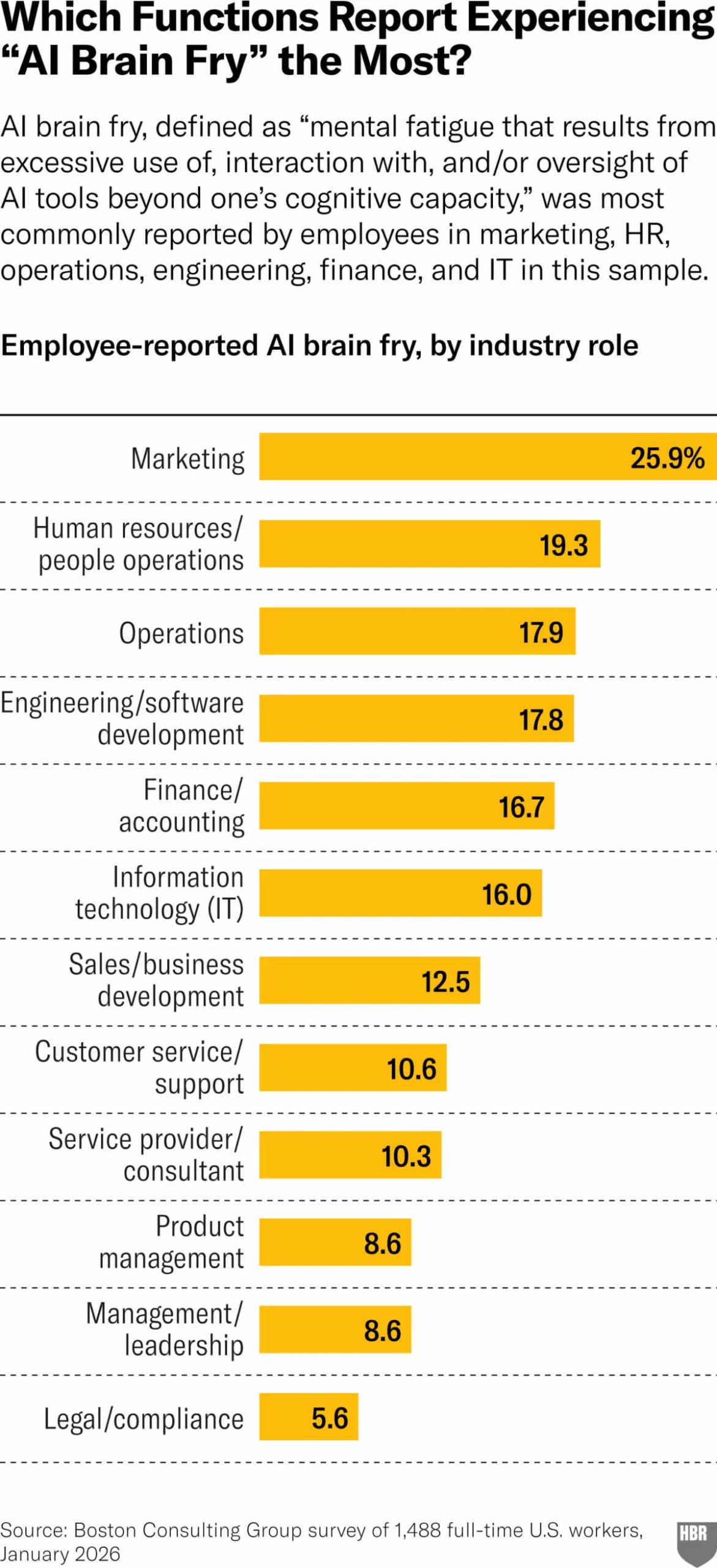
Not all AI engagement is created equal. Some patterns drain energy, while other approaches manage to lighten the load. A key difference lies in the intentionality behind each interaction and the level of trust placed in these digital partners.
Many have experienced days when a digital assistant seems to generate more questions than answers, leading to endless switching between tasks and applications. This constant task-shifting interrupts natural workflow and multiplies mental overhead. Conversely, structured use—setting clear objectives and letting AI handle repetitive chores—frees up time for creative reasoning.
AI as a stress amplifier
When deadlines approach and projects accumulate, relying on AI for rapid-fire solutions can backfire. Endless alerts and suggestions prompt quick responses but encourage only surface-level thinking. This crowds out opportunities for reflection or deeper problem-solving, nudging professionals closer to burnout.
The tension between machine speed and human processing capacity often forces the brain into overdrive. This amplifies stress and undermines both accuracy and job satisfaction, especially if expectations for immediate output remain high.
Harnessing AI constructively for wellness
On the other hand, AI can serve as a stress buffer under the right circumstances. When systems are developed to delegate routine decisions or automate repetitive data handling, space opens up for strategic planning and learning. Mindful deployment of AI shifts attention toward higher-value work, reducing mental clutter.
Teams that set boundaries—such as disabling nonessential notifications or batching requests to AI systems—report improved clarity and focus. Building regular pauses into digital workflows restores energy and supports sustainable productivity throughout the day.
Practical strategies to avoid “brain fry” from AI tools
Given the fine line between support and strain, several practical actions can make a significant difference. These strategies help transform AI from a potential energy drain into a valuable asset for every professional.
Adapting daily routines to suit individual needs, rather than forcing relentless interaction with machines, remains central to staying mentally sharp. A combination of digital proficiency and self-awareness paves the way for better outcomes for both organizations and their people.
- Batch similar tasks and assign to AI what it handles best, such as data organization or creating basic summaries.
- Customize settings to silence unnecessary prompts, minimizing interruptions during focused work periods.
- Schedule short “offline” breaks—no AI, no screens—to prevent mental overload from accumulating.
- Set end-of-day digital cutoffs, signaling the brain that it is time to recharge.
- Foster collaborative sessions that combine AI insights with group brainstorming, leveraging both human judgment and machine analysis.
Comparing traditional and AI-assisted workflows
Two prevalent work models reveal striking contrasts in terms of mental impact. Traditional methods involve stepwise processes and steady pacing, limiting sudden surges of information. Although slower, these allow the mind downtime between tasks.
By contrast, AI-led workflows often compress countless microdecisions into brief periods. While output rises quickly, the absence of transition zones strains attention spans. If left unmanaged, this shift can deplete cognitive reserves much sooner than expected.
Shaping future workplaces: proactive adaptation to AI-powered demands
The widespread adoption of artificial intelligence raises new questions about productivity and mental health. Recognizing early signs of fatigue—and designing work rhythms that balance technological assistance with restorative habits—could address many of the challenges posed by today’s fast-evolving digital landscape.
Professionals who take charge of their AI engagements by building intentional routines, setting limits, and reflecting on their energy levels will experience these advancements not as burdens, but as catalysts for creativity and well-being.
Source : https://hbr.org/2026/03/when-using-ai-leads-to-brain-fry
