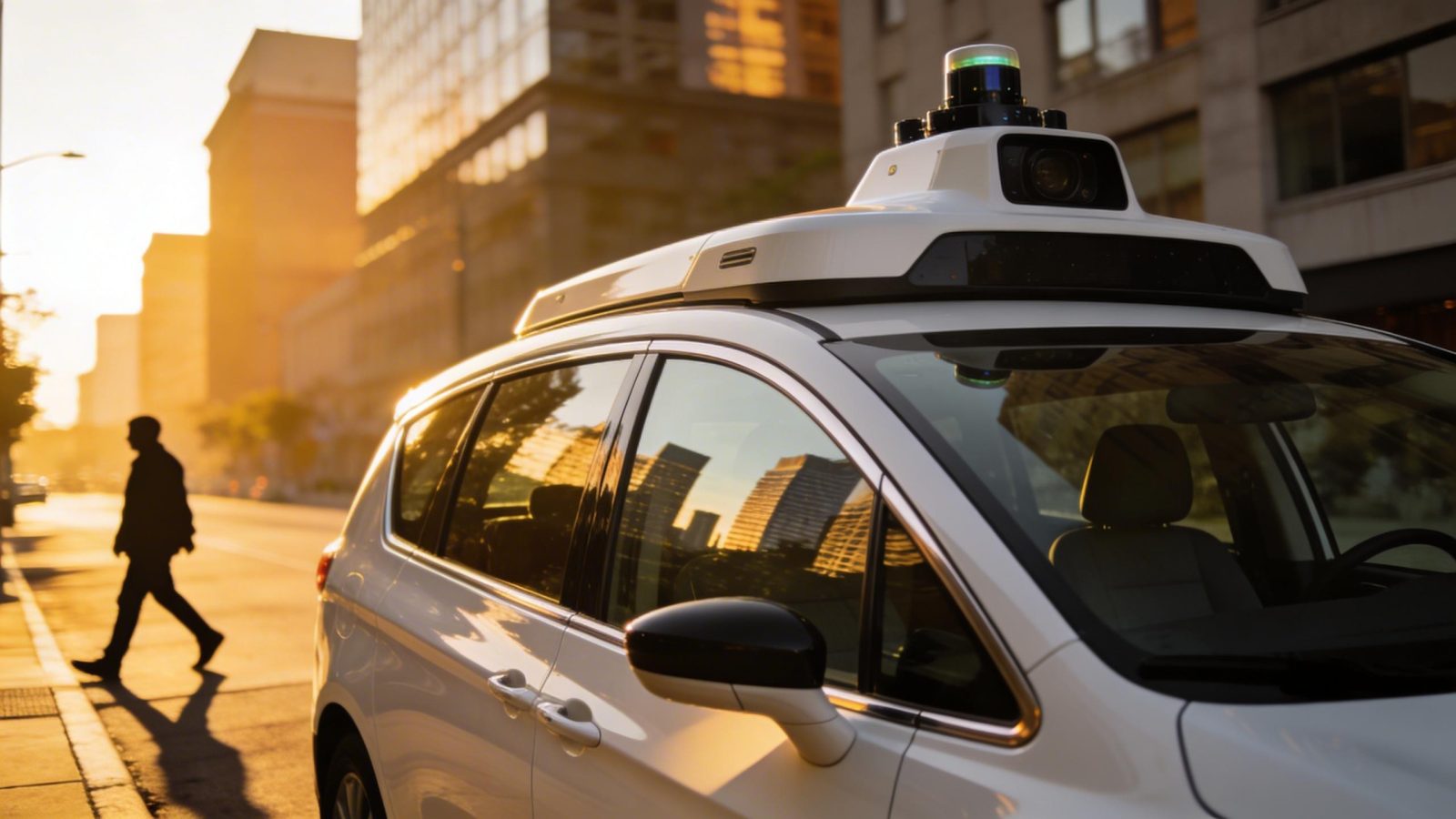
Alphabet’s compensation and investment signals are useful because they show where long-term AI infrastructure bets are being placed. Robotaxis remain one of the clearest examples of a high-cost AI project where adoption, regulation, and unit economics all matter.
- Executive compensation stories should be read alongside company strategy and shareholder incentives.
- Robotaxis require more than model performance: safety, regulation, fleet operations, and consumer trust are central.
- The business question is whether long-term autonomy bets can justify the capital and patience they require.
For more context, see the AI at Work section.
Alphabet just made Pichai a $175M hostage to Waymo’s robotaxi dreams
The $175 million autonomous allocation is the largest single component of Pichai’s package after base performance units. Alphabet is structuring executive incentives around Waymo hitting profitability targets that even optimistic projections struggle to justify. As of December 2025, Waymo was delivering 450,000 paid rides per week across five U.S. cities. The company needs to hit 1 million weekly rides by year-end — a 122% increase in nine months.
And Waymo is already training robotaxis in AI-generated simulations, but the gap between virtual miles and real-world profitability remains enormous. The company’s valuation jumped from $45 billion in October 2024 to $126 billion after a recent $16 billion funding round. That’s a 180% increase in 16 months on a business that’s still burning cash.
The message to Wall Street is clear: Alphabet believes autonomous vehicles are the next Android, not the next Google Glass. But they’re paying Pichai like it’s already proven.
The performance math doesn’t justify the payout
Here’s the problem. Waymo’s estimated annual revenue sits somewhere south of $500 million based on available ride data and pricing. Even at the high end, that’s a rounding error for a $2 trillion company. Alphabet is compensating Pichai as if autonomous tech is already a $10 billion business. It’s not even a $1 billion business yet.
The $126 million in PSUs could double to $252 million if Alphabet outperforms the S&P 100 — or drop to zero if it lags. All-or-nothing. Meanwhile, China shipped 13,000 humanoid robots in 2025 while Waymo’s 450,000 weekly rides still represent a fraction of global transportation demand.
Rough.
Alphabet isn’t alone in betting big on unproven markets — Meta’s $500M autonomous AI bet shows the entire industry is chasing the same dream. But the compensation structure reveals something uncomfortable: Alphabet is paying Pichai for outcomes it can’t guarantee, on timelines it can’t control, in markets it doesn’t yet dominate.
The rank-and-file get layoffs, not stock
Pichai’s package could yield nothing if Waymo and Wing flop. But he’s already sitting on a reported net worth north of $1 billion from previous stock grants and sales. Google engineers facing AI-driven job cuts have no equivalent upside. They absorb the downside while executives swing for moonshots.
This isn’t about fairness — it’s about incentive misalignment. Alphabet is structuring executive comp to reward massive bets on autonomous tech while trimming headcount to fund those same bets. If Waymo hits profitability, Pichai’s stock multiplies. If it doesn’t, workers lose jobs and Pichai loses future grants he never needed in the first place.
The catch: Alphabet can’t admit autonomous tech might not scale without tanking the stock. So they pay Pichai like it’s inevitable and hope the market believes them.
Is Waymo the next Android, or the next Google Glass? Pichai’s $692 million package assumes Alphabet knows the answer. The March 7 SEC filing suggests they’re still guessing.