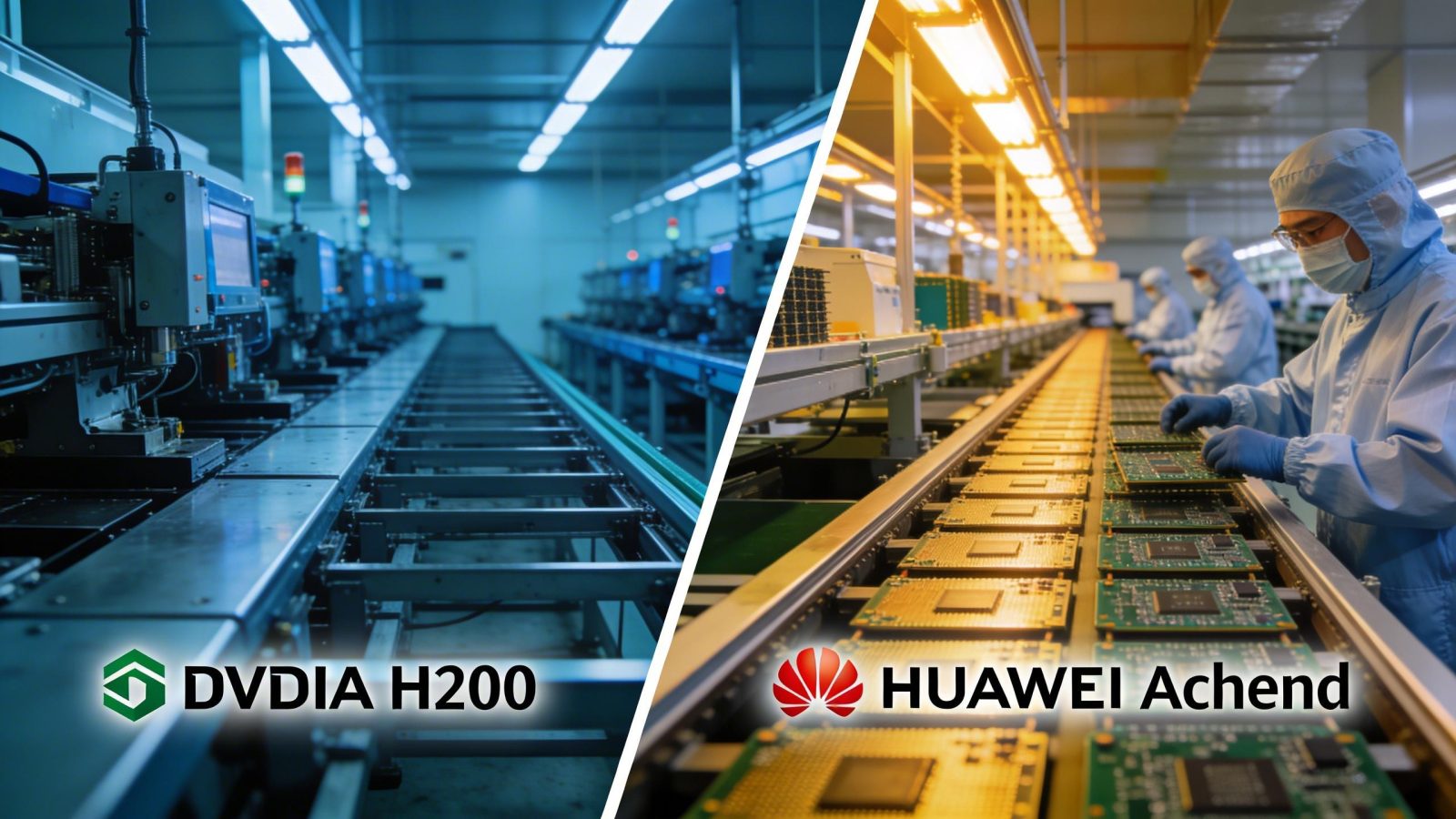
Nvidia just stopped making its most advanced China-bound chips. Not because of sanctions—because the US Commerce Department can’t decide who’s allowed to buy them. On March 6, 2026, the department confirmed new export rules that don’t just target adversaries—they turn allies into supplicants, demanding infrastructure commitments for bulk GPU orders while Nvidia’s H200 production line sits idle.
This isn’t strategic export control. It’s a self-inflicted wound disguised as national security, and the market is already reacting in ways Washington didn’t plan for.
The policy’s core mechanism: any entity ordering 200,000+ Nvidia GB300 GPUs must now commit to investing in US AI infrastructure to secure approval. That threshold isn’t aimed at rogue states—it hits Japan, Taiwan, and European allies building the hyperscale clusters that power modern AI. Meanwhile, orders above 1,000 GB300 units require expedited approval, a tightening from the 1,700 H100 limit under Biden’s rescinded AI Diffusion Rule. The Commerce Department called that earlier policy “burdensome, overreaching, and disastrous” on March 5—then replaced it with something worse.
The 200,000 GPU threshold turns allies into hostages
Here’s the absurdity: Japan and Taiwan—countries whose TSMC foundries manufacture these chips—now need US permission to buy 200,000+ units, with strings attached. The policy treats sovereign nations like supplicants, demanding they build US data centers to access hardware they helped create—exactly the kind of overreach that could make America lose the AI war even with homegrown giants like Nvidia.
The Commerce Department frames this as protecting American technological leadership. But forcing allies to commit to US AI infrastructure investments—the same buildouts Nvidia is betting billions on—looks less like security policy and more like a backdoor subsidy scheme. And it’s backfiring faster than anyone expected.
China’s Huawei bet is already paying off—at Nvidia’s expense
While the US plays export cop, Huawei is doubling production and winning Chinese customers who can’t wait for Nvidia approval. The company plans 600,000 Ascend 910C units in 2026—double last year’s output—and projects capturing 50% of the Chinese AI chip market by year-end, with Nvidia dropping to just 8%. Alibaba, Tencent, and DeepSeek are already customers.
The performance gap is closing. Huawei’s chips aren’t as powerful, but they’re available, and “good enough” wins when “best” requires begging the Commerce Department. Nvidia’s H200 production halt on March 6 isn’t just lost revenue—it’s a signal to global buyers that US chips come with political strings attached. And while Nvidia is quietly moving beyond the all-purpose GPU era, Huawei is winning the market Nvidia just abandoned.
The policy has no data, no opposition, and no deals—yet
Here’s what we don’t know: actual Q1 2026 revenue losses for Nvidia. Which allied governments are publicly opposing the rules. How many Chinese firms switched to Huawei since January. A single confirmed US infrastructure investment deal since March 6.
Nothing.
The Commerce Department announced the policy without publishing impact assessments, and no allied officials have gone on record. This is policy-by-decree with zero transparency. The only measurable outcome so far: Nvidia stopped making H200s for China, and Huawei doubled production. The US is betting its chipmakers’ 80-90% global market share on a threshold nobody can justify, even as the $650 billion AI buildout reshapes global infrastructure without American chips.
The Commerce Department wants to control AI by controlling chips. But chips only matter if people want to buy them. And right now, the only certainty is that Huawei’s factories are running 24/7 while Nvidia’s H200 line sits idle.