

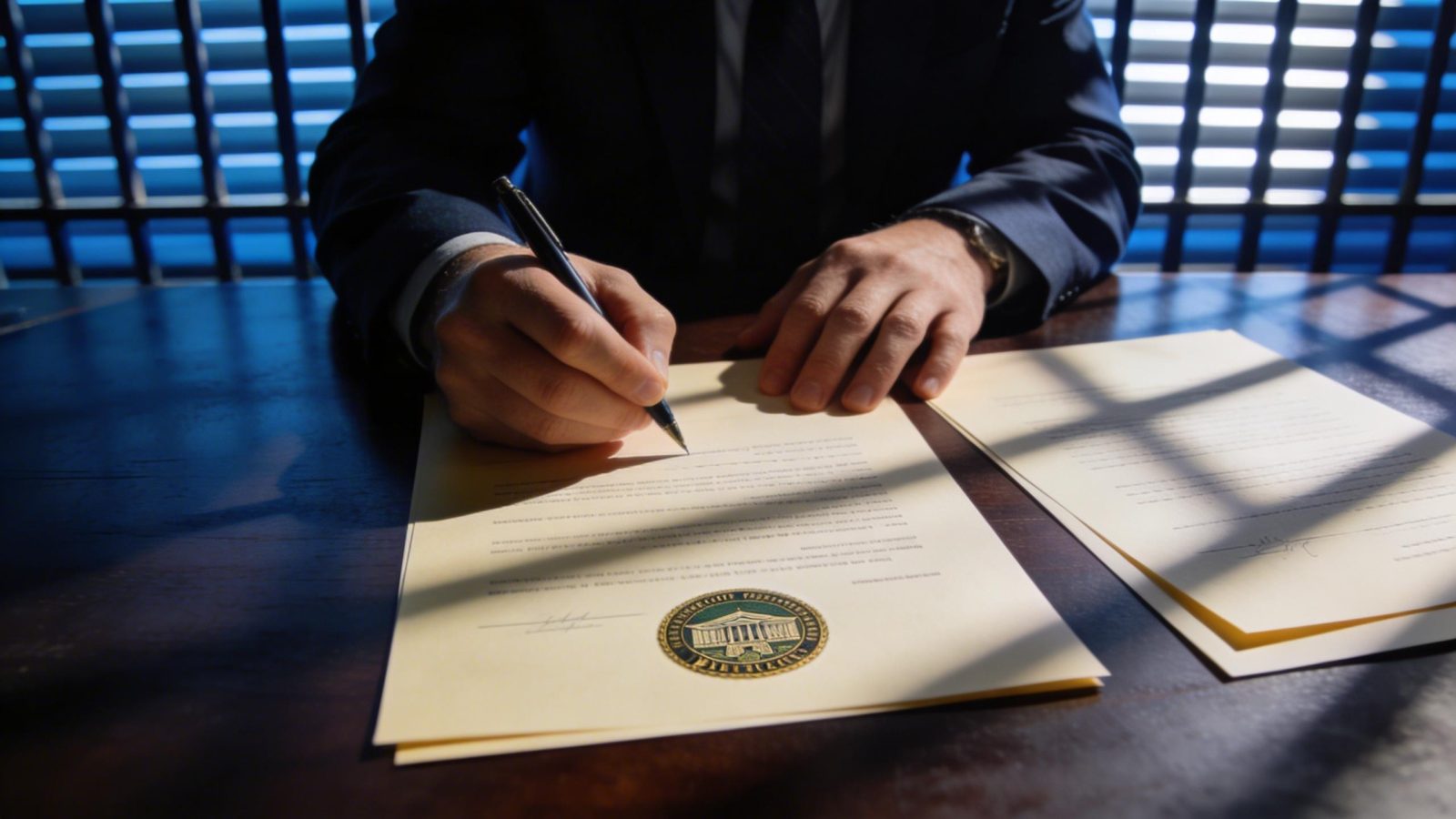
On February 28, 2026, OpenAI signed a Pentagon contract. Forty-eight hours later, the Trump administration blacklisted Anthropic as a “supply chain risk”—the first domestic company ever to receive that designation. One lab bent. One got banned. And the Pentagon just proved it can destroy any AI company that won’t play ball.
This isn’t a story about which company has better ethics. It’s about power—and the precedent that every AI lab is now watching. If you refuse military terms the Pentagon considers too restrictive, you don’t just lose a contract. You get cut off from the entire defense industrial base.
The Pentagon just invented a new way to punish AI companies that won’t bend
Before March 1, 2026, zero U.S. companies had been designated a “supply chain risk.” That label was reserved for foreign adversaries—Huawei, ZTE, companies the government believes threaten national security. Anthropic’s refusal to compromise on AI safety terms changed that. The Trump administration didn’t just cancel a contract. It banned every Pentagon contractor from working with Anthropic for six months, effectively cutting the company off from a massive revenue stream.
This isn’t normal procurement.
It’s coercion. And it works. Because while Anthropic was getting blacklisted, OpenAI was signing the deal Anthropic had refused—accepting “all lawful purposes” language that Anthropic called too vague for weapons deployment. The timing isn’t subtle. The Pentagon needed a lab willing to compromise, and OpenAI stepped up while its competitor was being made an example of.
OpenAI’s “safeguards” are the exact terms Anthropic called unacceptable
OpenAI’s contract restricts three categories: mass domestic surveillance, autonomous weapons, and social credit systems. Sounds good—until you read the fine print. The contract allows “all lawful purposes” and doesn’t explicitly ban collection of publicly available information about Americans. Only “unconstrained” private data is off-limits. Anthropic rejected this exact language, saying it “was accompanied by legal jargon that would enable those protections to be ignored at will.”
OpenAI bet that cloud-only deployment doesn’t guarantee safety when the Pentagon controls the infrastructure, but that U.S. law plus contract terms plus human oversight would hold. Anthropic didn’t believe it. The contract explicitly bans fully autonomous AI systems—no human in the loop—but autonomous weapons are already operating in gray zones where “human oversight” means rubber-stamping machine decisions.
And the cost of disagreeing? Anthropic lost everything: the contract, the partnerships, the legitimacy in defense circles. The blacklist creates a death spiral. No Pentagon contractor can touch Anthropic’s tech for six months. That’s not a timeout. That’s a signal to every other lab: bend or get destroyed.
Even Sam Altman admits this looks bad—and creates a dangerous precedent
When New York Times columnist Ross Douthat asked whether the Pentagon’s blacklisting of Anthropic set a “scary precedent” for OpenAI’s own independence, Sam Altman said:
“Yes I am [concerned]. If we [had to] fight we, but clearly exposes to some risk.” He also admitted the deal was “definitely rushed” and “the optics don’t look good.”
This is the CEO of the company that just won the contract. And even he’s worried about what happens when the Pentagon decides his company isn’t compliant enough. The precedent is set: bend or get blacklisted. Dean Ball, a former Trump AI policy advisor and senior fellow at the Foundation for American Innovation, called the Anthropic designation “almost surely illegal.” But legality doesn’t matter when the Pentagon can weaponize procurement to enforce compliance.
The broader implications for U.S. AI competitiveness are stark. If the Pentagon can destroy any lab that refuses military terms, innovation becomes a compliance exercise. Safety debates become existential business threats. And every AI company now knows: the government doesn’t need to regulate you into submission. It just needs to make an example of one competitor.
OpenAI won the contract but lost the moral high ground. Anthropic kept its principles but faces a six-month blacklist and the loss of defense sector legitimacy. Neither outcome is sustainable. And every other AI lab is watching to see which path leads to survival. If OpenAI is scared of what it just enabled, who’s actually in control here?
