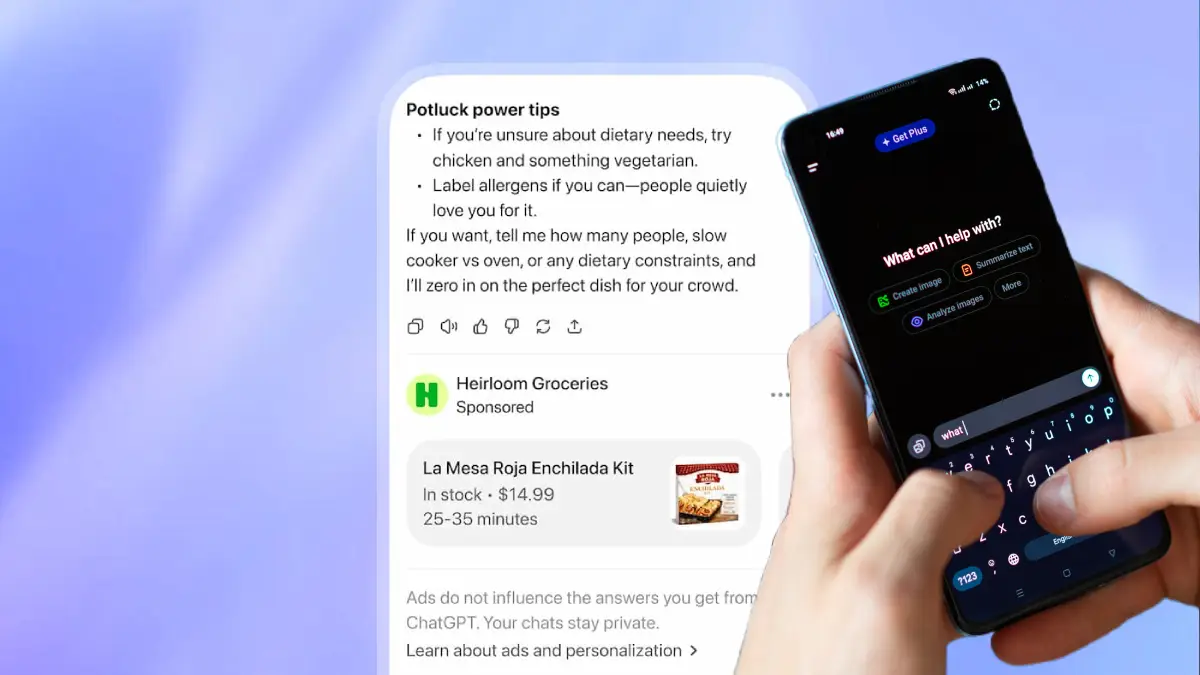
OpenAI’s ChatGPT is making headlines again, but this time, advertisements are in the spotlight. For those using the free version or holding a basic “Go” subscription, ad banners will soon appear at the end of each interaction. In contrast, premium plans such as Pro, Business, or Enterprise will remain unaffected by these new additions. This change, currently being tested among users in the United States, marks an important shift in how conversational AI platforms balance operational costs and revenue streams.
As AI technology advances, the scale of resources required to support these systems increases dramatically. OpenAI cites rising infrastructure expenses as a primary reason for introducing ads—a decision that has sparked considerable debate. Here is a look at the motivations behind this move, its impact on user experience, and what lies ahead for millions who rely on ChatGPT.
Why are ads coming to ChatGPT?
We’re starting to roll out a test for ads in ChatGPT today to a subset of free and Go users in the U.S.
Ads do not influence ChatGPT’s answers. Ads are labeled as sponsored and visually separate from the response.
Our goal is to give everyone access to ChatGPT for free with… pic.twitter.com/S9BV24uJLb
— OpenAI (@OpenAI) February 9, 2026
Running a robust service like ChatGPT demands ongoing investment. Training large language models, managing billions of queries, and continuing rapid innovation all come with significant financial challenges. OpenAI emphasizes that adding advertisements will help secure crucial funding needed to maintain free access while ensuring continued advancements and high-quality performance.
Relying solely on subscription revenue may not be enough to achieve long-term goals or expand capabilities. By integrating advertising into its business model, OpenAI mirrors strategies used by other major digital platforms, diversifying income sources to foster stability and growth.
- Infrastructure upgrades require substantial capital investment
- An expanding user base increases server loads and overall operational costs
- Offering a truly free product becomes more challenging as demand grows
- Subscription fees meet some needs, but do not suit every budget or preference
How will ads work on ChatGPT?
Ads are set to appear exclusively for non-paying users or those subscribed to basic plans. These sponsored banners show up only at the conclusion of chat sessions, rather than interrupting the flow of conversation. OpenAI assures that this placement minimizes disruption and keeps the core service smooth, even as promotional content enters the mix.
To make ads relevant, the selection process relies on previous interactions and current discussion topics. While ad targeting is common across the web, its arrival within an AI chatbot feels different—especially where privacy and personalization intersect.
How does ad matching work?
When selecting which advertisements to display, ChatGPT combines real-time topics from the current session with data from prior conversations. Advertisers submit their banners, and the system aims to present highly targeted content based on recent user interests and discussion themes. Personalization is standard in many online environments, but applying it within an AI assistant represents another step forward in digital service evolution.
This approach seeks to make sponsored content feel less intrusive. Ads become more relevant to the actual conversation, mirroring a broader movement toward personalized digital experiences.
Who gets an ad-free experience?
Premium users—including those with Pro, Business, or Enterprise accounts—are unaffected by the introduction of ads. OpenAI maintains a clear distinction between free/basic offerings and paid subscriptions, highlighting the absence of ads as a key benefit for those willing to invest in a higher-tier plan.
Only those at non-premium levels will encounter any banners, reassuring business clients and loyal customers who depend on uninterrupted productivity.
What options do users have now?
With this update, individuals using the free product must consider their preferences. They can choose to accept brief promotional interruptions, upgrade to a paid plan, or explore alternative conversational AI platforms with different monetization approaches. Each option presents practical trade-offs involving cost, convenience, and tolerance for digital advertising.
A notable advantage is flexibility: those seeking uninterrupted access may opt for a premium subscription, while casual users retain a no-cost, ad-supported choice. Many will weigh factors such as value for money, sensitivity to ads, and the features available on each platform.
Broader implications of ads in AI-powered tools
The introduction of advertising into AI environments sets a precedent likely to influence smart assistants and chatbots across the industry. As competitors observe this transition, they may adopt similar tactics or emphasize ad-free, subscription-only models to stand out. The commercial pressures of running advanced digital products place creative monetization strategies at the forefront of decision-making.
Clear distinctions between subscriber tiers, especially regarding features and ad exposure, shape perceptions of fairness and accessibility. While ads help fund innovation and allow many to access powerful AI at no cost, they also raise questions about data usage and control, sparking renewed discussions around responsible digital consumption.
- Free users continue to access the service but see added promotions
- Paid plans offer an uninterrupted, premium experience
- Increased competition may drive new features or better pricing elsewhere