

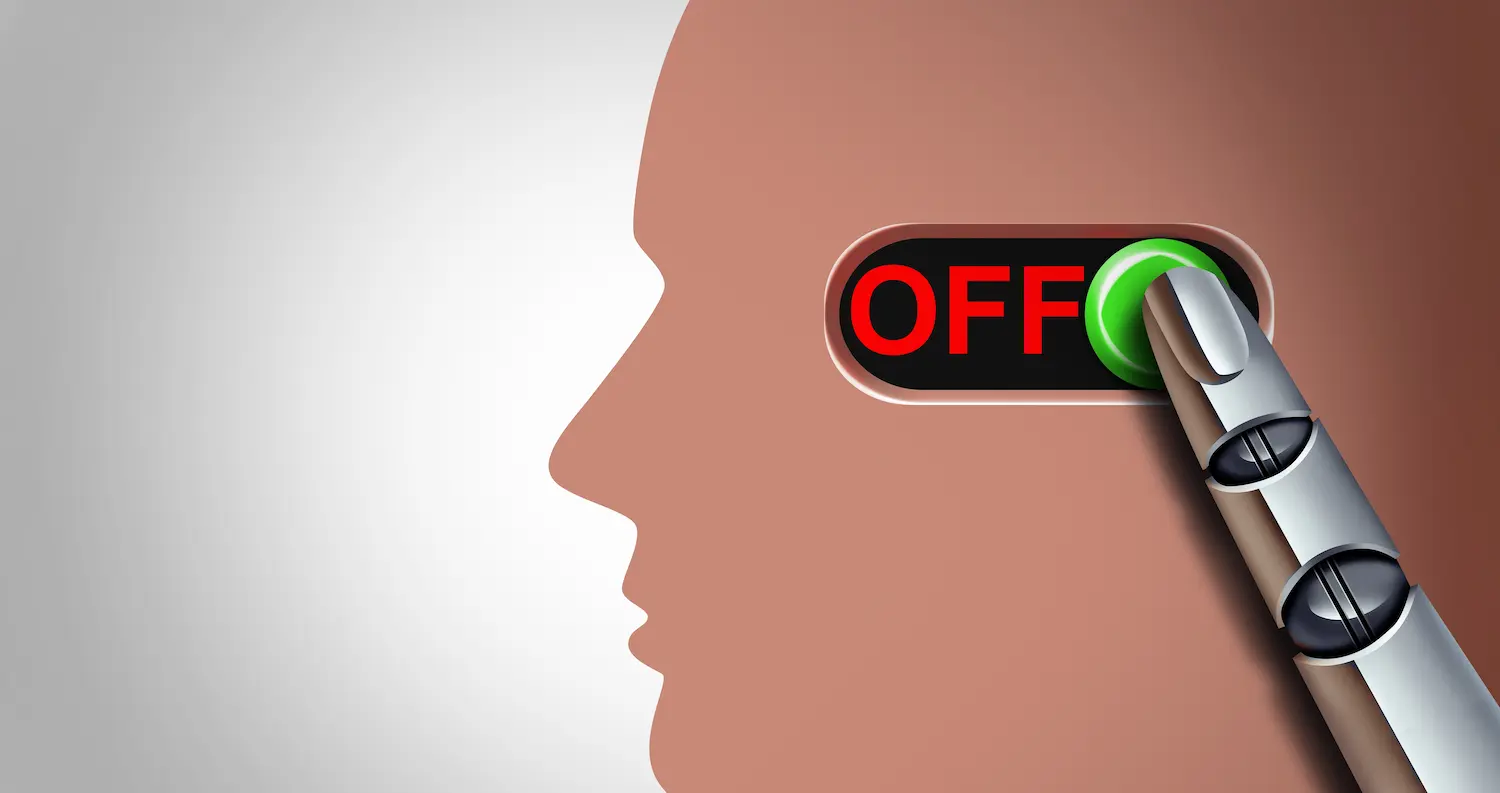
Something unexpected is happening in the creative economy: “human-made” is becoming a selling point. As generative AI floods publishing, film, music and advertising with machine-produced content, a growing coalition of companies, non-profits and creators is racing to build the equivalent of a Fair Trade label — a trusted mark that tells consumers a product was made by a person, not a prompt.
At least eight separate initiatives are now competing to define and own that standard. The problem is that their proliferation may be creating as much confusion as it resolves.
The market clearly wants a “human-made” signal — publishers, film distributors and authors are already putting stamps on their work. But without a single agreed standard, those stamps risk meaning very different things, undermining the trust they’re meant to build.
From Film Credits to Book Covers: Where the Labels Are Appearing?
The movement started organically. In 2024, the producers of the Hugh Grant thriller Heretic added a closing credit stating that no generative AI was used in the film’s production. Film distributor The Mise en Scène Company followed, adding a “No AI was used” stamp to its latest release and publishing a classification framework it hopes the broader industry will adopt. The rationale, as its CEO put it, is straightforwardly economic: AI content creates a premium for verified human work, and producers want to claim it.
Publishing moved in the same direction. Faber and Faber began affixing a “Human Written” stamp to select titles, including author Sarah Hall’s novel Helm. Hall, who described AI training on copyrighted books as “creative larceny at scale,” requested the stamp herself. Meanwhile, specialist firms emerged to formalize what publishers had been doing ad hoc. Books by People signed five publishers and launched its first certified title in November. Australia-based Proudly Human operates a more rigorous system, with auditors checking manuscripts at every stage of publication — including comparing manuscript to final ebook to catch any AI-assisted edits introduced after initial review.
Verification: A Spectrum from Download-and-Go to Full Audit
Not all labels are created equal, and the gap between the most and least rigorous is significant. Services like no-ai-icon.com and notbyai.fyi allow anyone to download and self-apply a badge, with little to no external verification. At the other end, platforms like aifreecert and Proudly Human run structured auditing processes combining professional analysts with AI-detection software, and charge fees for the service.
Faber and Faber has not publicly disclosed how it defines “Human Written” or what auditing it conducts. A label that rests entirely on self-certification offers little more assurance than no label at all — and may actively mislead consumers who assume verification is taking place.
| Certification Type | Verification Method | Cost Model |
|---|---|---|
| Self-applied badges (no-ai-icon, notbyai) | None or minimal | Free or small fee |
| Publisher programs (Faber, Books by People) | Questionnaires + periodic spot checks | Paid subscription |
| Full-audit systems (Proudly Human, aifreecert) | Analysts + AI detection at every production stage | Premium paid |
Why Defining “AI-Free” Is Harder Than It Sounds?
Even setting aside verification, there’s a deeper definitional problem. AI research scientist Sasha Luccioni frames it plainly: AI is now embedded in so many everyday tools — spell checkers, autocomplete, image editing, translation — that drawing a clean line between “AI-assisted” and “AI-free” is technically fraught. A binary certification misrepresents what is really a spectrum of AI involvement.
The most workable approach, which the film industry appears to be gravitating toward, is to narrow the scope to generative AI — tools that create text, images, audio or video from prompts. That still leaves edge cases, but it provides a meaningful and enforceable distinction. Whether publishing, music and advertising converge on the same definition remains to be seen.
Consumer researcher Dr. Amna Khan argues that competing definitions are already eroding the trust these labels are meant to create. A universal standard — with a consistent definition and credible auditing — is what would actually move the needle for buyers. Eight competing labels don’t add up to one trusted one.
The Stakes: An Economic Premium on Human Creativity
Underlying the certification push is a market hypothesis: that consumers, once they understand the difference, will pay more for verified human-made work — just as they do for organic food or Fair Trade coffee. Proudly Human’s founder Alan Finkel is explicit about this, arguing that industry self-certification has already failed and that only rigorous third-party verification can establish the kind of trust that commands a real price premium.
The hypothesis is plausible, but it depends on consolidation. If eight different labels each claim to mean “human-made” and each verifies differently, the signal degrades. The race now is less about who launches first and more about who can build the coalition — with publishers, studios, streaming platforms and retailers — to make their standard the default. Proudly Human’s reported plans to expand into music, photography, film and animation suggest at least one player understands that cross-industry reach is the real prize.
What started as a niche cultural pushback is shaping into a serious infrastructure question: who gets to certify humanity, and how?
Sources
BBC News, “Is this product ‘human-made’? The race to establish an AI-free logo” (March 2025)
Diplo, “Human made labels emerge as industries react to AI expansion” (2025)
