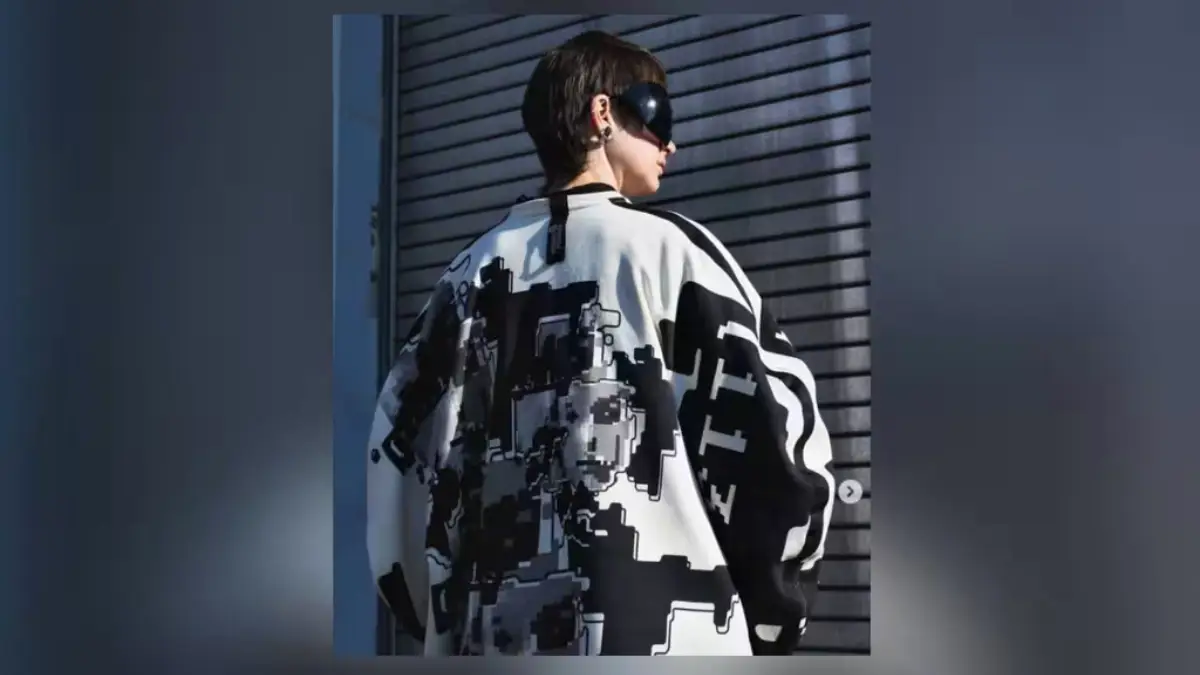
The relentless spread of surveillance cameras and artificial intelligence has sparked a new wave in street style: anti-AI clothing. Designers are now crafting garments with technology at the forefront, aiming not just for aesthetics or comfort but also for privacy protection. These clothes feature confusing patterns intended to mislead smart algorithms that track human faces. Far from being science fiction, this trend represents one of several creative responses to digital surveillance making its way into everyday wardrobes.
Why are people seeking ways to foil facial recognition?
Many residents in large cities find themselves wondering how frequently their face ends up captured on camera during a simple walk down the street. Today’s public spaces are filled with security systems capable of much more than recording video—they analyze features invisibly, transforming humans into data points. Some worry about consequences such as automated fines sent home after breaking minor rules.
This anxiety surrounding mass monitoring has turned attention toward innovative countermeasures. Interest in personal privacy runs deeper than ever as law enforcement agencies and private companies amass vast image databases. As awareness grows regarding how these systems work and what data they collect, individuals become increasingly motivated to experiment with ways of evading them—even by altering their appearance.
What techniques have people used before anti-AI fashion?
Before today’s high-tech fabrics, protesters relied on more traditional strategies to avoid identification. Many chose black outfits to present uniform silhouettes that blend together in crowds, making it harder for software to distinguish between individuals.
Others became inventive with makeup to disrupt facial symmetry or used umbrellas to shield themselves from overhead lenses. Such tools helped sidestep detection by interfering with core elements needed for accurate recognition. What sets current anti-AI clothing apart is its direct challenge to the system through visible designs embedded in apparel.
- Wearing monochrome clothes to confuse silhouette-matching algorithms
- Applying bold makeup to distort facial landmarks
- Using accessories such as hats or masks to block identifying features
- Employing physical barriers (like umbrellas) for temporary concealment
How does anti-AI clothing actually work?
Instead of fully covering the face, these new garments aim to throw off recognition software by introducing chaos into its calculations. Designers incorporate adversarial images—patterns specifically developed to trick machine vision.
These prints go beyond outrageous looks; every color clash, jagged line, or incongruous circle disrupts the recognizable contrasts and proportions algorithms depend on to match a person’s face to database photos. Even slight interference may result in the system failing to detect a face—or mistaking a jacket for a chair behind the wearer.
Visual confusion versus AI perception
To a human observer, the effect might appear loud or quirky. For an algorithm, however, the mix of shapes and gradients proves genuinely perplexing. This approach leverages machine learning’s reliance on patterns: where humans see random art, a computer struggles to identify familiar signals—and sometimes gives up.
Remarkably, even small design tweaks can produce significant differences in results. In controlled tests, adversarial hoodies or scarves created by researchers managed to fool object detection systems, especially if the individual remained mostly still. This demonstrates just how fragile some forms of AI-based recognition remain when confronted with unpredictable visual noise.
Case studies and real-world impact
Recent years offer compelling examples of anti-AI garments in action. Computer scientists have documented instances where unusual jackets rendered wearers invisible to advanced tracking cameras. Such experiments fascinate activists, artists, and ordinary citizens alike—showcasing how this niche tech-fashion can cross cultural boundaries.
With rising concerns over governmental and corporate surveillance, demand for these items is growing rapidly, particularly in regions saturated with camera networks. Shops specializing in disguising apparel report spikes in sales whenever authorities announce upgraded surveillance programs, highlighting how technology and fashion now intersect dramatically in modern society.
Where is facial recognition expanding most rapidly?
One country experiencing rapid adoption is the United States. Security agencies and local police operate thousands of cameras, increasingly combining traditional footage with artificial intelligence capable of instant ID checks. Private organizations—from megastores to transit hubs—manage millions more cameras feeding data into similar recognition frameworks.
Government policy changes further fuel the need for anti-surveillance gear. As regulations expand the legal scope for retailers and officials to use AI in video security, conversations about rights to anonymity gain momentum. Some now view public spaces less as free zones and more as sites of constant digital tagging.
Are there limits to what anti-AI clothing can achieve?
While such fashion may effectively confuse certain recognition tools, its reliability varies depending on context and the specific technology deployed. Standing still might cloak a person, yet movement could alert smarter algorithms trained to overcome basic disruptions. Moreover, each advancement in disguise inspires improvements in detection.
Nevertheless, the rise of anti-AI styles reflects broader questions about balancing safety with autonomy. Clothing designed for privacy serves as both protest and ingenuity, acting as a visible reminder that the debate around public surveillance remains unresolved. Anti-AI fashion will likely continue evolving alongside the technologies it strives to outsmart, ensuring style retains a surprisingly subversive role amid society’s ongoing digital transformation.