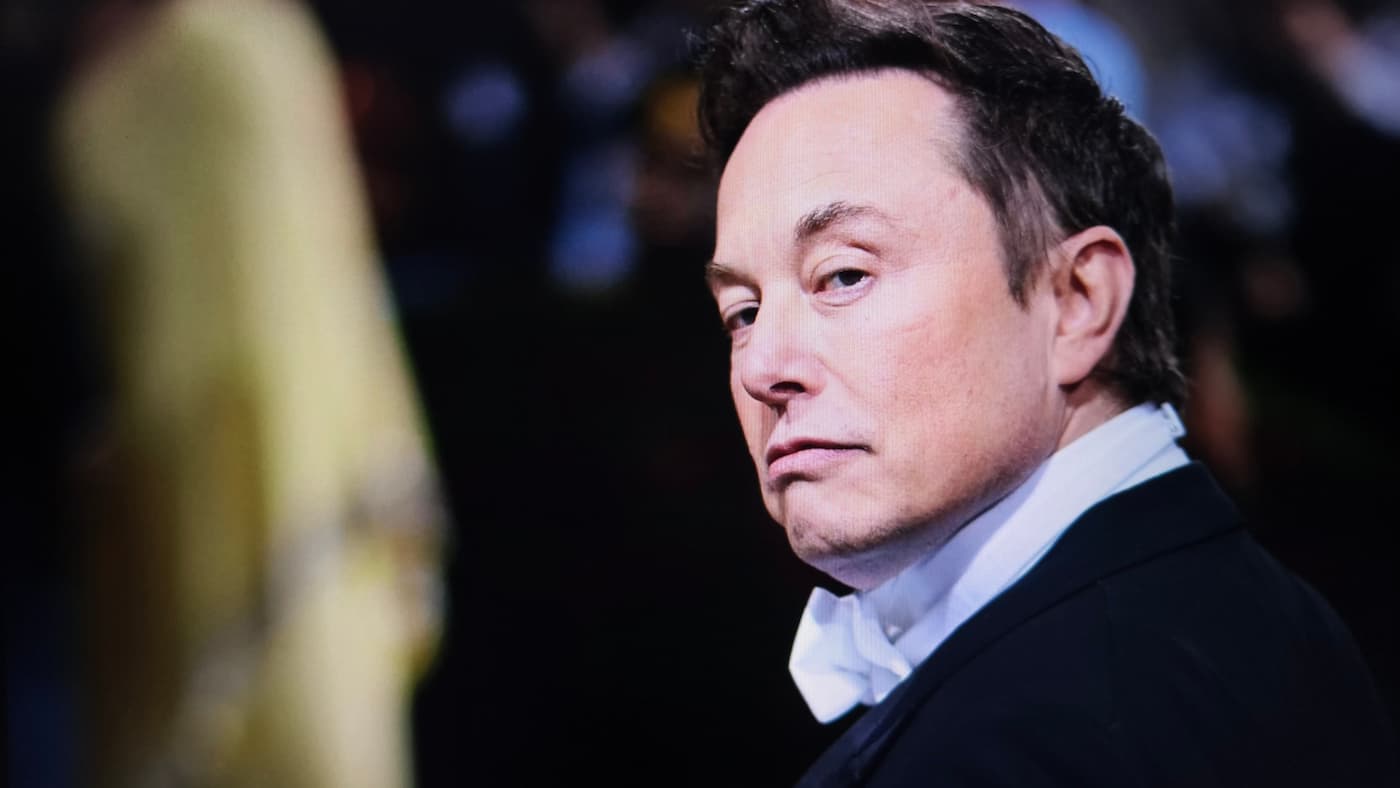
Elon Musk says we’ve entered the singularity. But beyond the headlines, real technological signals are accelerating fast.
Three weeks ago, Elon Musk posted a message that reignited one of Silicon Valley’s oldest debates: “We have entered the singularity.” Hours later, he doubled down, predicting that 2026 would mark the turning point.
For many observers, this sounded like typical Musk hyperbole. Yet the timing is difficult to ignore.
His comments came just after his AI company xAI secured a massive $20 billion funding round, while global leaders gathered in Davos warning that artificial intelligence is advancing faster than expected.
What the “singularity” actually means?
The technological singularity isn’t science fiction about killer robots.
The concept, popularized by mathematician Vernor Vinge and futurist Ray Kurzweil, describes the moment when artificial intelligence begins improving itself faster than humans can understand or control.
The key isn’t just intelligence. It’s acceleration. Once improvement becomes self-reinforcing, progress could explode beyond human prediction.
Why Musk is making this claim now?
On January 6, the company announced that it had raised $20 billion, far exceeding its initial target of $15 billion.
Nvidia, Cisco, Fidelity, the Qatar Investment Authority, the Abu Dhabi sovereign wealth fund, the United Arab Emirates, and so on—all these financial giants are putting colossal sums of money behind Elon Musk’s ambitions.
XAI’s valuation is said to be around $230 billion, which puts it on par with OP or Antropic.
And with this money, they are building something unprecedented: the Colossus supercomputer. Located in the Memphis area, it already has more than a million graphics cards, or H1-equivalent GPUs.
The computing chips are there. The expansion project aims for 1.5 million graphics processors. To give you an idea, the computing power needed to run all this could power 1.5 million homes.
Grock 5, their next model scheduled for the first quarter of 2026, will have 6 trillion parameters. Chat GPT4, which impressed everyone when it was released, had only about 1.8 trillion.
What makes Xai particularly dangerous to the competition is its access to real-world data in real time
The millions of Teslas on the road are constantly collecting driving data. Platform X provides a real-time stream of information about what’s happening in the world.
Open and Google don’t have access to this kind of data. Now let’s look at the figures that back up Musk’s claims.
You know, there’s a benchmark and a test that we give to AIs called the GPQA Diamond, which consists of 298 doctoral-level questions in biology, chemistry, physics, mathematics, and so on. Of course, if you follow the channel, you know this Stard perfectly well, since I mention it often.
These are questions that only experts with years of study can solve. Cloud Opus 4.5 scored around 87%. OpenAI’s GPT 5.2 Pro scored 93%. Google’s G Mini 3 Deep Sinking scored 93.8%. We’re talking about PhD-level scores on questions designed to differentiate experts from non-experts.
In programming, the SW bench benchmark tests real software engineering tasks rather than academic exercises, real problems that computer scientists face today. In 2024, the best models were capped at 50%. Today, Cloud + 4.5 reaches 80.9% and chat JPT is at 80%.
That’s a 30-point increase in one year. OpenAI has also published a benchmark called GDP Val, which compares GPT 5.2 to human professionals in 44 different occupations.
And in this benchmark, AI equals or surpasses the best experts in the field in 71% of tasks. Lawyer, accountant, analyst, marketer. These are all professions that were thought to be safe because they required a degree.
In mathematics, the best models now score 5% on the May 2025 exam, which is reserved for the brightest students in the country.
What remains difficult for AI, however, is scientific discovery. So on Nobel-level research benchmarks, scores hover around 11%. AI does not yet replace researchers who make fundamental breakthroughs.
The trajectory is what really matters here. Two years ago, you know, she failed basic programming job interviews. Today, she outperforms senior engineers.
So yes, what happened this week in Davos is worth paying attention to. Dario Amode, the boss of Antropique, made statements that shook the assembly.
According to him, AI will replace almost all the work of software developers in the next 6 to 12 months.
Models will reach Nobel level in several fields by 2026 or 2027, and 50% of junior white-collar jobs could disappear in the next one to five years.
The performance gap is shrinking fast
Benchmarks once used to separate human experts from machines are rapidly being conquered.
Modern models now score near or above PhD-level results in complex science exams and outperform professional programmers on real engineering tasks.
OpenAI reports that its latest systems match or surpass top human professionals in a majority of tested occupations. Coding, legal analysis, accounting, and financial modeling are no longer immune.
Davos signals a shift in expectations
At the World Economic Forum, Anthropic CEO Dario Amodei predicted that AI could replace much of junior software engineering work within a year.
Google DeepMind’s Demis Hassabis offered a more cautious view, but still acknowledged a 50% chance of achieving human-level AI before 2030.
Even companies once skeptical now openly discuss preparing for artificial general intelligence.
Skeptics still see major hurdles
Not everyone agrees. AI pioneer Yann LeCun argues current language models cannot reach human intelligence without major breakthroughs. Others note that innovation may slow as “easy” discoveries disappear.
And Musk himself has a history of optimistic timelines that slip.
Signals that will reveal if singularity is truly approaching
Observers point to several indicators: rapid economic productivity gains, AI systems capable of autonomously improving themselves, benchmark saturation across disciplines, and progress in robotics or brain-computer interfaces.
None of these thresholds have been fully crossed yet, but movement is accelerating.
The real question isn’t if change is coming
Regardless of terminology — singularity, AGI, or simply automation — AI systems are already reshaping industries. The debate is no longer theoretical.
The real question is who adapts fast enough as machines become capable of performing increasingly complex tasks.
The singularity may still be debated. But the speed of AI progress is no longer.