

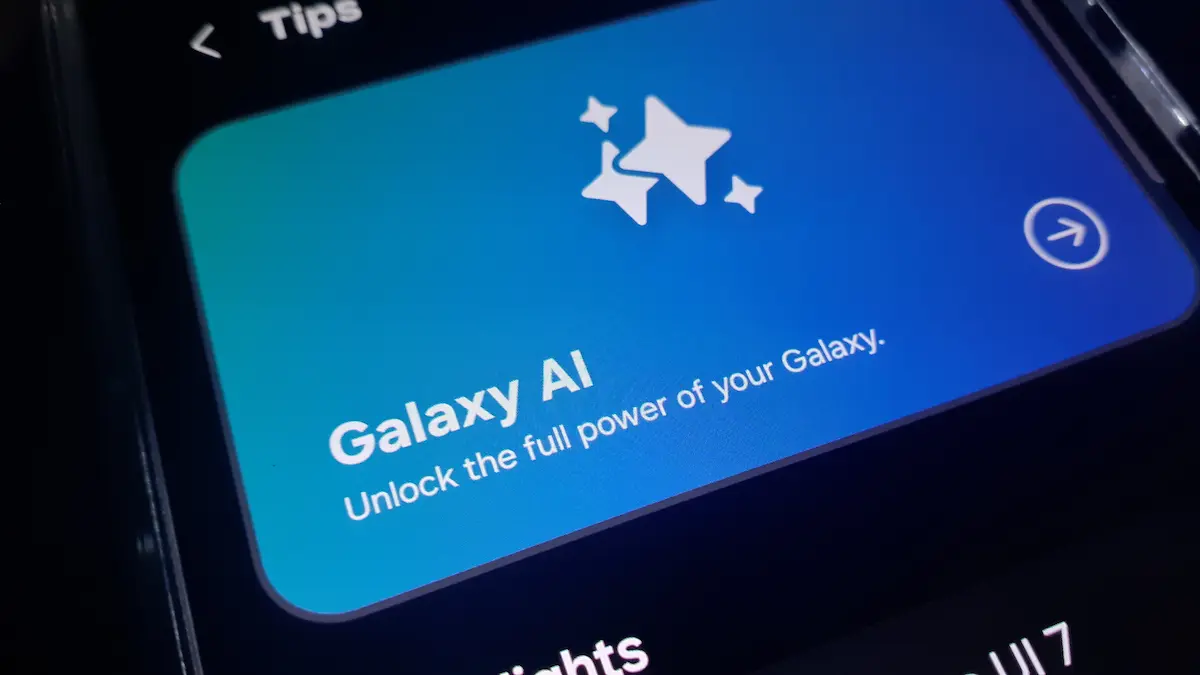
Samsung confirmed yesterday that Galaxy S26 Unpacked happens February 25 in San Francisco—and the event’s biggest reveal won’t be the phones. It’ll be watching the company try to convince buyers that “seamless AI” matters more than the fact that the S26 is the S25 with a new processor.
The February 25 Unpacked promises “invisible, personal” intelligence. The leaked specs promise recycled cameras, identical designs, and battery bumps so small they’d be margin-of-error in real-world use.
This isn’t a product launch. It’s a strategic retreat dressed up as innovation.
Samsung’s S26 lineup proves the smartphone upgrade cycle has hit an economic wall where meaningful hardware changes cost more than consumers will pay—so AI marketing becomes the only upgrade left.
The S26 “upgrades” are a spec sheet shell game
Start with the base Galaxy S26: 4,300mAh battery (up from the S25’s 4,000mAh), 12GB RAM (up from 8GB), and the exact same 50MP camera system. Same 6.3-inch display. Same design language Samsung’s been recycling since the S21. The S26 Ultra? 5,100mAh battery, 60W wired charging (up from 45W), and the identical 200MP main sensor from two generations ago.
These aren’t upgrades. They’re annual maintenance patches.
The only real change is the chipset: Snapdragon 8 Elite Gen 5 in the US and China, Exynos 2600 everywhere else. That’s it. No new camera hardware. No display redesign. No radical form factor shift. Reddit users captured the mood perfectly: “I can’t believe they got away with reusing the same design since S21… Samsung makes even Apple look innovative.” Brutal—but accurate when Apple’s rumored foldable iPhone makes Samsung’s titanium-frame-for-the-fourth-year feel like coasting.
Samsung chose this. Meaningful hardware innovation—larger displays, new camera systems, radical redesigns—costs money. Money that either cuts margins or forces retail price hikes. The S26 is what happens when a company decides margin protection matters more than product differentiation.
AI hype is the only upgrade Samsung can afford
Samsung’s official Unpacked invite teases AI that “feels seamlessly integrated” and “invisible, personal” intelligence. What it doesn’t mention: any AI-specific hardware. No dedicated NPU upgrade. No on-device model specs. No exclusive features that require the S26’s silicon.
The Snapdragon 8 Elite Gen 5 is a yearly chipset refresh, not an AI revolution. It’s faster than last year’s chip because that’s how semiconductors work. But Samsung’s betting the “AI” label does more work than the actual silicon—and they’re probably right. The pitch echoes CES 2026’s AI companion demos: big promises, vague implementation, no shipping dates.
And Samsung knows it. That’s why $30 credit reservations opened yesterday—no purchase required—with up to $900 trade-in discounts and a $5,000 giveaway entry. When the product can’t generate excitement, financial incentives have to. Samsung is paying customers to care about phones that look identical to the ones they already own.
Here’s the thing: if AI is commoditizing knowledge work, why does it justify a $1,000 smartphone? The software runs on last year’s hardware. The “seamless” experience Samsung promises on February 25 doesn’t require new cameras or 300mAh more battery—it requires better software, which costs Samsung nothing to push to existing devices.
Who the S26 leaves behind—and why that matters
Early adopters lose. Upgraders from the S23 or S24 lose. If you bought an S25 last year, the S26 offers you a chipset and 15W faster charging on the Ultra. That’s the entire value proposition.
Reddit’s backlash—”every year they swap the SOC for a new one and offer new colors”—reflects a crisis bigger than one product cycle. The smartphone upgrade cycle is broken when upgrades don’t exist. Samsung’s hitting the same wall Apple hit five years ago, except Apple responded with ecosystem lock-in and services revenue. Samsung’s responding with AI marketing and trade-in credits.
The March 2026 retail launch at S25 pricing isn’t a deal. It’s Samsung admitting they can’t charge more for what amounts to a spec bump. And if voice AI is replacing typing at work, consumers don’t need flagship hardware to access the future—they need software Samsung could ship to three-year-old devices tomorrow.
If the S26 is this underwhelming, what does Samsung know about 2027 that we don’t? The entire industry is stalling because the next breakthrough—foldables that don’t break, AR glasses that actually work, something else entirely—isn’t ready for mass production. The S26 isn’t a product. It’s a placeholder while Samsung figures out what flagship even means anymore.
