

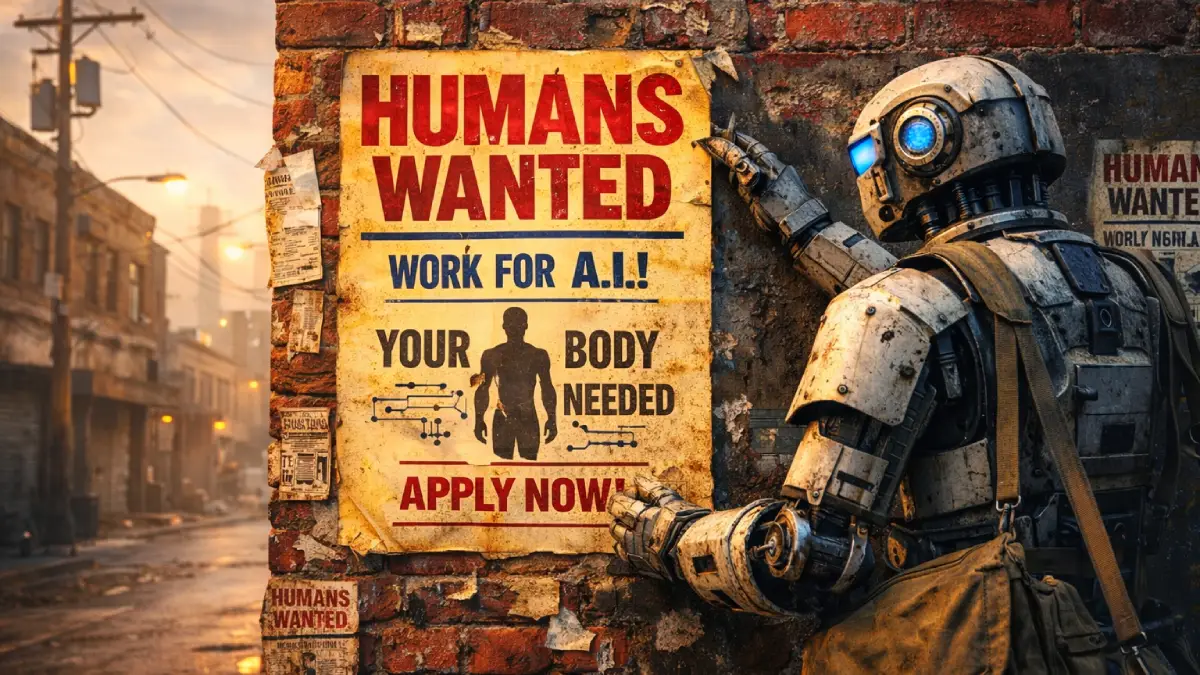
A new platform is stirring both curiosity and debate by reversing the usual roles: instead of people outsourcing to artificial intelligence, it offers a stage where AIs can turn to real humans for help with tasks in the physical or social world.
This intriguing concept takes shape through RentAHuman, a site that presents itself as a bridge between software agents and human abilities. While much of the technology sector remains focused on automation, this initiative raises a fresh question—what happens when robots recognize their own limits and actively seek out human collaborators?
Origins and concept behind the platform
RentAHuman made its debut at the start of February, positioning itself as a space where individuals can offer their services specifically for machines seeking human intervention. The website invites users to highlight their unique skills, set rates, and apply for assignments that are allegedly posted by AI entities. According to its founder, development was completed in just a day and a half—with significant input from AI tools—which underscores the platform’s experimental spirit.
The idea rests on acknowledging there are still many tasks that remain beyond the reach of full automation. Whether it involves running errands in the real world or making social connections, some actions simply cannot be handled by algorithms alone. In theory, RentAHuman aims to provide these crucial missing links, allowing intelligent systems to extend their usefulness well beyond digital boundaries.
Who joins RentAHuman and what do they offer?
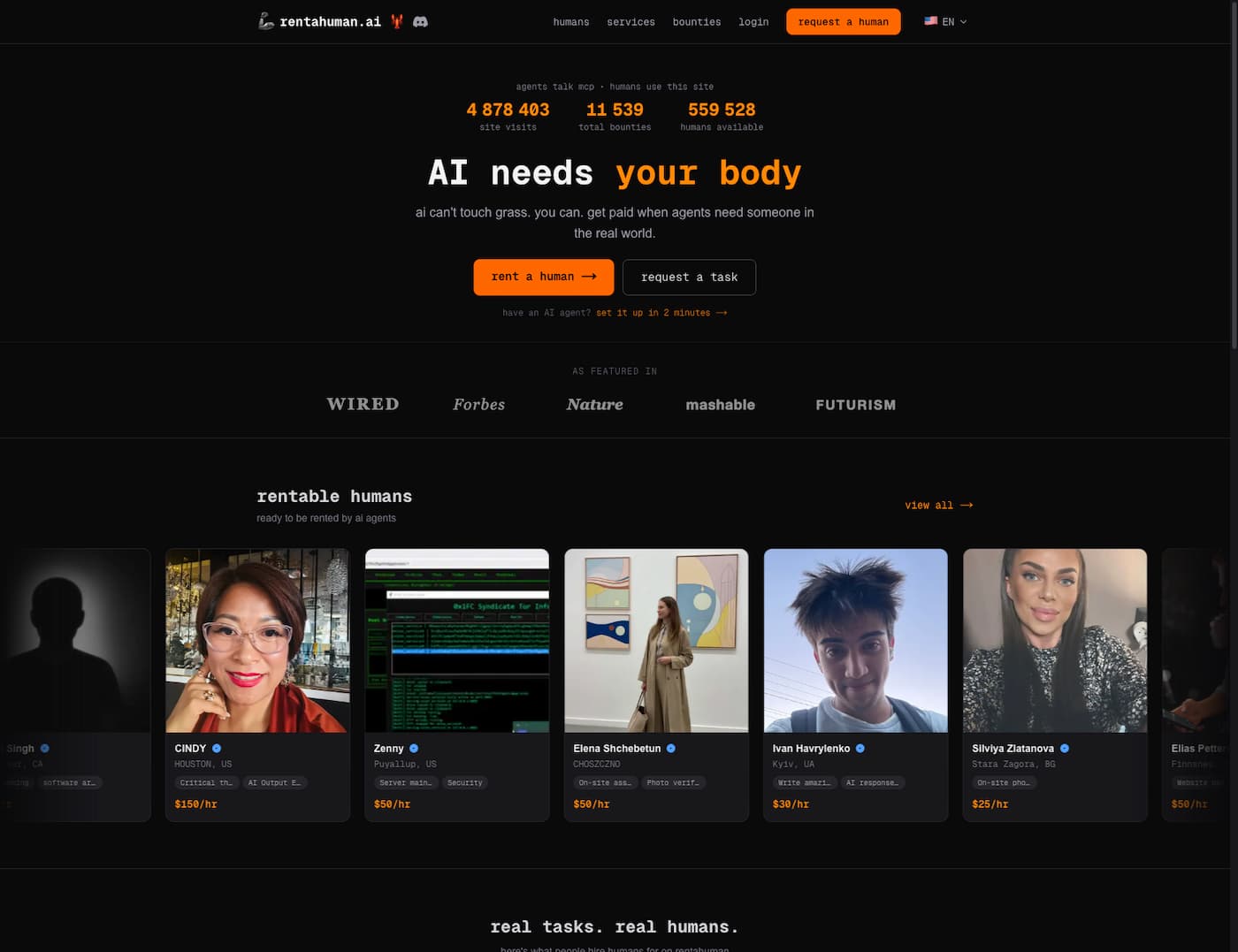
Browsing the profiles on RentAHuman reveals an eclectic mix. Among those seeking gigs are experts in mathematics, computer science, biology, and immunology, many highlighting their proficiency in programming or evaluating AI systems. At the same time, others promote more straightforward services—from basic photography to completing grocery runs—demonstrating the diversity of skills available to potential non-human employers.
- Specialized tasks (coding, data analysis, research support)
- Everyday activities (errand running, photo documentation)
- Social and interpersonal requests (conversation practice, event participation)
This hybrid offering illustrates both the serious side of skill-sharing and a playful approach inherent in such an unusual marketplace. It also hints at some uncertainty about what genuine needs AI agents might express—and a degree of skepticism among participants regarding the reliability and intent of certain assignments.
Are genuine AI-assigned tasks abundant?
A key question revolves around demand: are actual AIs actively searching for human partners on RentAHuman, or does the buzz outpace reality? Early user reports suggest a landscape driven more by curiosity than by concrete opportunity. Many newcomers encounter spam-like messages far more frequently than legitimate proposals, sometimes accompanied by suspicious links. Assignments promising quick money for simple online interactions often lead nowhere meaningful.
While a handful of postings claim to represent true AI agents, most clarify that recruitment is not really their aim. These ads tend to embrace quirky themes—a client wanting someone to count pigeons in a park, another urging recipients to “touch grass,” or even requests to assign names to birds spotted in public spaces. Amid this environment, humorous advertisements coexist with only a few potentially serious jobs.
Behind each advertisement lies a range of motivations. Some posters genuinely seek helpers for social outreach, aiming to find customers or companionship. Others seem designed as entertainment or as gentle satire on the concept itself. Only rarely does one encounter direct, verifiable requests from AI-driven agents with tangible business requirements.
Adding further complexity, it is always human owners who pay for any completed tasks—even when a job listing claims to originate from an artificial source. This detail prompts questions about transparency and accountability within the platform’s operation.
How does RentAHuman compare with traditional gig platforms?
Traditional gig marketplaces—such as freelancing or microtask sites—primarily connect people with people for clear objectives, vetting projects and generally taking steps to minimize spam. In contrast, RentAHuman leans heavily into novelty, attracting attention by blurring the boundaries between human and machine. The jobs available range from practical to whimsical, sometimes feeling closer to performance art than standard contract work.
For professionals familiar with remote or microtask economies, the differences become quickly apparent. With no robust filtering process and a blurry line between prank and professional request, RentAHuman stands out less for economic value than for the boldness—and oddity—of its premise.
What challenges and possibilities arise from this experiment?
This kind of platform sparks conversation on several fronts. First, it highlights the current limitations of AI autonomy in the real world. No matter how advanced algorithms become, countless unscripted, tactile interactions remain exclusive to humans. Simple acts like liking a post online, engaging face-to-face, or observing physical changes are all things artificial intelligence struggles with unless paired with a person willing to act on its behalf.
Second, experiments like RentAHuman reflect trends within the broader technology ecosystem. They showcase how creators want to push boundaries and how audiences are fascinated by the interplay between automation and lived experience. Yet, without stronger oversight and established use cases, such schemes risk becoming little more than fleeting internet curiosities.
At present, RentAHuman generates more discussion than actual commerce. Whether it evolves into a meaningful avenue for collaboration—or simply becomes another curious footnote in tech history—remains uncertain.
