


Job interviews remain one of the most stressful moments in a professional career. Even highly qualified candidates struggle with pressure, difficult questions, and the fear of saying the wrong thing.
That’s exactly the problem Persuasiv AI aims to solve.
The platform promises to transform interview anxiety into confidence through realistic AI simulations, detailed performance analysis, and actionable feedback. Curious about the experience, I decided to test it myself.
Here’s what Persuasiv AI really does, how it works, and whether it delivers real value.
What is Persuasiv AI?
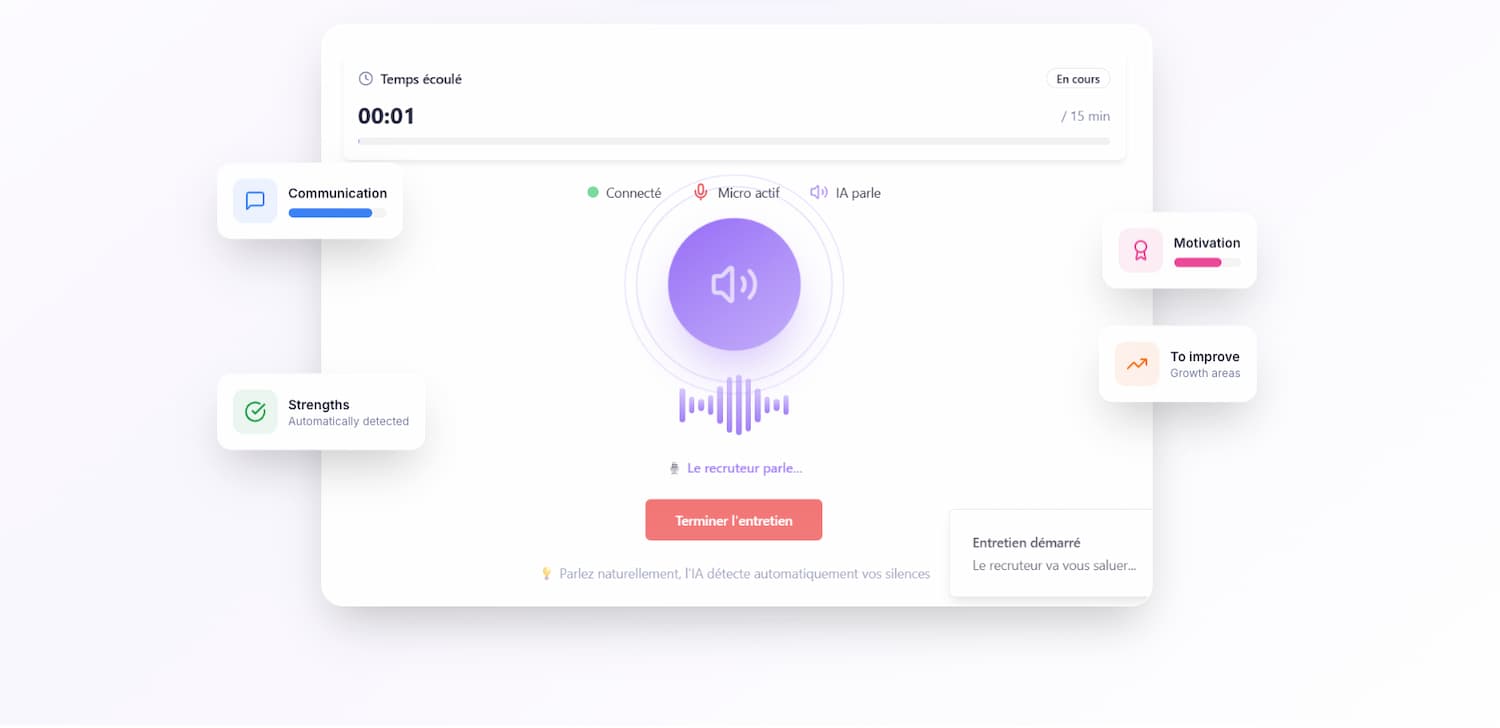
Persuasiv AI is an interview training platform designed to simulate real hiring conversations using artificial intelligence. Instead of reading generic advice or watching interview tips, you actually practice answering questions in a realistic environment.
According to its positioning, the goal is simple: help candidates join the top 3% of applicants by improving how they communicate, structure their answers, and present themselves.
The platform focuses on four key pillars:
- Realistic voice-based interview simulations
- Personalized AI questions tailored to your role
- Detailed performance analysis
- Progress tracking over time
Getting Started: Setting Up the Simulation
The onboarding process is straightforward. Before starting, the platform asks a few practical questions:
- Your current situation (actively applying or not)
- Your experience level
- Your target role
- Your desired timeline for preparation
- The difficulty level of the questions
In my test, I selected a communication-related role and chose a high difficulty level to see how demanding the AI could be.
Once the setup is complete, the interview begins immediately.
The Interview Experience: Surprisingly Realistic
The simulation starts with a virtual interviewer introducing itself as your coach and reminding you that this is a training session.
Then the questions begin.
The flow feels natural:
- “Please introduce yourself briefly.”
- Role-specific motivation questions
- Requests for concrete examples
- Follow-up questions based on your answers
What makes the experience interesting is the conversational logic. The AI doesn’t just ask generic questions — it reacts and digs deeper, just like a real recruiter would.
Even when answers are vague or improvised, the system continues the conversation without breaking the flow.
The Most Impressive Part: Instant Analysis
Once the simulation ends, Persuasiv AI generates a detailed breakdown of your performance.
The dashboard includes:
- Full transcript of your answers
- Overall communication score
- Response-by-response evaluation
- Strengths and weaknesses
- Suggestions for improvement
The analysis focuses on elements that matter in real interviews:
- Clarity and structure
- Relevance of examples
- Confidence and conciseness
- Use of filler words
- Ability to deliver concrete results
What stands out is how actionable the feedback is. Instead of generic advice like “be more confident,” the platform highlights exactly what worked and what didn’t.
Why This Matters More Than Traditional Preparation?
Most interview preparation methods rely on theory: articles, lists of common questions, or general coaching tips.
Persuasiv AI takes a different approach: practice first, feedback immediately.
This creates three major benefits:
- Reduced stress through repetition
- Faster improvement thanks to concrete feedback
- Better self-awareness about communication habits
The platform also tracks progress over time, allowing users to see measurable improvement across multiple sessions.
What Users Say?
User testimonials highlight the same core advantages:
- More confidence before real interviews
- Clear understanding of weaknesses
- Realistic practice environment
- Faster preparation compared to traditional methods
The platform reports high satisfaction levels, including strong user ratings and thousands of successful interview preparations.
Pricing and Accessibility
Persuasiv AI operates on a paid model, but the entry cost remains relatively accessible. During my test, a promotional offer allowed access to a simulation for a small fee, making it easy to try without a major commitment.
Considering the level of personalized analysis, the value proposition feels strong compared to traditional coaching sessions.
Who Should Use Persuasiv AI?
This tool is particularly useful for:
- First-time job seekers
- Candidates preparing for competitive roles
- Professionals changing careers
- Anyone who feels anxious about interviews
- People who want structured, measurable preparation
Limitations to Keep in Mind
While the experience is impressive, it’s not a complete replacement for real-world interaction.
Human interviews still involve emotional nuance, body language, and unpredictable dynamics.
However, as a training environment, the platform delivers exactly what it promises: realistic practice and clear improvement paths.
Final Verdict: A Practical AI That Delivers Real Value
Persuasiv AI doesn’t try to impress with flashy features or futuristic claims.
Instead, it focuses on a simple but powerful idea: helping you practice, analyze, and improve your interview performance.
The realistic simulations, detailed feedback, and measurable progress make it one of the most practical applications of AI for career development.
UCStrategies takeaway: In the growing market of career AI tools, Persuasiv AI stands out by solving a real pain point — turning interview preparation from theory into data-driven practice.
