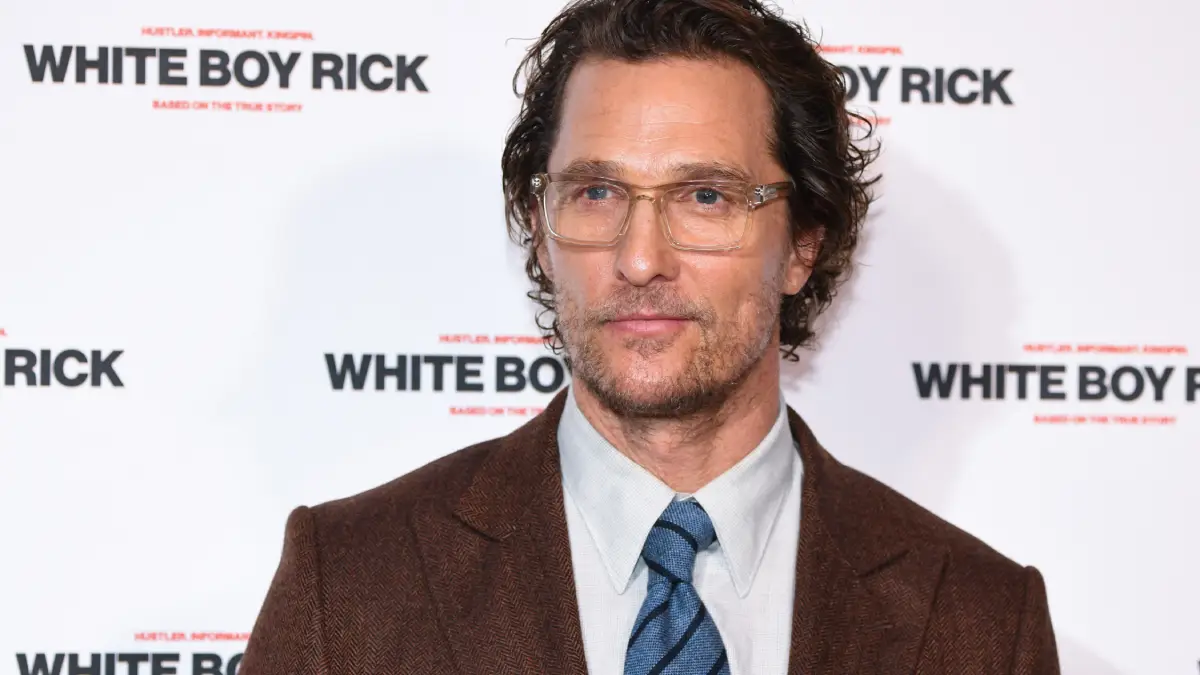
Digital technology evolves at breakneck speed, yet the threats it introduces seem to accelerate even faster. Among the most pressing challenges for artists and public figures is the rise of artificial intelligence, capable of replicating voices, faces, and entire personalities in mere seconds. In response to these concerns, Matthew McConaughey has taken an unconventional step: securing a patent on his likeness to prevent unauthorized usage by AI systems. This move draws attention to a growing dilemma in entertainment law while raising crucial questions about data protection and intellectual property in an algorithm-driven world.
Why do celebrities worry about AI copying their image?
Public figures such as actors and musicians depend profoundly on their personal brand. Recent advancements in AI have made it remarkably easy to create lifelike digital forgeries—often referred to as “deepfakes”—that mimic real people’s appearance, gestures, and voice. For stars like Matthew McConaughey, this issue extends well beyond reputation; it introduces direct financial risks as well.
Consider a scenario where a commercial features a digital replica of a celebrity endorsing products with which they have no association, all without their consent. These situations are no longer confined to science fiction. As AI becomes more sophisticated, its ability to produce convincing content can deceive both audiences and standard authentication tools. The outcome is a significant threat to one’s control over their own identity and every opportunity that depends on it.
How did Matthew McConaughey react to the AI risk?
Rather than waiting for legislation to catch up, McConaughey opted for a proactive solution. He pursued a patent crafted specifically to protect the use of his image—an innovative step among Hollywood personalities. While many public figures rely on copyright or trademark protections for their names and works, a patent designed to safeguard a person’s physical likeness marks a distinct shift in strategy.
This extra layer of legal defense ensures that any attempt to use McConaughey’s face, voice, or style in AI-generated material requires explicit authorization. It serves as a warning to companies developing AI technologies and sets a precedent that others in the industry may soon follow.
Understanding the difference between copyright, trademark, and patent rights
Celebrities traditionally turn to copyright laws to protect creative outputs, such as films and photographs. Trademark protection, on the other hand, applies to recognizable branding elements like names or logos. However, McConaughey’s choice highlights a critical gap: neither copyright nor trademark fully shields against digitized personality theft through AI. Patents usually cover inventions, but when used creatively, as demonstrated here, they provide a unique form of defense for the likenesses of living individuals.
This approach suggests that the current legal framework may require adaptation as artificial intelligence continues to blur the lines between reality and simulation. It also sends a clear message to studios, advertisers, and AI developers that rights over personal likeness deserve serious consideration.
Will other celebrities take the same route?
As news spreads regarding McConaughey’s patent, more high-profile individuals will likely explore similar measures. The potential costs associated with legal action are often outweighed by the risk of financial and reputational loss if unapproved digital copies circulate online. It is easy to imagine famous athletes, musicians, and global icons investigating new ways to protect themselves amid the rapid advances of AI-powered imitation.
This trend places additional pressure on governments and legal authorities worldwide. Should enough public figures adopt this tactic, there could be calls for updated legislation to ensure fairness not only for celebrities, but also for ordinary individuals whose images might be misused.
What makes patented image protection different?
A patent focused directly on an individual’s visual identity stands apart for several reasons. Unlike general copyright, which covers pre-existing works, or trademarks linked to business activity, a patent targeting likeness addresses technological reproduction head-on. For instance, if an AI system attempts to generate film scenes, advertisements, or interviews using McConaughey’s distinctive features without proper licensing, the creators now face tangible legal consequences.
Such protection effectively closes loopholes present in existing regulations and compels technology firms to proceed with caution. Although litigation costs remain considerable, the public nature of a patent—visible and searchable by anyone—serves as a clear boundary for both would-be infringers and fans regarding acceptable uses of celebrity material.
Possible impacts on media, advertising, and law
McConaughey’s decision reverberates across multiple industries, prompting companies to reconsider their approaches to likeness rights, consent, and digital endorsements. Studios preparing remakes or virtual cameos will likely pursue official agreements before digitally recreating stars—even after those stars retire. With advertisers increasingly turning to AI-generated media, respecting such patents helps avoid negative publicity and expensive legal battles.
Legal professionals and policymakers are paying close attention. Some scholars debate whether similar protections should become automatic or continue requiring active application, as with patents today. There are suggestions for a global registry of registered likenesses to streamline verification for tech platforms seeking to avoid accidental infringement.
- Studios may add clauses in contracts covering future AI reproductions.
- Technology developers could implement detection tools to block unauthorized use of facial data.
- Fans and consumers benefit from clearer standards distinguishing legitimate from fake endorsements.
| Type of protection | Traditional focus | Relevance for AI era |
|---|---|---|
| Copyright | Creative works already fixed (movies, songs) | Limited; does not cover personality traits or lookalikes |
| Trademark | Brand names, logos, catchphrases | Helps with endorsement and product tie-ins, not full persona |
| Patent for likeness | Usually inventions, now extended to appearances | Directly tackles AI-based replication of identities |
Looking ahead at identity protection in the age of AI
The advance of AI puts new pressure not just on public figures, but on society’s understanding of what can—and cannot—be imitated. As technology surges forward each year, proactive solutions like McConaughey’s patent highlight possible futures: ones where personalities, not merely creations, become assets to defend in both courtrooms and boardrooms.
No solution offers absolute security, yet renewed focus on individual rights and inventive legal strategies gives performers hope that their faces, voices, and character will remain under their control—no matter what digital trends emerge next.