

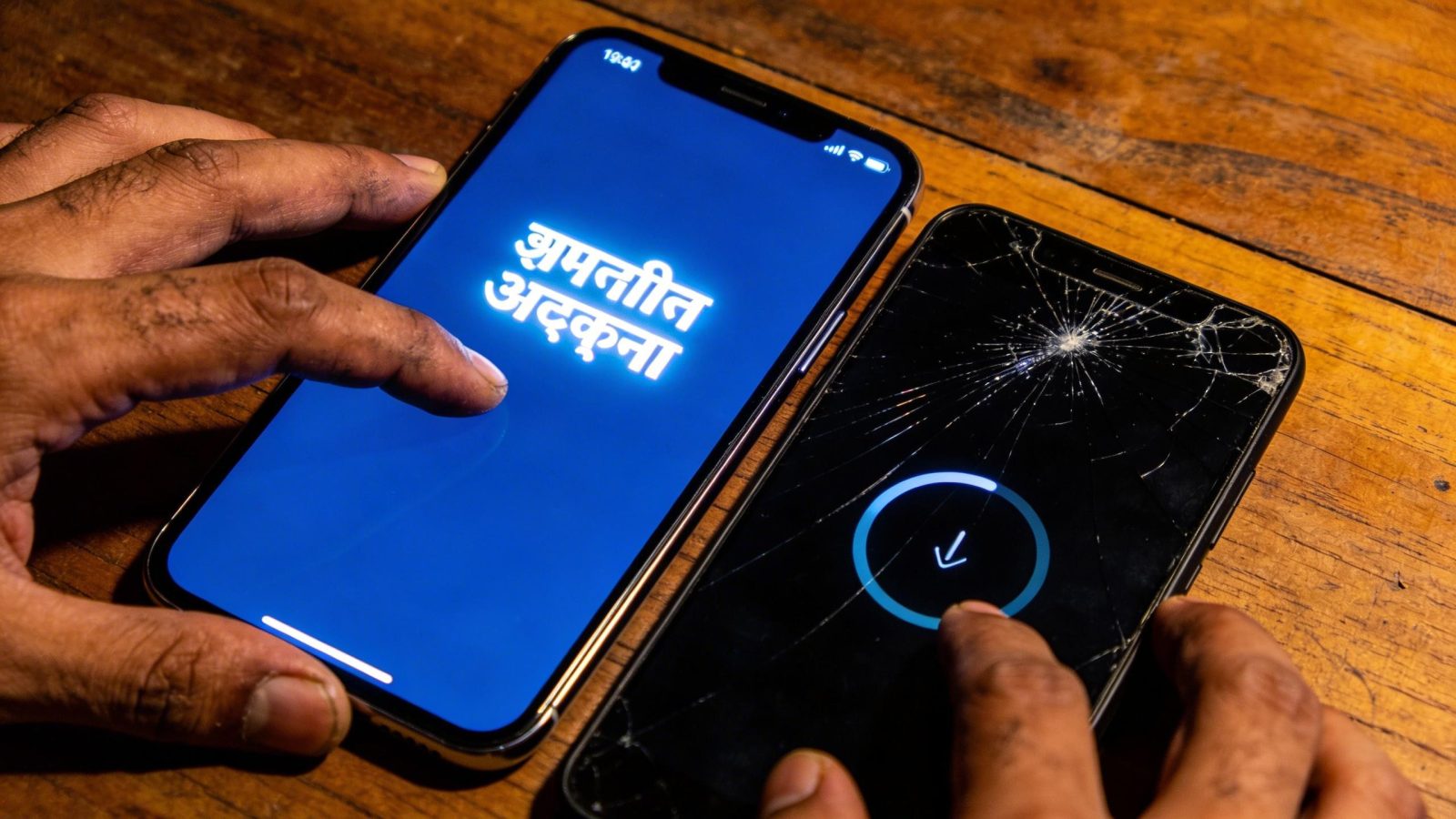
Sarvam Edge just beat Google at speech recognition in Hindi. The catch? You need a phone that costs more than ₹39,999 ($480)—in a country where most smartphones sell for under ₹15,000.
On February 14, Indian AI startup Sarvam.ai launched Sarvam Edge, a 294MB speech recognition model that runs entirely offline and outperforms Google Cloud STT on Hindi and Gujarati benchmarks. It’s a technical marvel: 74 million parameters, 200 milliseconds to first token, streaming at 30 tokens per second. The kind of performance that makes you wonder why anyone pays for cloud APIs.
Then you see the hardware requirement.
The model works. The math doesn’t.
Sarvam’s speech recognition model—the kind of tech driving voice AI replacing typing in Western offices—runs entirely offline. According to Sarvam’s February 14 blog post, it supports 10 Indic languages for speech recognition and delivers 8.5x real-time processing on a Snapdragon 8 Gen 3 chip. On real-world benchmarks using the Vistaar dataset, it beats Google’s cloud service on accuracy.
The translation model is even more compact: 60MB covering 11 languages in 110 translation pairs. It outperforms Meta’s NLLB-600M model—four times larger—on FloRes Indian language benchmarks. For a startup competing against trillion-dollar companies, these are legitimately impressive numbers.
But here’s what Sarvam didn’t benchmark: performance on the phones most Indians actually own.
The Snapdragon 8 Gen 3 requirement isn’t a suggestion. It’s the difference between 200ms latency and unusable lag. And phones with that chip start at ₹39,999. Most sell closer to ₹60,000. In a market where budget devices under ₹15,000 reportedly dominate volume, Sarvam just built offline AI for the 20% who already have reliable internet.
India’s premium phone problem just became an AI access problem
Let’s do the economics. A Snapdragon 8 Gen 3 phone costs roughly three months’ salary for India’s median farm worker. Qualcomm holds 40% market share in the above-₹25,000 segment and 30% overall in 2025—but that concentration tells you everything about who can afford this technology.
The irony: discussions about AI’s impact on high-skill jobs assume workers can afford the devices running that AI.
Reddit users celebrated the launch with “Finally AI that works in villages without Jio signal.” Hacker News called it a “game-changer for teachers and farmers.” But Sarvam provided no budget-device benchmarks. No latency numbers for a ₹12,000 phone. No acknowledgment that “offline AI for India” might exclude 80% of India.
Digital inclusion advocates have yet to weigh in publicly. Google and Meta have not responded to Sarvam’s accuracy claims.
What Sarvam actually built—and who it’s for
This is production-grade tech for India’s emerging middle class with flagship phones. It’s not democratization—it’s a premium feature for people who already have options. The “offline” angle matters for privacy and eliminates cloud API costs, but the hardware gate means this helps the 20% who need it least.
With India’s 250 million job AI impact looming, the access gap isn’t just inconvenient—it’s structural. Sarvam’s hardware dependency echoes the same supply chain reality facing India’s $1.2B AI independence plan: brilliant software trapped behind silicon most people can’t buy.
The company solved offline AI. They just didn’t solve offline India.
