

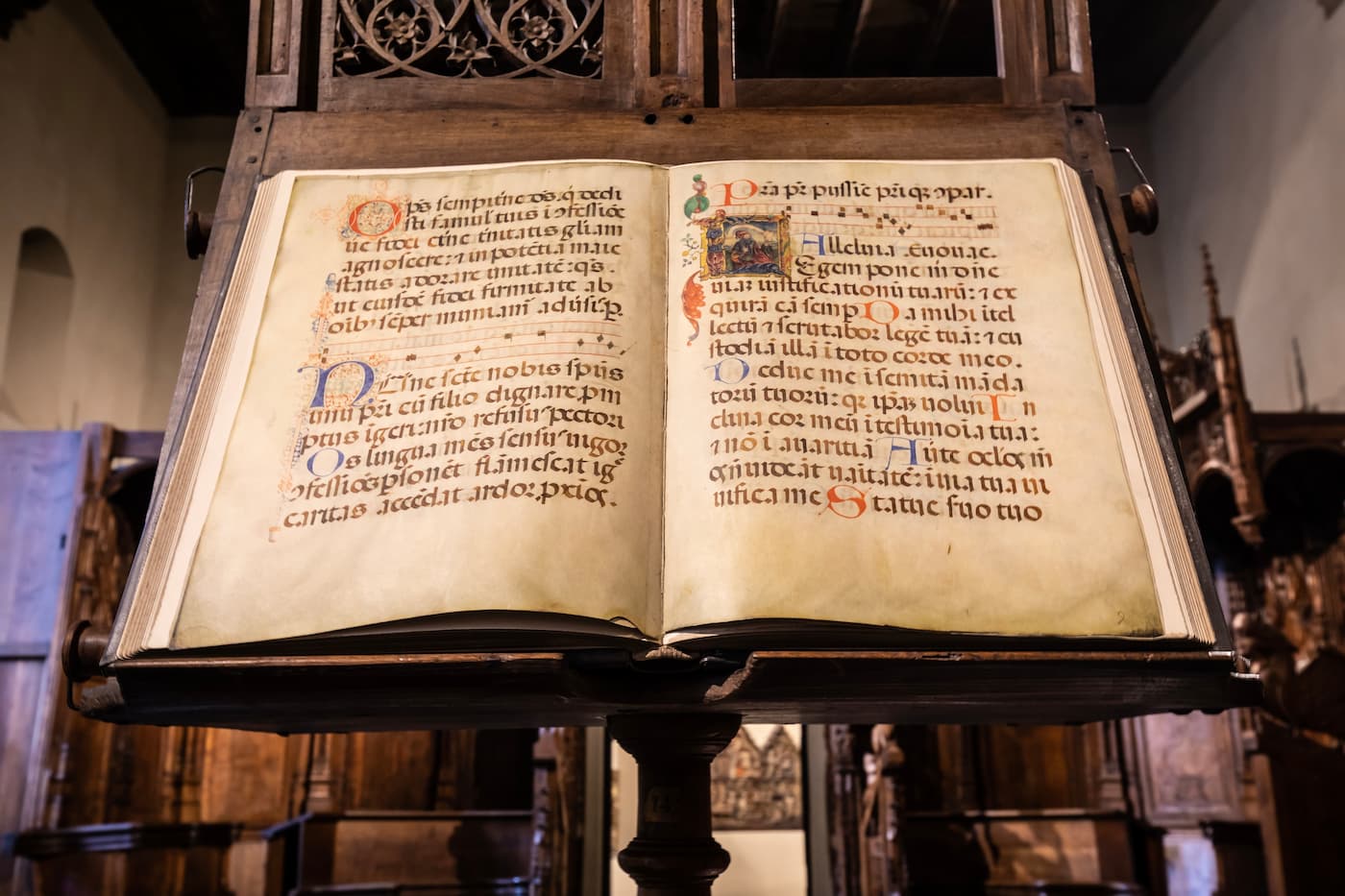
Medieval manuscripts have long fascinated historians and philologists, but for centuries their wealth of knowledge remained locked behind intricate scripts, fragile parchment, and daunting language barriers. Today, artificial intelligence is transforming the study of these ancient texts, turning a once painstaking scholarly process into something fast, scalable, and remarkably accessible. What previously demanded months of dedicated effort from human experts can now be accomplished in almost the time it takes to brew a pot of coffee.
How artificial intelligence approaches centuries-old handwriting?
Transcribing medieval manuscripts presents a truly unique challenge. Handwriting styles varied dramatically—even within the same work—and scribes often made idiosyncratic spelling choices. Traditional methods required teams of trained paleographers who spent years mastering the art of deciphering such arcane writing, slowly working through each line. Artificial intelligence changes this dynamic by automating much of the repetitive labor, learning from digitized samples until computers can “read” old scripts with impressive skill.
Some AI models, such as Kraken, stand out in this field thanks to their ability to process large sets of images and reliably convert handwritten pages into digital text. This automation does not replace scholars but acts as tireless support, helping unlock entire libraries that would otherwise overwhelm even the most dedicated expert teams.
What makes modern projects successful?
Recent international collaborations illustrate how scaling up changes everything. Rather than focusing on a cherished handful of books, research groups now scan and analyze thousands of pages at once. The main ingredients behind this success are precise digitization techniques and advanced machine learning algorithms capable of adapting to messy, centuries-old sources. Projects like CoMMA bring together these components, enabling researchers worldwide to tackle expansive manuscript collections wherever they are stored.
A typical workflow involves scanning high-resolution images, feeding them into custom-trained AI, and retrieving nearly complete transcriptions in just minutes. While this leap forward saves countless hours, some level of human oversight remains essential to ensure accuracy. Scholars still review and correct outputs where needed, particularly since current error rates hover around 10 percent.
Why speed alone is not enough?
Rapid transcription opens new possibilities, but challenges endure. Medieval documents contain nuances—smudged ink, faded passages, regional dialects—that push machines beyond standard optical character recognition tools. Preserving fidelity to the original requires careful calibration and ongoing collaboration between technologists and historians, ensuring each document’s true character survives its translation to digital form.
While speed attracts attention, nuance earns trust. Much of what distinguishes outstanding AI-assisted research lies in fine-tuning results, actively comparing machine-generated versions against expert interpretations. This iterative process gradually raises quality, making each digital facsimile more faithful to its source.
Is the partnership between humans and AI lasting?
Rather than replacing traditional expertise, intelligent software amplifies what human specialists can achieve. Automation excels at handling repetitive tasks, while nuanced interpretation remains firmly in the domain of scholars. This synergy has become a model for blending deep historical insight with twenty-first-century computing power.
In practical terms, human validation continues to play a crucial role, whether standardizing language, resolving ambiguities, or correcting those persistent ten percent of errors that algorithms cannot resolve.
Broadening access to forgotten treasures
Perhaps the most profound impact of these innovations is found in increased access—not only for scholars and linguists, but also for educators, students, and anyone intrigued by the Middle Ages. Many manuscripts, once hidden due to limited resources or institutional priorities, are stepping into the spotlight as digital archives expand.
By eliminating previous barriers, artificial intelligence creates opportunities to enrich classroom lessons, drive new research, and foster interdisciplinary dialogue throughout the humanities. Cultural heritage institutions are now poised to share rare works far beyond their physical locations.
- Entire medieval libraries can be studied in weeks instead of decades.
- Distant scholars gain near-instant access to global collections.
- Multilingual materials receive broader research visibility.
- Collaboration across borders becomes seamless.
Standardization: benefit or risk?
Turning diverse manuscripts into standardized texts serves practical needs, facilitating computational analysis and cross-comparison that were impossible in the past. Yet, there is concern about losing subtle distinctions valued by specialists. Original spellings, marginal notes, personal flourishes—all contribute to historical richness.
Researchers strive to balance efficiency with preservation of detail. Where automation smooths over complexities, manual validation seeks to restore missing nuances, reinforcing both the integrity and humanity of the resulting text.
| Traditional method | AI-enhanced method |
|---|---|
| Months or years per volume | Minutes or hours per volume |
| Small, focused teams | Large-scale, collaborative networks |
| Limited accessibility | Global sharing possible |
| Manual checking throughout | Human verification mainly at final stage |
The future of studying medieval cultures
The convergence of artificial intelligence and the humanities is reshaping how medieval societies are understood and appreciated. Vaults of knowledge that were once sealed are opening steadily, enabling extensive comparison of languages, cultural traditions, and writing styles. Collaboration between programmers and classicists stands out as a defining feature, fueling progress as technology continues to evolve.
With every new page rendered readable, decisions about preservation, interpretation, and dissemination take on greater significance. If present trends persist, future generations may inherit a richer and more interconnected portrait of the distant past—a legacy bridging both eras and disciplines.
