Headlines have been flying in recent weeks: “Gemini is catching up to ChatGPT”, “750 million users vs. 900 million”, “Google is closing the gap”.
On paper, it looks like a neck-and-neck race. In reality, it’s a classic case of metrics theater.
Google just announced that Gemini passed 750 million users following its strong Q4 2025 earnings. ChatGPT, by comparison, sits at around 900 million users.
But those two numbers are not measuring the same thing — and the difference matters more than the gap.
750 million vs. 900 million… measured in two different ways
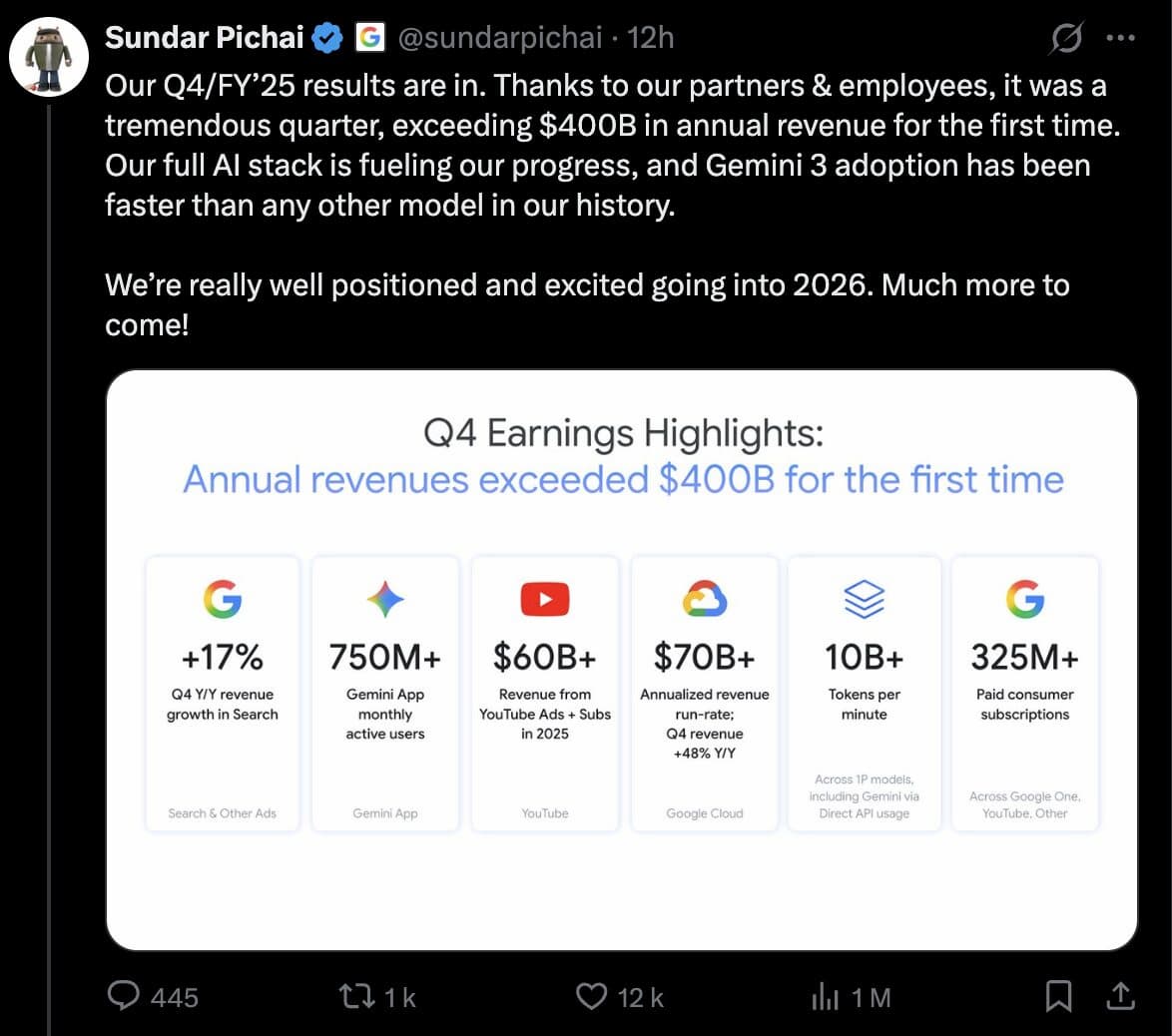
Google counts monthly active users. OpenAI counts weekly active users.
That single detail completely changes the picture. Someone who opens Gemini once a month — even briefly — is counted as an active user. With ChatGPT, that same person wouldn’t count at all unless they come back every week.
In practical terms, 900 million weekly users is a much stronger signal than 750 million monthly users.
If OpenAI reported monthly usage, ChatGPT would almost certainly be well above one billion users today.
Conversely, if Google reported weekly users for Gemini, the number would likely be far lower — potentially half of the monthly figure.
Yes, Gemini is growing fast — just not “caught up”
None of this means Gemini is struggling. Quite the opposite.In March 2025, Gemini had around 350 million monthly users. Less than a year later, it’s crossed 750 million. That’s more than a 2× increase in twelve months — a very real acceleration.
On the model side, Google has largely closed the technical gap. Gemini 3 Pro and Gemini 3 Flash perform at the very top of public benchmarks, and in many evaluations they rival — or beat — the latest GPT releases.
The remaining gap isn’t about raw intelligence anymore. It’s about product maturity and habits.
ChatGPT still wins on usage, features, and mindshare
As a service, ChatGPT still leads on several fronts: conversation projects, long-term memory, multi-user chats, offline conversation access, and overall polish.
More importantly, ChatGPT has something Google can’t brute-force with distribution: brand association.
For many users, “AI” still means “ChatGPT” — the same way “search” once meant “Google.”
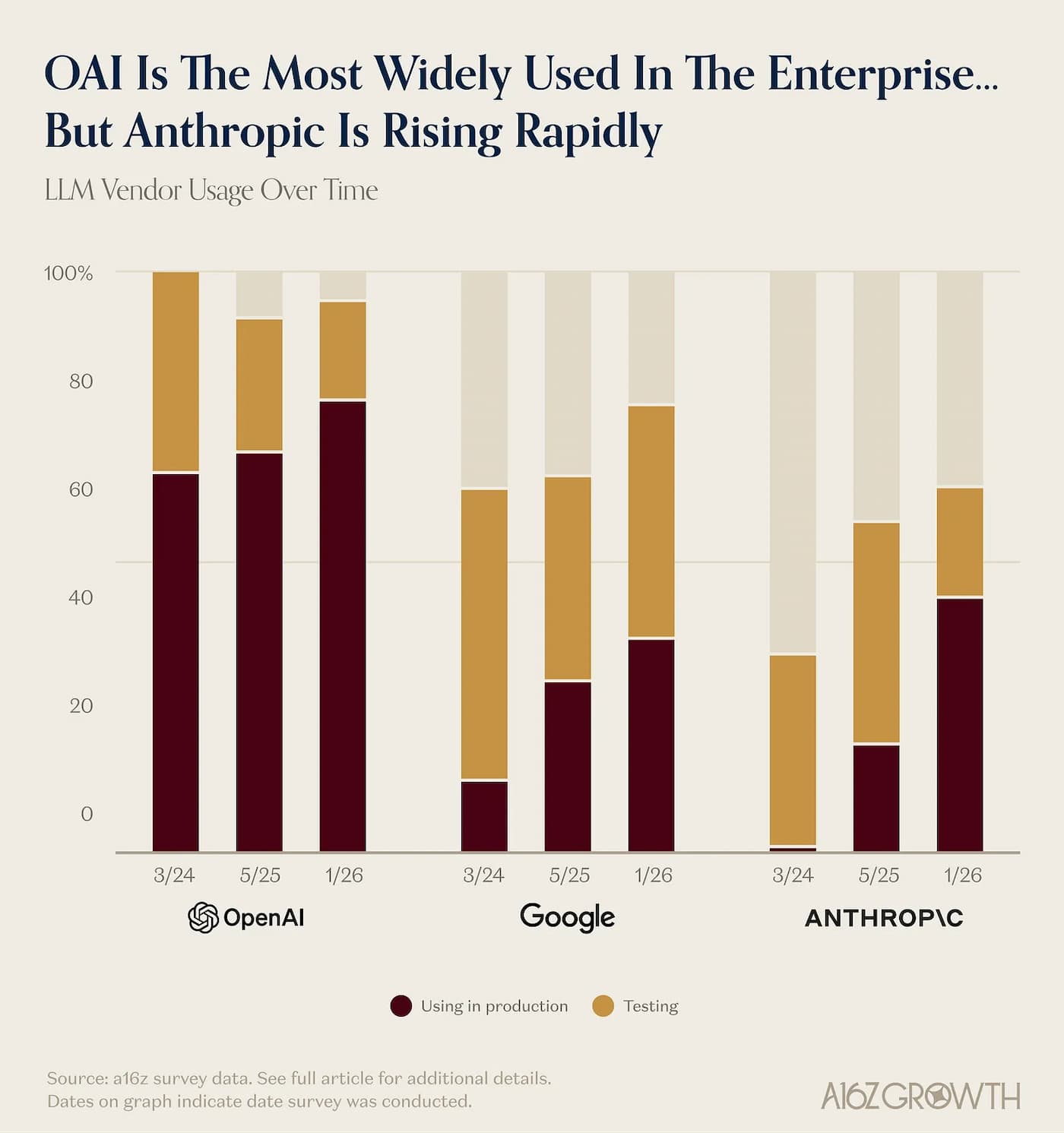
Industry data reflects that inertia. Surveys of large companies show that a clear majority still rely on GPT models in production, even as Gemini and Claude gain traction.
Google’s advantage isn’t the chatbot race
There’s a bigger picture here that raw user counts miss. Google doesn’t actually need Gemini to beat ChatGPT as a standalone chatbot.
Its strategy is to embed AI everywhere — Search, Gmail, Docs, Android, Workspace.
In total reach, Google’s AI already touches far more people than any single OpenAI product ever could. Gemini doesn’t have to win the popularity contest to win the platform war.
The likely outcome in 2026 isn’t Gemini “overtaking” ChatGPT overnight. It’s a slow narrowing of the gap, while Google quietly turns AI into default infrastructure.
So yes — Gemini is growing fast. No — it’s not actually on the verge of overtaking ChatGPT. And that distinction is exactly why headline comparisons deserve a second look.