

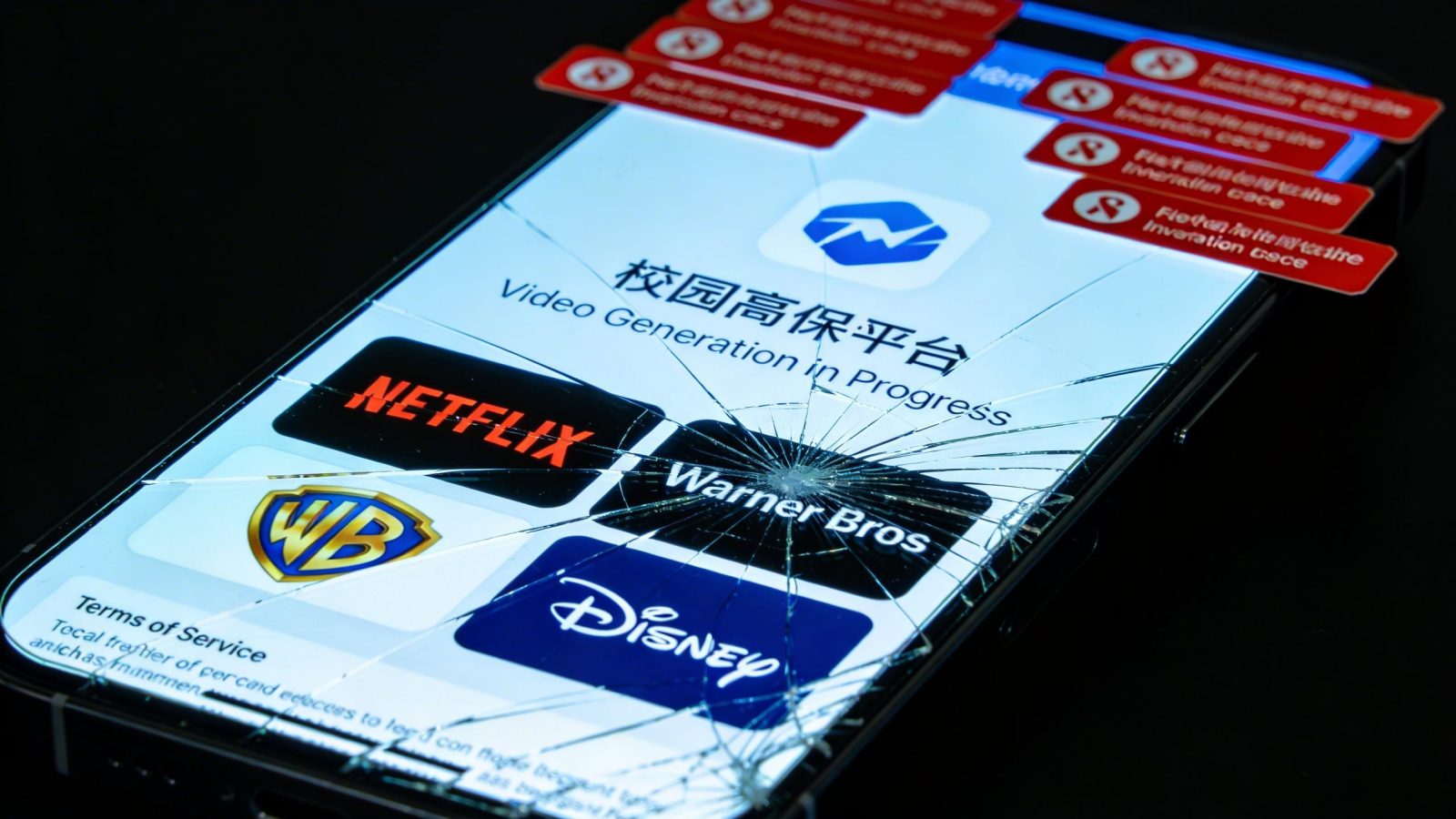
China threw a party for AI video generation. Hollywood sent lawyers.
ByteDance’s Seedance 2.0 debuted at the Spring Festival Gala on February 17, 2026, generating animated backdrops for live performances watched by hundreds of millions. Within 24 hours, Netflix, Warner Bros., Paramount, and Disney sent cease-and-desist letters threatening legal action. This isn’t a philosophical debate about AI ethics—it’s active legal warfare with named plaintiffs and specific IP violations. The collision reveals something bigger: computational dominance without global legitimacy is worthless.
ByteDance processed 10x ChatGPT’s throughput during one broadcast—and it’s locked to China
ByteDance’s AI video generation platform hit 63.3 billion tokens per minute during the Gala broadcast—ten times higher than ChatGPT’s peak API throughput of 6 billion tokens per minute recorded in October 2025. The platform logged 1.9 billion interactions across ByteDance’s AI services that single day.
Impressive.
But the tool can’t operate outside China. ByteDance kept Seedance 2.0 geofenced from launch, reportedly due to copyright fears that proved justified when the studios moved. The computational achievement is real—the geographic limitation makes it irrelevant for global creators who might otherwise license it. You can process all the tokens you want. If you can’t ship the product beyond one jurisdiction, you’ve built a very fast calculator that nobody else can use.
Four studios sent cease-and-desist letters within 24 hours—and named specific properties
Netflix accused ByteDance of treating their IP “as free, public domain clip art,” citing unauthorized use of “Squid Game” sets, “Bridgerton” costumes, and “KPop Demon Hunters” character design. Warner Bros. flagged “Harry Potter,” “Lord of the Rings,” and Batman. The letters arrived February 18, 2026—one day after the Gala.
The legal action followed AI-generated celebrity videos that sparked industry outrage in early February, including a viral Tom Cruise vs. Brad Pitt fighting clip. SAG-AFTRA condemned Seedance 2.0 for “disregarding law, ethics, industry standards and basic principles of consent,” calling it unacceptable that the tool uses actors’ voices and likenesses without permission.
Screenwriter Rhett Rheese, who wrote the Deadpool franchise, posted: “I hate to say it. It’s likely over for us.”
That’s the real human cost. Not abstract concerns about AI disrupting Hollywood—actual creative professionals watching the technology generate their work for free while studios threaten lawsuits that can’t reach across jurisdictional lines.
The “safeguards” ByteDance promised could kill what makes Seedance 2.0 powerful
ByteDance reportedly pledged to implement safeguards in response to the legal threats. But here’s the paradox nobody’s discussing: the tool’s architecture is designed to absorb vast visual media datasets—the exact mechanism enabling the copyright violations Hollywood cited. Strengthening content filters may cripple the model’s core capabilities.
And the China-only availability remains. ByteDance isn’t expanding global access—it’s fortifying domestic dominance while Hollywood’s legal machinery grinds forward with no clear enforcement path. The real winners aren’t creators. They’re Chinese tech evangelists celebrating industrial achievement at the Spring Festival Gala while screenwriters, costume designers, and VFX artists watch AI generate their work at scale.
The jurisdictional stalemate is complete: China logged 1.9 billion interactions in a single day, showcasing AI video generation as a civilizational breakthrough. Hollywood sent four studios’ worth of cease-and-desist letters, treating identical technology as IP theft requiring immediate legal action. Neither side is backing down. Computational power and legal legitimacy have completely diverged.
One country’s breakthrough. Another’s theft.
