
Modern enterprise AI voice agents now achieve sub-500ms latency and 95% intent recognition accuracy, effectively bridging the gap between automated systems and human-like interaction. Despite these advancements, high operational overhead and data security risks persist for organizations relying on legacy infrastructure.
This evaluation identifies the best ai voice agents for enterprise customer service by analyzing technical benchmarks, CRM integration capabilities, and SOC 2 compliance standards. We break down the top-tier solutions to help you optimize your contact center performance.
- Best AI Voice Agents for Enterprise Customer Service: Selection Framework
- PolyAI: The Standard for Natural Conversational Depth
- Dialpad AI: Seamless Integration for Modern Support Teams
- NICE CXone: Behavioral Analytics at Massive Scale
- Talkdesk: Specialized Automation for Regulated Verticals
- Five9: Orchestrating Complex Multi-Modal Journeys
- Genesys Cloud CX: Enterprise Scalability and Reliability
- Air: Rapid Deployment for High-Volume Interactions
- ZIWO AI: Sovereign Infrastructure and Emerging Markets
Best AI Voice Agents for Enterprise Customer Service: Selection Framework
Enterprise AI voice agents prioritize sub-500ms latency, SOC 2 compliance, and seamless CRM bi-directional syncing. Top-tier platforms like PolyAI and NICE CXone ensure 95%+ intent recognition accuracy, directly reducing operational overhead through automated post-call documentation.
The focus on technical benchmarks leads directly into the critical role of response speed and natural language understanding.
Latency and Real-Time Intent Recognition
High latency destroys customer trust instantly. Overlapping speech creates immense user frustration. Human-like flow requires staying below the sub-second response threshold.
Sub-500ms latency is the industry benchmark. Exceeding this causes overlapping speech and destroys human-like conversational flow.
Modern LLM inference speeds far exceed old NLU systems. Specialized hardware acceleration now powers these interactions. Fast intent recognition prevents awkward silences. Speed is a technical necessity.
Speed directly dictates customer satisfaction. It remains the primary indicator for production readiness.
Integration with CRM and Ticketing Ecosystems
Bi-directional data flow with Salesforce or Zendesk is mandatory. Real-time data access ensures contextual relevance. Agents deliver personalized greetings based on CRM history.
Platforms perform automated record updates immediately after calls. This eliminates manual administrative work for staff. Data accuracy and consistency improve significantly.
Reliable systems like Aircall qualify prospects and update records instantly. Modern enterprises use the best AI note-taking apps to maintain high data integrity across all customer touchpoints.
Compliance, Security, and Data Sovereignty
GDPR and HIPAA requirements govern all voice data. PII leaks in transcripts represent a severe risk. Encryption standards must protect every voice stream.
Cloud processing differs from self-hosted sovereign infrastructure. Regulated industries often require local data residency. Maintenance costs vary across these models. SOC 2 Type II certification remains a primary requirement.
Security serves as the non-negotiable foundation. It enables enterprise-grade trust for long-term deployment.
Human Handoff and Context Transfer Protocols
Technical “safe transfer” logic prevents dropped calls. Context packets move seamlessly to human agents. Customers never repeat their problems during transitions.
Sentiment-based routing triggers immediate escalations. Detecting anger or confusion forces a human intervention. Real-time emotional analysis guides these decisions.
While firms like Newo raise capital to automate receptionists, maintaining a robust handoff protocol prevents costly errors. Top AI voice agents for automating enterprise customer service balance automation with human expertise.
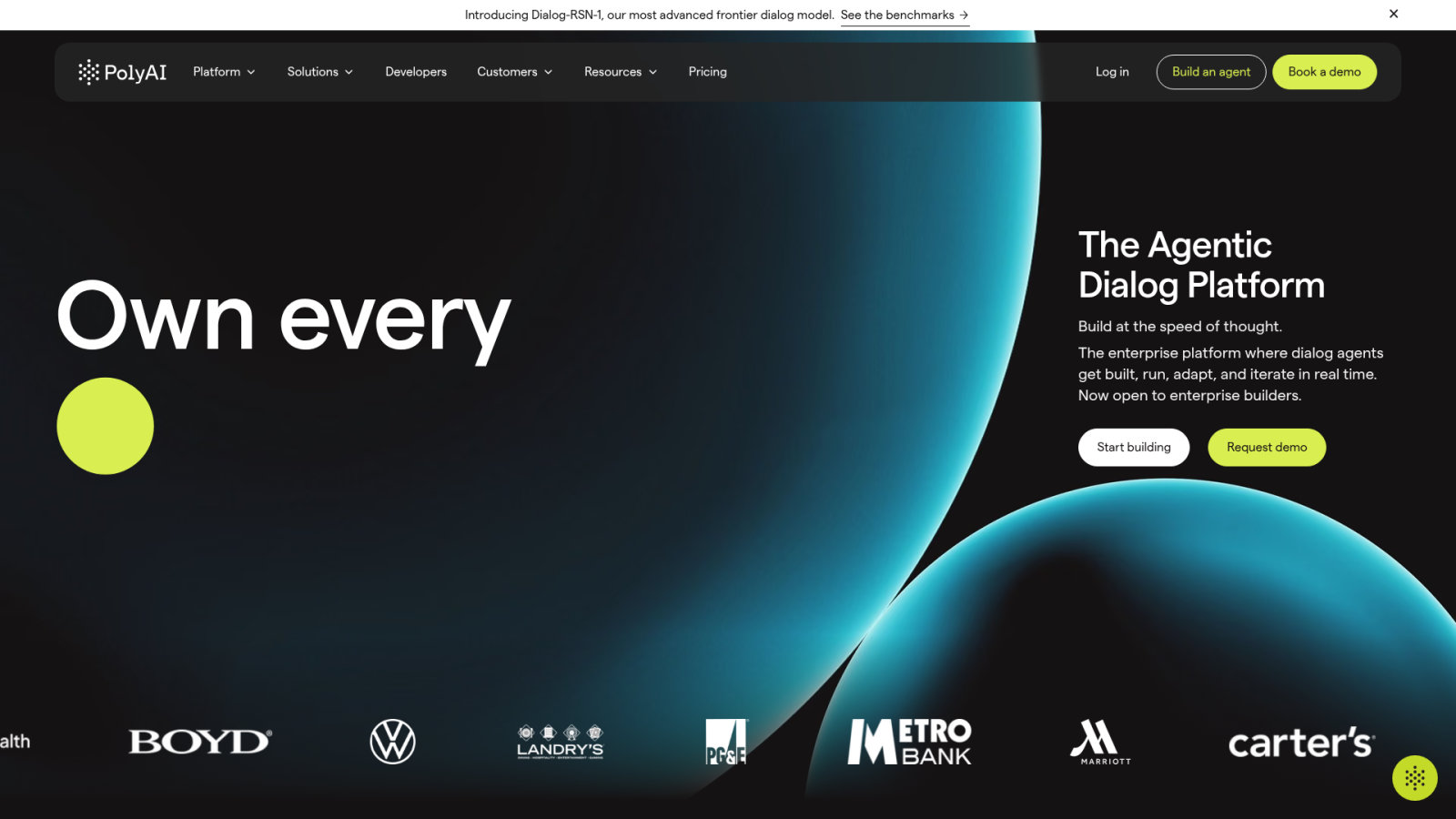
PolyAI: The Standard for Natural Conversational Depth
PolyAI distinguishes itself by rejecting generic models. The provider utilizes a specialized architecture. This framework effectively manages the inherent complexity of human speech.
Proprietary Speech Architecture
PolyAI reduces word error rates significantly. The system demonstrates high resistance to background noise. Its speech-to-text engine maintains clarity in unpredictable environments.
The agent handles frequent interruptions seamlessly. It preserves context during sudden intent shifts. The “barge-in” capability serves as a primary feature. Conversations maintain a natural flow.
Proprietary stacks outperform standard LLM wrappers in production. Custom architecture ensures consistent reliability. This focus stabilizes the voice interface performance.
Technical superiority in proprietary stacks directly dictates the user experience. Reliable infrastructure prevents the common failures seen in generic solutions.
Industry-Specific Fine-Tuning
Performance gains are evident in banking and hospitality sectors. The system handles industry-specific jargon accurately. Pre-trained models accelerate enterprise deployment timelines.
| Pricing Model | Core Logic | Best For | Risk Level |
|---|---|---|---|
| Outcome-based | Cost per resolved intent | High-volume resolution | Low (Vendor risk) |
| Per-minute billing | Cost per duration | General support | High (Enterprise risk) |
Outcome-based pricing aligns vendor incentives with client goals. Large volumes benefit from predictable costs. This method contrasts with traditional, duration-heavy telecom billing.
High-volume call centers see immediate ROI. The model prioritizes the financial value of resolved issues over mere airtime.
Outcome-based pricing shifts the risk from the enterprise to the vendor, ensuring the AI actually delivers measurable business value.
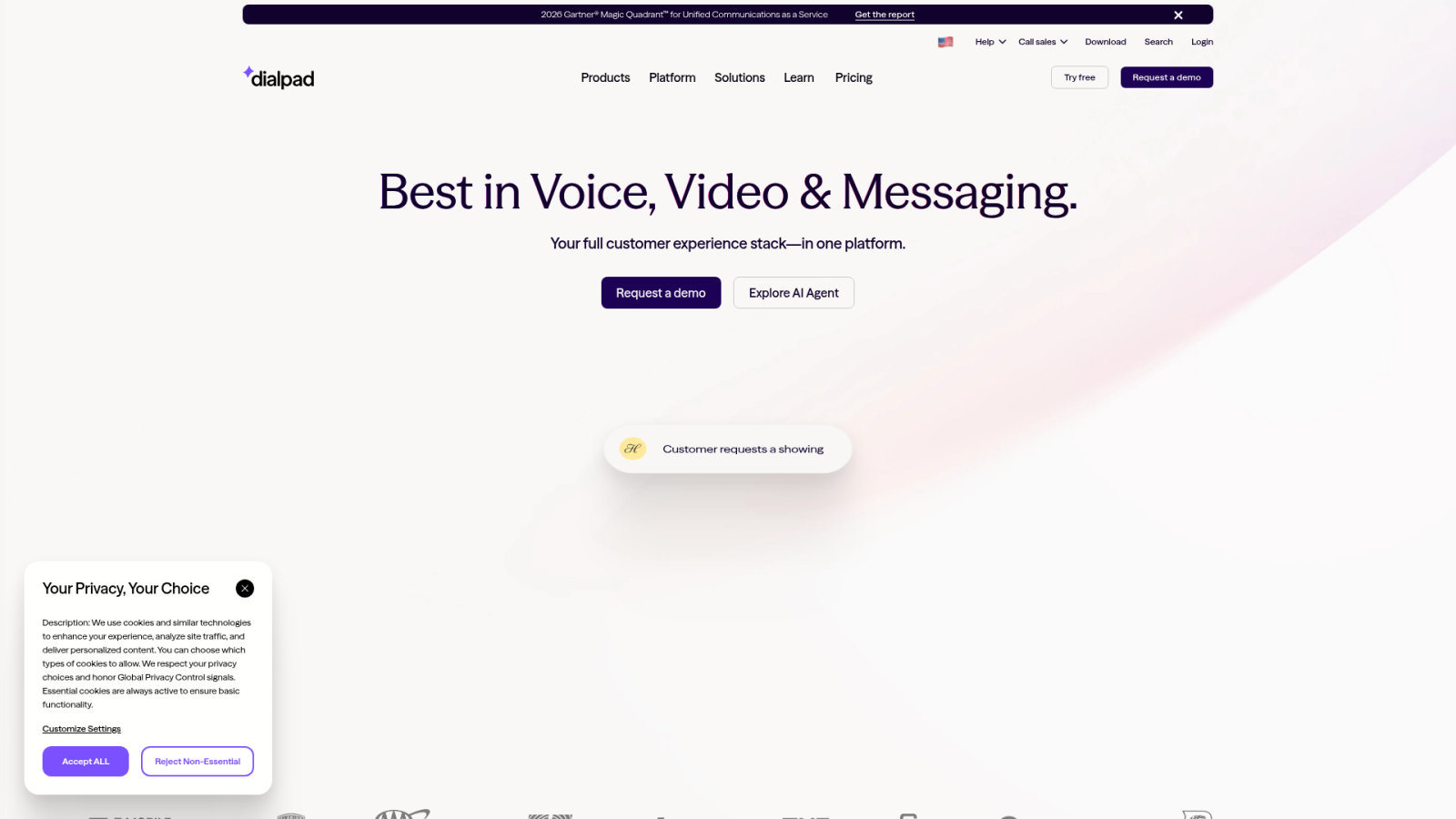
Dialpad AI: Seamless Integration for Modern Support Teams
Dialpad bridges the gap between automated response and human assistance by embedding AI directly into the communication flow.
Real-Time Transcription and Agent Coaching
Dialpad AI Live Coach provides immediate suggestions to human agents during active calls. The system actively listens to the ongoing conversation. It triggers instant pop-up cards containing precise answers to customer queries.
Their native Speech-to-Text engine delivers high accuracy across diverse regional accents. Local processing ensures minimal latency for real-time feedback. This technology significantly reduces agent training time. Managers see faster proficiency in new hires.
Effective automation requires comparing specialized tools, such as Murf AI vs ElevenLabs, to find the right voice fit. Choosing high-quality synthesis enhances the overall customer experience during automated interactions.
The system automatically generates post-call summaries after every interaction. This feature saves agents several minutes of manual data entry per call. Workflow efficiency increases as documentation becomes instantaneous.
Productivity gains are substantial. The hybrid human-AI model ensures consistent, high-quality support across all channels.
Native CCaaS and UCaaS Synergy
Consolidating communications into a single platform eliminates operational silos. Managers oversee internal calls and external support through one interface. This unified data view simplifies performance tracking across the organization.
Deployment is straightforward for existing users who simply activate the feature. No complex API middleware is required for integration. This native approach accelerates speed to market. Businesses avoid lengthy technical setups.
- Reduced hardware costs
- Unified billing
- Centralized security management
- Simplified agent onboarding
The global voice network ensures high reliability and consistent uptime. Call quality remains stable for international enterprise operations. Connection stability is a core platform strength.
Consolidated stacks drive operational efficiency. A lower total cost of ownership makes this an attractive enterprise solution.
NICE CXone: Behavioral Analytics at Massive Scale
Transitioning from basic automation to deep behavioral intelligence requires a shift in how interaction data is processed and utilized.
Enlighten AI Framework
NICE CXone processes massive conversational datasets to drive predictive accuracy. The system evaluates customer satisfaction mid-call by analyzing behavioral patterns. It scores agent soft skills automatically across every interaction.
Emotional tone management identifies customer frustration in real-time. The AI suggests de-escalation tactics to stabilize tense exchanges. This creates a feedback loop for voice bots. These adjustments directly improve Net Promoter Scores.
Effective deployment ensures that 40% of enterprise apps will run AI agents by 2026, necessitating robust behavioral control mechanisms.
Proprietary behavioral models analyze intent beyond simple keyword spotting. They detect nuance in human speech patterns. This sophistication differentiates the platform from standard IVR systems.
The analysis operates at an immense scale. It processes millions of calls to refine predictive models.
Predictive Routing and Workforce Sync
The system synchronizes bot activity with human agent availability. Real-time tracking monitors staff occupancy levels. The voice bot holds calls during volume peaks to maintain service levels.
A centralized dashboard displays automated versus human resolution rates. Managers use these metrics to pinpoint specific training gaps. This visibility ensures operational transparency across the entire contact center.
Workforce Management integration enables capacity-aware routing. The AI balances interaction loads across global teams. This prevents agent burnout while maintaining high response speeds.
“True scale in the contact center requires AI that understands not just what is said, but how the customer feels.”
Leveraging behavioral data provides a long-term strategic advantage. It transforms raw speech into a permanent asset for customer retention.
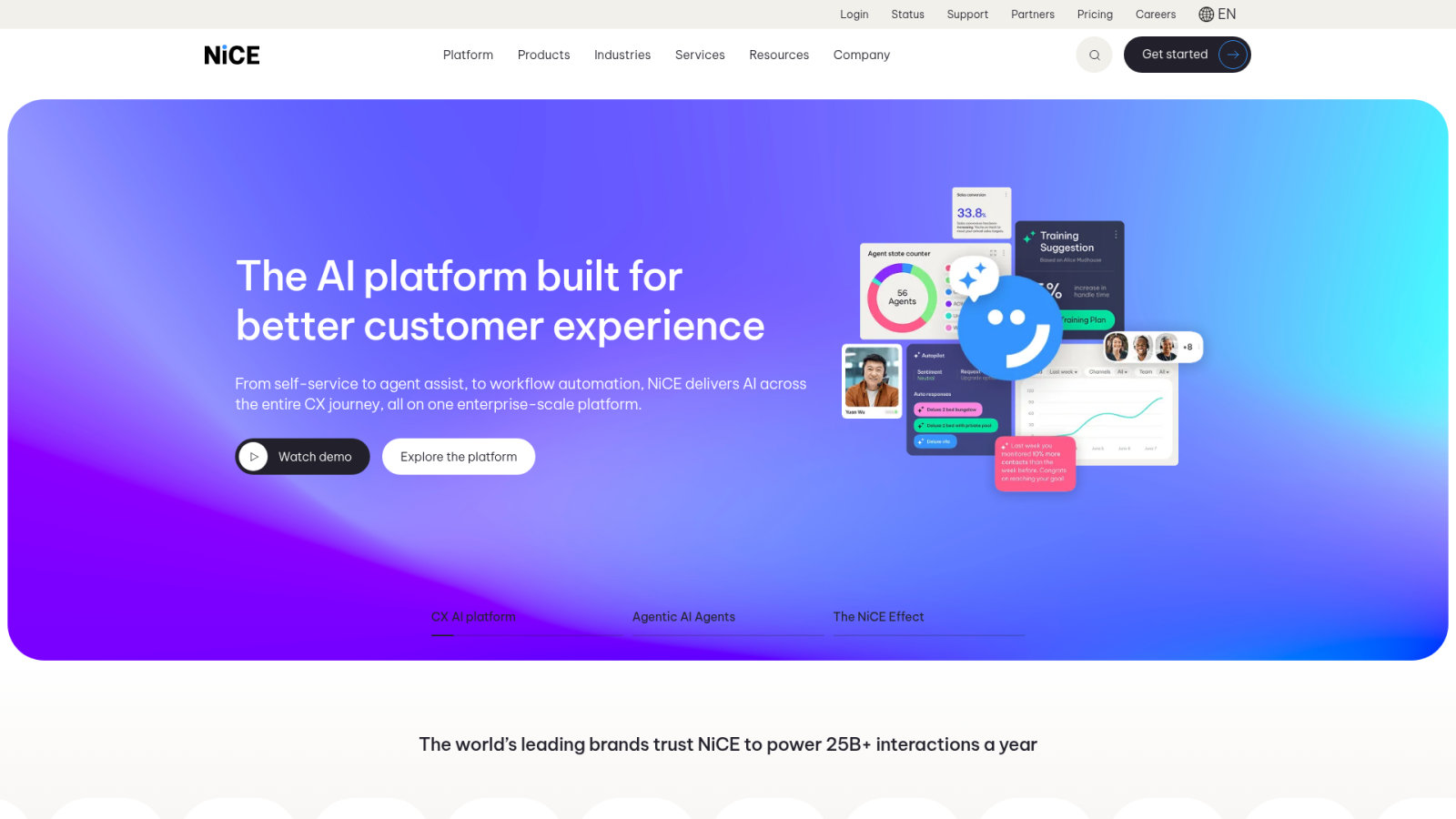
Talkdesk: Specialized Automation for Regulated Verticals
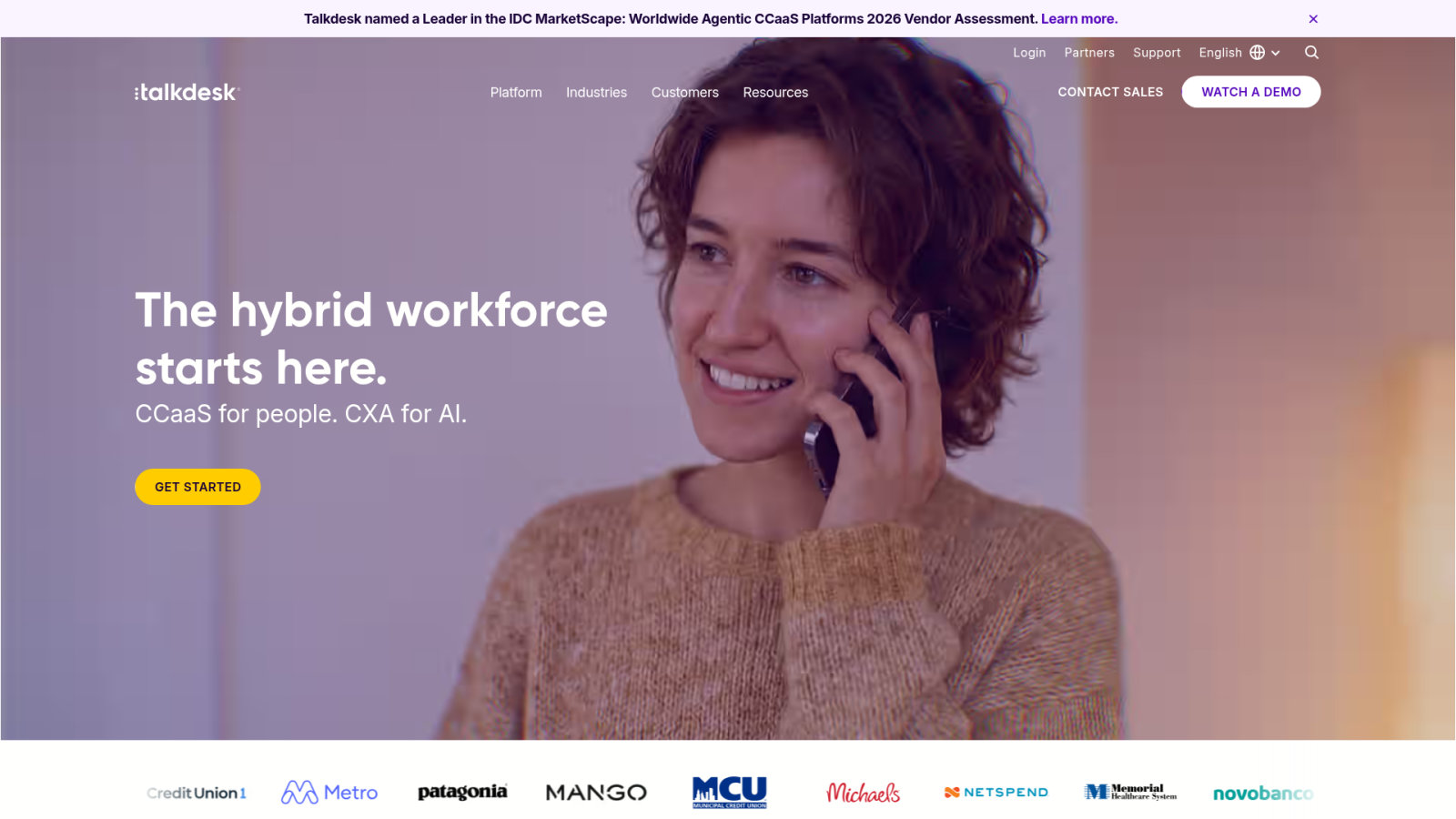
Talkdesk prioritizes operational simplicity for non-technical managers while maintaining rigorous compliance for sensitive sectors. The platform bridges the gap between complex AI engineering and daily customer service management.
AI Trainer for Non-Technical Administrators
The CXA Operations Center utilizes a low-code interface. Managers update interaction flows without needing IT intervention. This visual builder simplifies complex adjustments through intuitive clicks.
The system identifies knowledge gaps by flagging unanswered questions. Administrators view these specific failures in real-time. Adding new intents becomes a direct task for the support team. Agility improves significantly.
Effective management requires understanding prompt engineering best practices in 2026 to refine model responses. These tools empower staff to optimize performance independently.
Professional services costs drop as internal teams take control. Organizations no longer rely on expensive data scientists for routine model tuning.
AI democratization is now a reality. Iteration speed increases as frontline expertise directly shapes the automation logic.
Vertical-Specific Experience Clouds
Talkdesk Healthcare Experience Cloud offers pre-configured workflows for providers. Financial services templates address specific banking needs immediately. Out-of-the-box logic accelerates deployment for these complex industries.
Security layers enable PII protection through automated redaction. Sensitive data is masked in logs to ensure privacy. Compliance with industry-specific regulations remains the core focus. Trust is mandatory in these sectors.
- HIPAA-compliant voice processing
- PCI-DSS payment handling
- Automated identity verification
- Encrypted call recording
Deep data exchange occurs through integration with specialized vertical CRMs. These connections ensure that AI agents possess full patient or member context.
Specialized clouds provide a safe environment for automation. Compliance officers gain peace of mind through built-in governance and security.
Five9: Orchestrating Complex Multi-Modal Journeys
Five9 facilitates fluid transitions between communication channels, ensuring the customer journey remains unbroken. This approach integrates automation with human expertise to deliver an optimal, modern service experience for large enterprises.
Low-Code IVA Development Environment
Five9 Inference Studio provides rapid prototyping tools for non-technical users. The visual environment simplifies bot design through intuitive interfaces. Consequently, testing new scripts becomes a fast, streamlined process.
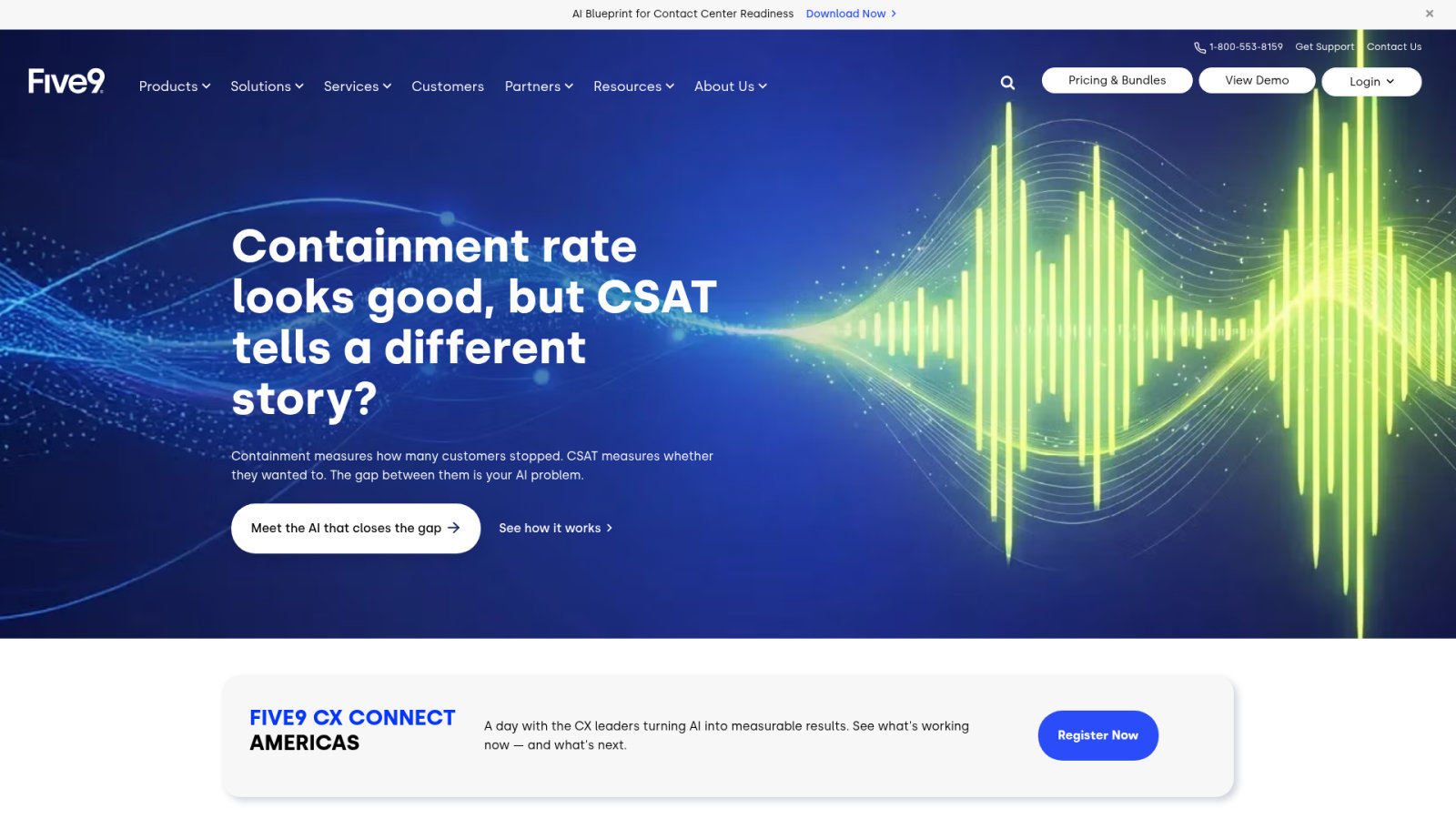
The platform integrates third-party LLMs from providers like Google and OpenAI. This integration significantly improves conversational fluidity and natural intent detection. Users switch models easily, ensuring the infrastructure remains future-proof.
Developers can explore advanced capabilities through the AI agent ecosystem to enhance task automation. These tools support sophisticated back-office integrations and workflows.
Collaborative features allow multiple developers to work on shared projects simultaneously. Version control for voice flows ensures stability and consistency during the entire deployment cycle.
In short, the IVA offers high flexibility. It drastically accelerates the speed of development.
Multi-Modal Context Retention
The system manages seamless chat-to-voice transitions by maintaining the user’s history. Context carries over instantly to the new channel. This prevents customers from repeating their issues.
Post-call summarization features utilize LLMs to generate concise interaction records. This automation reduces agent wrap-up time significantly. Automated tagging of call intents further enhances back-office efficiency.
Key capabilities include:
- Cross-channel history sync
- Real-time sentiment transfer
- Automated ticket creation
- Post-call analytics export
These features directly impact Average Handle Time (AHT). The resulting operational efficiency leads to substantial cost savings.
Multi-modal continuity is vital for modern CX. It delivers a superior, personalized customer experience across all touchpoints.
Genesys Cloud CX: Enterprise Scalability and Reliability
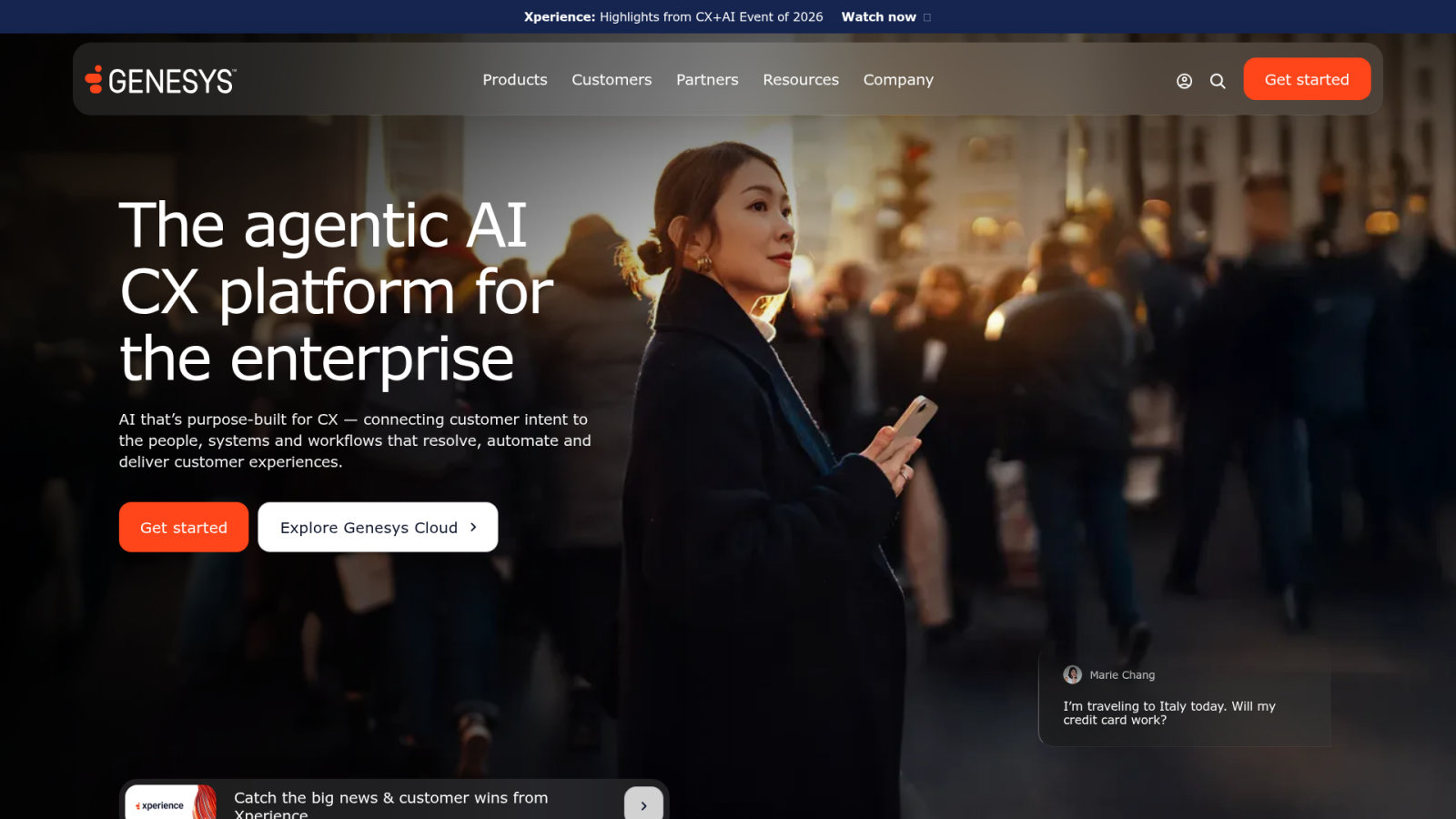
Genesys provides the heavy-duty infrastructure required by global enterprises to manage complex, high-volume interaction swarms. This foundation ensures that automated voice services remain stable under extreme pressure.
Predictive Engagement Engine
The engine utilizes historical interaction data to anticipate needs. Trigger logic activates voice bots based on specific visitor behaviors. This system maintains a precise balance between AI efficiency and human expertise.
Global infrastructure supports high-volume contact centers through extensive distribution. Redundancy across multiple continents prevents service interruptions. Massive enterprises rely on this architecture for consistent performance. Reliability remains the core priority for large-scale operations.
Recent developments show that AI is no longer just digital as it begins to influence physical operational workflows. This integration enhances how enterprises manage customer touchpoints globally.
Real-time monitoring tools provide immediate visibility into global traffic patterns. Supervisors track visitor activity and performance metrics across all active channels instantly.
Genesys delivers enterprise-grade performance at scale. The platform handles millions of monthly interactions without degradation.
Hybrid Cloud and On-Premise Flexibility
Enterprises can retain legacy hardware while integrating modern AI capabilities. This approach provides a clear, phased path toward full cloud migration. It respects existing technical investments.
Multi-agent architectures orchestrate complex workflows by coordinating specialized AI tasks. Different bots handle specific segments of the customer journey. This technical depth allows for sophisticated, automated problem-solving.
For the global enterprise, the choice isn’t just about AI features, but about the underlying infrastructure’s ability to never drop a call.
Hybrid deployments offer enhanced security for regulated firms. Organizations maintain strict data control by keeping sensitive processing on-site when necessary.
Genesys supports complex legacy environments through flexible connectivity. It bridges the gap between traditional systems and advanced automation.
Air: Rapid Deployment for High-Volume Interactions
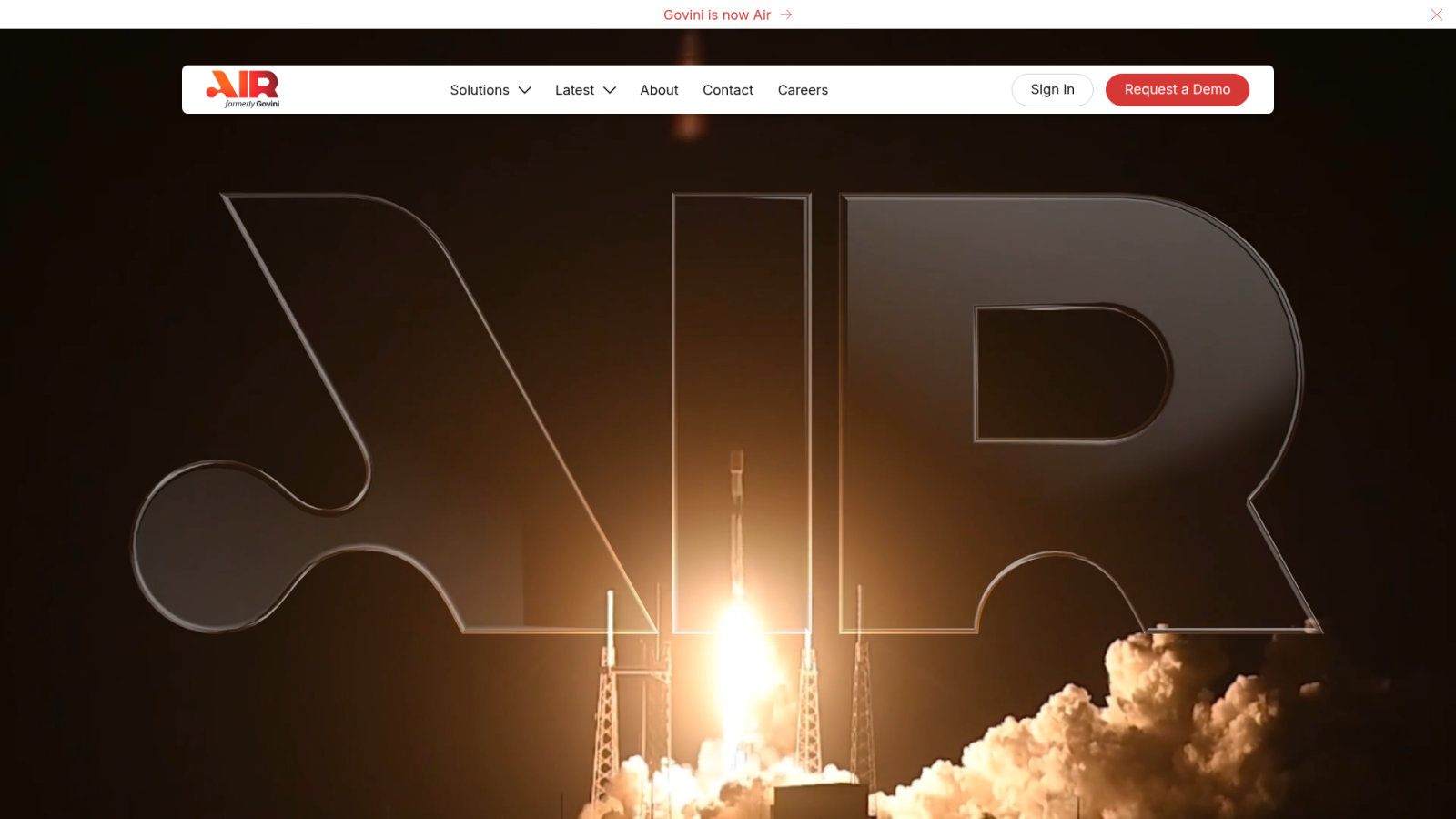
Air specializes in extreme speed and operational scale. This platform serves organizations requiring immediate mass campaign launches. The focus remains on rapid execution over initial architectural depth.
Infinite Scaling for Inbound and Outbound
The system manages sudden traffic spikes effortlessly. Elastic architecture eliminates traditional queue times entirely. It ensures constant availability regardless of call volume fluctuations.
The AI executes outbound calls for lead qualification. It handles booking tasks to drive conversion metrics. Every interaction targets revenue generation through automated persistence. The bot functions as a full-time agent.
Enterprises often compare these capabilities when evaluating the best AI chatbots 2026 for multi-channel support. Integrating voice with chat creates a cohesive strategy.
The voice interface prioritizes simplicity. Direct interactions replace complex menus. This approach minimizes caller friction during high-stakes engagements.
Scaling power is absolute. High-growth companies gain significant competitive advantages.
Speed to Market and Pilot Frameworks
The pilot process is exceptionally fast. Systems launch within days using pre-built templates. These templates cover common service tasks to accelerate initial deployment.
Speed involves trade-offs regarding backend depth. Rapid setups might limit complex deep-tier integrations initially. This model suits agile environments over highly intricate legacy structures. Efficiency defines the balance.
- 48-hour pilot setup
- Automated A/B testing for scripts
- Real-time dashboarding
- Instant scaling to 10k+ concurrent calls
Rapid testing ensures cost-effectiveness. The framework allows teams to fail fast and iterate scripts based on real data.
Speed provides a decisive market edge. Time-sensitive industries benefit most from this accelerated implementation strategy.
ZIWO AI: Sovereign Infrastructure and Emerging Markets
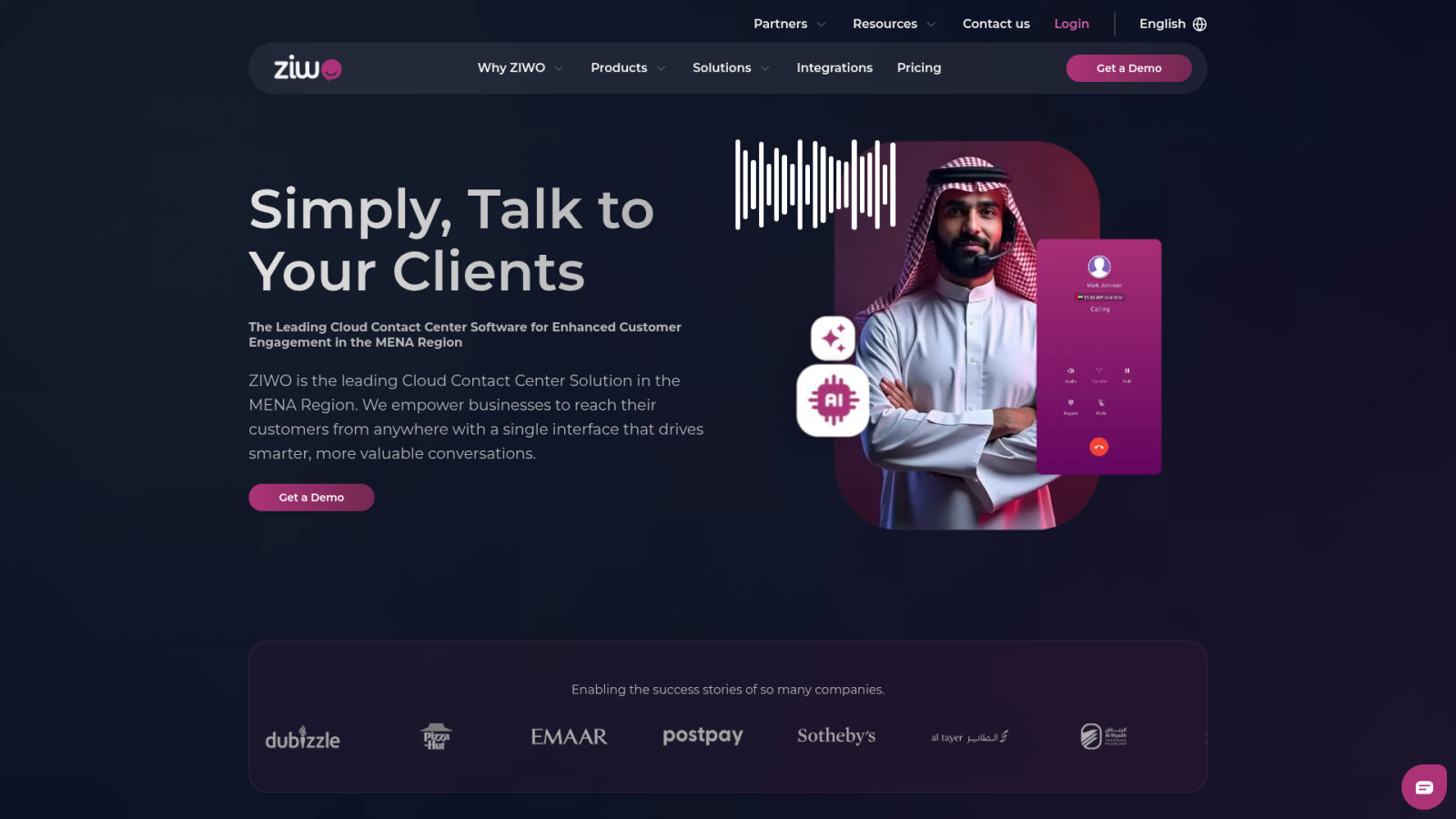
Transitioning from generic global models to localized solutions marks a shift toward operational precision. ZIWO addresses the unique challenges of emerging markets, offering localized infrastructure and deep support for regional linguistic nuances.
Middle East and Regional Language Support
ZIWO delivers high performance in Saudi and Emirati dialects. It handles regional accents with precision where generic models often fail. Localized training ensures accurate understanding of specific linguistic nuances.
Data residency remains a top priority for MENA enterprises. The platform utilizes sovereign clouds to meet strict local compliance needs. This infrastructure builds essential trust with regional regulators and government entities.
Effective automation requires deep integration with regional workflows. For instance, evaluating Lindy AI productivity gains shows how specialized tools transform business efficiency through smart task management.
The linguistic fine-tuning process incorporates local slang and idioms. This approach ensures conversations feel natural rather than robotic or translated.
Regional specialization provides a clear advantage. ZIWO focuses on underserved languages to bridge the automation gap.
Direct Telecom Integration and Call Quality
Direct carrier relationships eliminate intermediaries in the signal path. This setup reduces jitter and latency significantly. The result is crystal-clear voice quality for every interaction.
Advanced reporting tools monitor success rates across complex networks. Automated failover mechanisms ensure continuous service during outages. High uptime is maintained even in challenging infrastructure environments.
In emerging markets, the battle for AI supremacy is won or lost on the quality of the underlying telecom connection.
Integrating local phone numbers is a seamless process. Enterprises achieve a global reach while maintaining a familiar local feel.
Technical reliability serves as the foundation for ZIWO. The focus remains on robust infrastructure to support advanced AI agents.
Enterprise voice automation hinges on sub-500ms latency, SOC 2 compliance, and deep CRM synchronization. Selecting the best AI voice agents for enterprise customer service requires balancing rapid deployment with specialized infrastructure. Transform your operational efficiency now to secure a competitive, high-performance future. The era of seamless, human-like interaction is here.
FAQ
What are the primary technical benchmarks for enterprise-grade AI voice agents?
Top-tier enterprise voice agents must prioritize sub-500ms latency to maintain human-like conversational flow. Performance is measured by Intent Classification Accuracy (ICA), where critical sectors like banking require rates exceeding 98% to ensure reliability.
Furthermore, systems must demonstrate high Out-of-Scope Detection Rates (OSDR) above 95%. This prevents “hallucinations” and ensures the agent gracefully handles requests beyond its programmed capabilities, maintaining professional service standards.
How do voice agents handle security and regulatory compliance?
Security is a non-negotiable foundation, requiring SOC 2 Type II certification and HIPAA compliance for regulated industries. These frameworks ensure rigorous controls over data privacy, integrity, and availability during voice processing.
Enterprises often utilize zero-data retention modes and PII masking to protect sensitive customer information. Deployment flexibility, including sovereign cloud or on-premise infrastructure, further supports strict regional data residency requirements.
What is the benefit of integrating AI voice agents with CRM systems?
Bi-directional CRM integration transforms voice interactions into structured operational data. Systems like Salesforce or Zendesk are updated in real-time, eliminating manual post-call documentation and ensuring data accuracy across the enterprise ecosystem.
This connectivity allows for personalized greetings based on customer history and triggers instant automated follow-ups. By syncing call transcripts and sentiment analysis directly to the customer profile, teams gain a unified, actionable view of the user journey.
How does outcome-based pricing differ from traditional billing for voice AI?
Outcome-based pricing shifts the financial risk from the enterprise to the vendor by charging based on resolved intents rather than call duration. This model aligns vendor incentives with actual business value, ensuring the AI delivers measurable results.
In contrast, traditional per-minute billing can lead to unpredictable costs, especially during high-volume periods or long interactions. Outcome-based models provide cost predictability and focus purely on the ROI of successful issue resolution.
What role does human handoff play in automated customer service?
A robust human handoff protocol ensures a “safe transfer” where context packets move seamlessly from the AI to a live agent. This prevents customers from repeating their issues, preserving satisfaction even when escalation is required.
Advanced agents use sentiment-based routing to detect frustration or confusion, triggering an immediate transfer to a human specialist. This hybrid model combines AI efficiency with human empathy for complex or high-stakes problem-solving.
Can AI voice agents support regional languages and dialects effectively?
Specialized providers like ZIWO AI focus on regional linguistic nuances, offering superior performance in specific dialects compared to generic models. This includes handling local slang, idioms, and varied accents common in emerging markets.
Effective regional support also relies on direct telecom integrations to reduce jitter and latency. By utilizing local infrastructure, these agents maintain high call quality and meet the specific sovereign compliance needs of the target geography.