


Artificial intelligence is continually expanding the horizons for developers, businesses, and lifelong learners. Recently, Anthropic took a significant step by unveiling a catalog of free online courses designed to help individuals build expertise around its Claude AI platform.
Whether one aims to enhance technical skills or simply wishes to understand how this generation of AI operates, a wide range of training materials is now easily accessible.
What are Anthropic’s Claude AI courses all about?
This collection goes well beyond a standard introduction to artificial intelligence concepts. Each course from Anthropic is crafted specifically for those seeking practical knowledge about using Claude in various contexts.
The curriculum appeals equally to programmers searching for code samples, instructors looking for demonstration material, and curious minds eager for hands-on guidance. No previous experience is necessary; access begins with a straightforward free registration.
Every course follows its own theme and learning objective. Thanks to this tailored approach, everyone—from experienced software engineers to motivated newcomers—can find the right entry point based on personal goals or curiosity. Frequent real-world examples ensure these resources move learners from theory into applied AI mastery.
To start learning now, visit this page: anthropic.skilljar.com.
How are the courses structured?
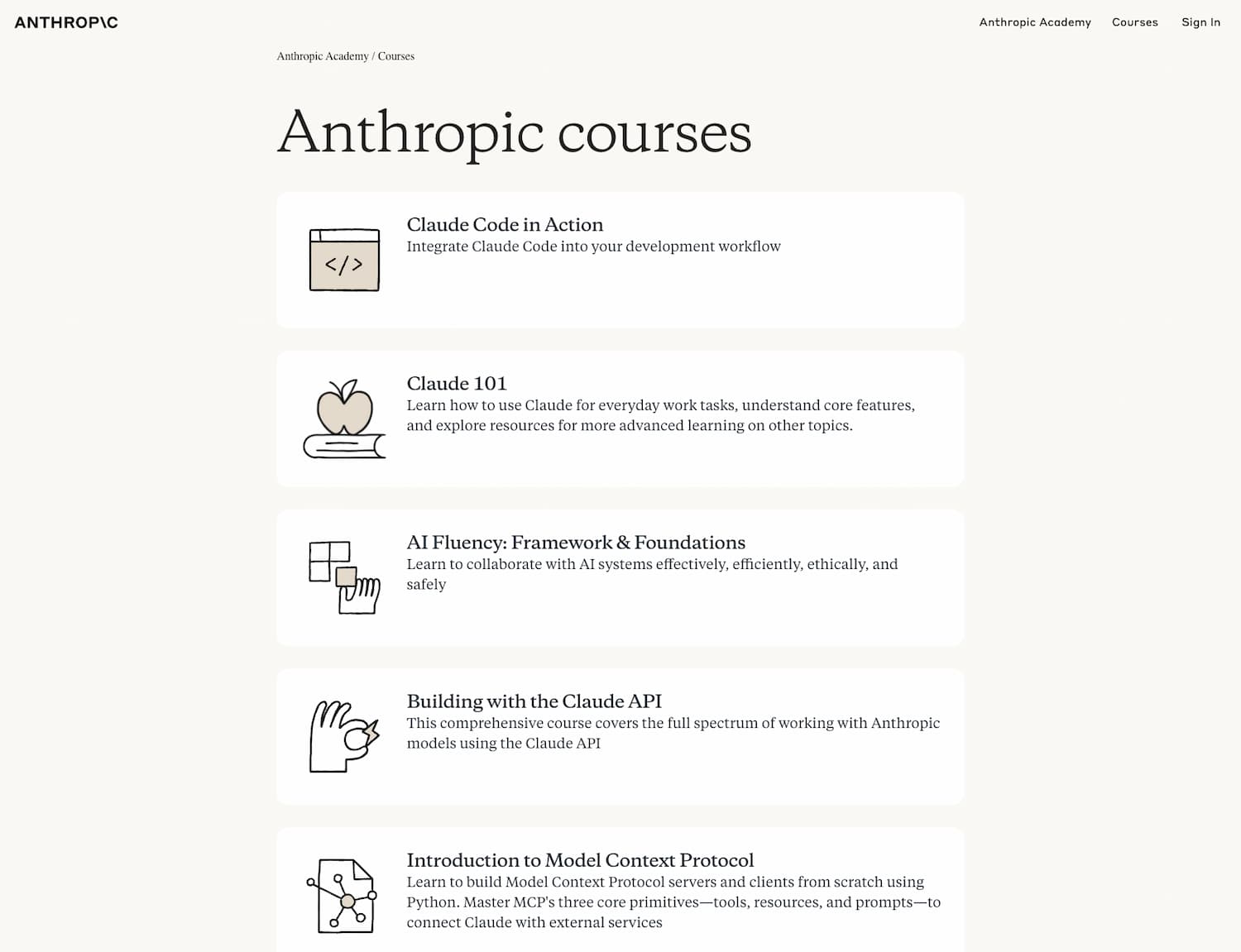
The content is hosted on Anthropic’s dedicated learning platform powered by Skilljar. With several independent courses available, participants can select their preferred focus area and progress at their own pace. Each module blends step-by-step explanations, exercises, and quizzes to reinforce understanding as learners advance.
This modular design encourages active engagement rather than passive reading. For example, some units guide users through working Python scripts or detailed interface walkthroughs, providing immediate opportunities to apply new knowledge. Registered members also enjoy regular updates as Anthropic expands its offerings alongside Claude’s technological evolution.
Which core topics do these trainings cover?
One standout resource is “Claude 101,” which acts as a starting point for beginners. It demystifies large language models before introducing best practices for utilizing the Claude platform in everyday tasks. However, those ready for deeper exploration will also find advanced options within the catalog.
- API integration fundamentals: Lessons include authentication with API keys, connecting Claude to external applications, and understanding usage quotas or billing structures.
- Developer skills modules: Topics such as “Introduction to MCP” teach how to set up personal servers in Python, even for those without prior cloud infrastructure experience.
- Specialized agent skills: These tutorials explain creating and sharing custom ‘Skills’ within Claude Code, enabling automation and repeatable workflows across projects.
- Use case scenarios: Practical paths demonstrate integrating Claude with platforms like Amazon Bedrock or Google Vertex AI, supporting solutions that fit broader enterprise ecosystems.
This comprehensive coverage allows developers to experiment not only with basic interactions but also with production-grade integrations and automation routines—all under expert guidance.
Unlike many traditional AI learning resources that may skip over technical details or require expensive subscriptions, Anthropic’s choice to offer comprehensive, no-cost, modular content helps democratize advanced AI skill-building.
Why offer this training for free?
Providing open educational resources is a strategic decision. By training users directly in Claude, Anthropic ensures consistent quality in the applications built atop its platform. Eliminating financial and administrative barriers accelerates adoption among both individual enthusiasts and organizations exploring real-world AI implementations.
An added benefit is the cultivation of a technical community invested in Claude’s growth. As more developers gain confidence using the model and APIs, collaboration increases, feedback becomes richer, and innovative use cases emerge—ultimately shaping the future direction of the platform.
What does the learning process look like?
Getting started is simple: interested participants need only create a free account to begin exploring lessons. There is flexibility to move between introductory topics or head straight into advanced modules, depending on existing skills and professional interests.
A clear structure takes learners from initial setup to project completion. Features like progress tracking, inline assessments, and instant feedback transform exposure into lasting knowledge and practical ability.
Lessons alternate between conceptual explanations, hands-on coding sessions, and guidance for integrating Claude into ongoing work. This blend encourages experimentation outside the confines of each lesson.
Community forums and occasional live support further enrich the experience, offering insights from others who have faced similar implementation challenges and discovered creative solutions or time-saving shortcuts.
How does Claude compare with other AI learning platforms?
Examining key differences makes it easier to see where Anthropic’s approach excels. The comparison table below highlights factors such as cost, depth, customization, and user engagement features.
| Feature | Claude AI Courses | Other AI Platforms (Typical) |
|---|---|---|
| Access cost | Free | Often paid or limited free trials |
| Course depth | Beginner to advanced | Mainly beginner/intermediate |
| Hands-on projects | Integrated throughout | Usually separated or optional |
| Platform focus | Claude-specific features | General AI principles |
| User community | Growing developer base | Established, but less focused |
This targeted support for learning how to apply Claude in specific real-world situations distinguishes it from generalized online AI education platforms.
Who benefits most from these resources?
The value extends to a broad audience. Software developers receive ready-to-use templates and sample cases, minimizing time spent troubleshooting alone. Educators gain fresh teaching materials rooted in current industry practice. Even non-technical professionals can acquire enough knowledge to discuss how Claude fits into modern business processes and technology stacks.
By delivering focused, flexible, and genuinely useful training, Anthropic positions its technology not merely as another AI model, but as a foundation for tomorrow’s most impactful AI-powered solutions.
