

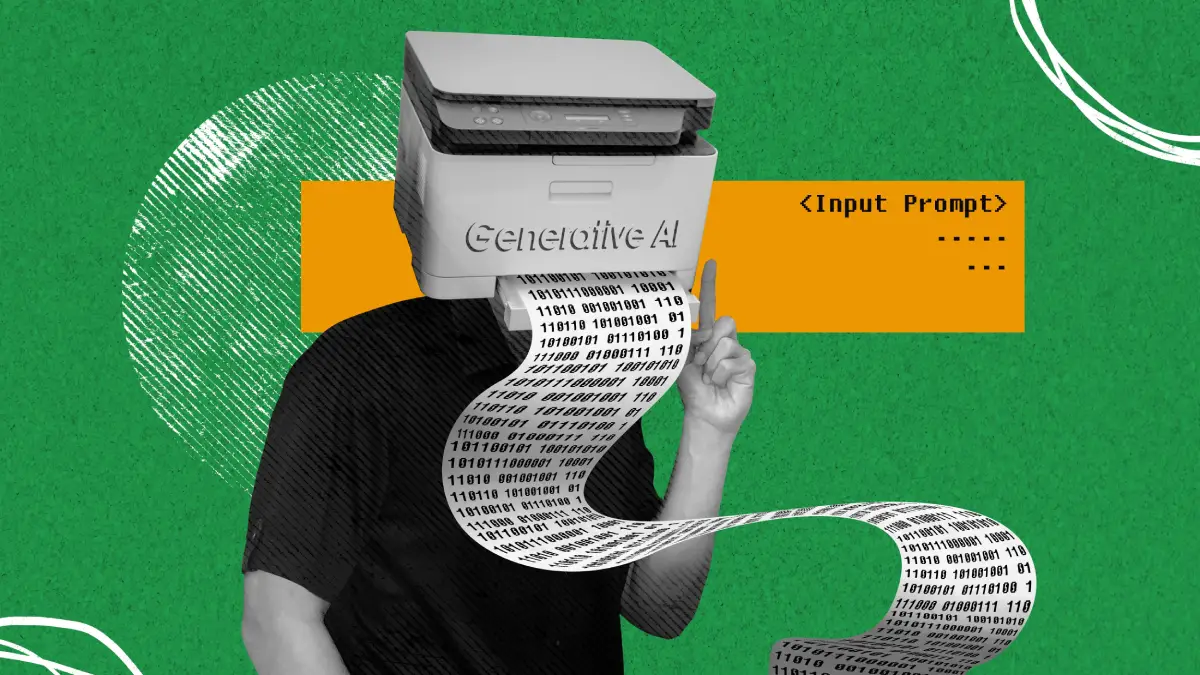
Does the relentless accumulation of ai slop in your digital workflow signal a fundamental breakdown in information retrieval? This analysis defines the operational mechanics of this synthetic waste to demonstrate how low-quality generative content systematically exploits the attention economy.
You will identify the specific financial drivers behind this pollution and acquire actionable insights to protect your organization from the productivity drain of automated mediocrity.
The essential takeaway: AI slop defines the flood of low-quality, machine-generated content prioritizing volume over substance to exploit search algorithms. This automated pollution degrades digital ecosystems and erodes trust in online information, a critical shift recognized by Merriam-Webster naming it the 2025 Word of the Year.
The Anatomy of AI Slop and Its Linguistic Evolution
Why Quality Deficit Defines Slop Over Standard AI Output
The core distinction. AI slop isn’t merely automated text; it represents a fundamental abandonment of human oversight in favor of raw speed. Unlike creative tools that empower professionals, this output prioritizes volume over value, flooding digital channels with meaningless noise that lacks intent or utility.
The operational mechanic. Without editorial filters, these systems churn out debris that clogs search engines and social feeds. This unmanaged proliferation of low-quality machine-generated content degrades the user experience by burying legitimate information under layers of synthetic filler, creating a massive friction point for users seeking answers.
AI slop is digital content made with generative AI that lacks effort, quality, or meaning, produced in high volume for clickbait.
Tracing the Term from Hacker News to 2025 Word of the Year
The historical trajectory. Developers on Hacker News first adopted the label to describe the visual debris left by early image generators. Usage spiked significantly in 2024 as major LLMs accelerated the production of generic assets, embedding the term into the vernacular of the tech elite.
The linguistic shift. Merriam-Webster cemented the term’s status by naming it Word of the Year 2025. It functions as a modern pejorative for digital waste, mirroring the evolution seen with the Cambridge Dictionary integration of “spam” decades earlier, marking a turning point in how we categorize unwanted data.
- Coined in the 2020s
- Gained traction in 2022
- Word of the Year 2024/2025
Connecting Content Decay to the Dead Internet Theory
The theoretical framework. This phenomenon validates the “Dead Internet” hypothesis, where the web devolves into a closed loop of bots talking to bots. The human element recedes as algorithms prioritize engagement metrics over reality, transforming the internet into a hollow echo chamber.
The systemic failure. Platforms suffer from “enshittification” as hallucinations pollute the data pool. While an Ahrefs paraphrasing tool: boost content quality can refine output, the flood of corrupted inputs remains a persistent threat, forcing users to navigate a minefield of errors.
The bottom line. User trust evaporates when authenticity becomes indistinguishable from simulation. You face a critical question: is your digital strategy robust enough to survive the flood?
Financial Incentives Behind the Flood of Automated Junk
If the web is flooded, it is not by accident; automated mediocrity has become incredibly profitable.
Exploiting the Attention Economy for Programmatic Ad Revenue
You might wonder why ai slop exists at this scale. It generates revenue through programmatic advertising by prioritizing quantity over quality. High-volume content simply maximizes ad impressions.
Platforms like Facebook incentivize this behavior through specific engagement-based ad rates. Weird synthetic images trigger curiosity clicks, driving up monetization efficiency for creators. It is a calculated numbers game where bizarre visuals win. Advertisers pay for these cheap eyes.
This practice is known as “slop farming” among industry insiders. Creators build massive content farms to ruthlessly exploit specific algorithmic loopholes. They flood feeds to capture easy revenue streams immediately.
Automation tools streamline this process significantly for volume. You can see how the Best ai summary question maker operates here.
Technical Acceleration via Large Language Models and Diffusion
Image diffusion models accelerate production speeds dramatically for everyone. Creators generate viral curiosities like “Shrimp Jesus” in mere seconds. The barrier to entry has effectively vanished for spammers.
Large Language Models enable mass text production instantly for operators. These systems generate vast amounts of filler without deep meaning. You can verify this lack of substance in the LLM slop taxonomy. It prioritizes structure over actual facts or utility.
We must categorize the tools driving this volume. The table below outlines the primary engines behind the flood. Understanding these specific models reveals the mechanics of mass production. It clarifies the source of the noise.
| Tool Category | Primary Function | Output Type |
|---|---|---|
| OpenAI Sora | Video Generation | Synthetic Video |
| Google Veo | Video Generation | Synthetic Video |
| LLMs | Text Generation | Mass Text/Filler |
| Diffusion Models | Image Generation | Viral Images |
Visual Pollution from Social Media to Search Engine Results
“Shrimp Jesus” is a prime example of this mess. These absurd images invade news feeds because algorithms favor engagement. Users click out of confusion, fueling the cycle.
This impacts the utility of search engines severely today. Finding reliable information among the debris becomes a real struggle. Google results are now often clogged with generated filler. Consequently, the signal-to-noise ratio drops drastically.
The overall user experience degrades rapidly for us. We face a collective sense of digital fatigue from the absurdity. It feels like navigating a digital junkyard daily.
The proliferation of AI slop on social media is transforming the internet into a hall of mirrors.
Societal Consequences and the Institutional Response to Synthetic Waste
Beyond mere visual irritation, ai slop now embeds itself into our most critical social and professional infrastructures.
The Emergence of Workslop in Professional Communication
Workslop defines AI-generated corporate content masquerading as quality work. Employees use generative tools to produce reports lacking substance or meaningful progress. This creates a facade of productivity without actual value.
This phenomenon actively destroys organizational efficiency. Teams waste hours deciphering empty text that offers no return on investment. A robust unified collaboration platform exposes these inefficiencies quickly. The burden shifts unfairly to the reader to find meaning.
Colleagues now label dependent users as “sloppers.” Relying on these tools for basic communication erodes professional trust. Your reputation suffers when you prioritize speed over genuine input.
Contaminating Scientific Literature and Political Information
Academic integrity faces a crisis as journals publish nonsense. Reviewers increasingly encounter manuscripts containing hallucinated citations and absurdist imagery. Even prestigious publications struggle to filter this synthetic noise effectively.
Political actors weaponize this technology to manufacture dissent globally. Campaigns in the US, Russia, and China deploy misleading imagery to manipulate public perception. We need rigorous human quality cataloging to combat these dangerous digital falsehoods effectively.
This flood threatens the very concept of shared reality. Citizens struggle to distinguish between documented events and fabricated narratives. The erosion of truth destabilizes democratic discourse and public trust.
Platform Governance and the Marginalization of Human Creators
Giants like YouTube are finally enforcing stricter governance protocols. They now deploy AI-based moderation to identify and suppress low-quality synthetic mass production. These systems aim to restore the signal-to-noise ratio.
Human creatives face displacement by mimetic machines that work for free. Artists see their styles copied while losing visibility to algorithmic floods. Our Google Vids guide explores how creators can adapt to this shift.
To counter this, institutions are rolling out specific countermeasures. These strategic interventions focus on three distinct areas of enforcement:
- Algorithm adjustments
- Mandatory AI labeling
- Copyright protection efforts
The bottom line: AI slop constitutes a systemic erosion of digital quality, prioritizing volume over substance. As synthetic waste saturates search engines and social feeds, the premium on authentic human insight increases exponentially. In an ecosystem drowning in automated noise, how will you ensure your content retains its value and credibility?
FAQ
What defines AI slop and how does it differ from standard AI output?
The fundamental distinction lies in intent and utility. AI slop is characterized as high-volume, low-effort digital refuse generated solely to exploit attention metrics and programmatic ad revenue. Unlike standard AI output, which aims for accuracy, creativity, or operational efficiency, slop exhibits a deliberate “quality deficit”; it prioritizes the speed of production over coherence or meaning. This results in a flood of “zombie content”—such as incoherent ebooks or bizarre social media images—that clutters digital ecosystems without providing value.
While standard generative AI functions as a productivity multiplier, slop operates as a parasitic drain on platform integrity. It mimics the aesthetics of human creation but lacks the underlying logic or editorial supervision required for utility. If you encounter content that feels structurally sound but contextually hollow, you are likely navigating through this synthetic debris.
How did the term “AI slop” originate and evolve?
The term’s etymology traces a path from niche developer communities to mainstream vernacular. Originally derived from the word “slop”—historically denoting low-quality food for livestock—the concept gained traction in internet subcultures (often linked to the term “goyslop”) to describe mass-produced, inferior media. It crystallized as a specific descriptor for generative AI waste around 2022 on platforms like Hacker News and 4chan, serving as a linguistic counterweight to the hype surrounding Large Language Models.
The terminology achieved critical mass in May 2024, largely catalyzed by British programmer Simon Willison. Willison championed the word as a necessary classification for unwanted, machine-generated clutter, distinguishing it from useful AI applications. His advocacy helped position the term as a standard industry label, providing you with the precise vocabulary needed to categorize the degradation of your digital feeds.
What is the connection between AI slop and the Dead Internet Theory?
AI slop serves as the primary empirical evidence validating the Dead Internet Theory. This theory postulates that the majority of web activity is no longer organic human interaction, but rather an automated feedback loop of bots communicating with other bots. Slop accelerates this reality by flooding platforms with synthetic content that is generated by algorithms and subsequently consumed or engaged with by other algorithmic agents to inflate engagement metrics.
The phenomenon creates a “hall of mirrors” effect, where search engines and social feeds become saturated with content that mimics human behavior but lacks human origin. This validates the theory’s core fear: the displacement of authentic discourse by automated noise. Recognizing this connection allows you to better evaluate the authenticity of the information environments you rely on daily.
How is “workslop” impacting professional communication?
Workslop represents a critical drain on organizational efficiency disguised as productivity. In a professional context, this term refers to unrefined, AI-generated text used in emails, reports, or presentations that mimics competence without delivering substance. It occurs when employees—often termed “passengers”—utilize generative tools to bypass effort, resulting in verbose, generic communications that transfer the cognitive burden of interpretation onto the recipient.
This practice degrades the signal-to-noise ratio within corporate channels, forcing colleagues to waste billable hours deciphering hollow content. Unlike strategic AI use (“piloting”), which enhances output, workslop functions as a productivity tax. To maintain operational agility, you must distinguish between AI-assisted insights and this form of automated bureaucratic waste.
Why is AI slop causing a surge in scientific literature retractions?
The infiltration of synthetic data constitutes a systemic threat to academic integrity. Recent statistics indicate a massive spike in scientific retractions—hitting record highs in 2023—driven largely by “paper mills” utilizing AI to manufacture fraudulent studies at scale. These entities exploit the “publish or perish” pressure by generating scientifically incoherent papers, often featuring absurd AI-generated imagery or hallucinated data, which bypass overwhelmed peer review processes.
This flood of academic slop compromises the reliability of the scientific record, wasting resources on non-reproducible research. The issue is most prevalent in regions with high pressure for publication volume, such as China. For researchers and stakeholders, this necessitates a rigorous implementation of AI disclosure protocols to ensure the data driving your decisions is grounded in empirical reality, not algorithmic fabrication.
