For more than two centuries, art historians have debated the origins and methods behind some of Raphael’s most celebrated works. Today, artificial intelligence is shaking up this established field by offering fresh insights and sparking vibrant debate among experts.
With algorithms capable of recognizing patterns invisible to the human eye, machine learning is beginning to uncover secrets hidden within masterpieces—sometimes even challenging long-standing beliefs.
This technology not only promises faster research but also paves the way for more objective analysis, fundamentally shifting perspectives on authenticity and attribution in art.
Combining tradition with technology: AI enters the world of fine arts
In recent years, artificial intelligence has started blending with traditional approaches used in art analysis. Historically, experts have depended on close examination of painting techniques, provenance trails, and cultural context to attribute works.
Machine learning introduces a new dimension to this process: instead of replacing human expertise, it collaborates with specialists, processing visual information at an unmatched scale and level of detail.
These innovations are transforming how researchers tackle age-old puzzles, especially those involving disputed authorship or workshop contributions prevalent in Renaissance studios. AI tools bring systematic rigor to areas once dominated by subjective judgment, enabling rapid comparisons across vast museum collections worldwide.
Case study: uncovering inconsistency in a Raphael masterpiece
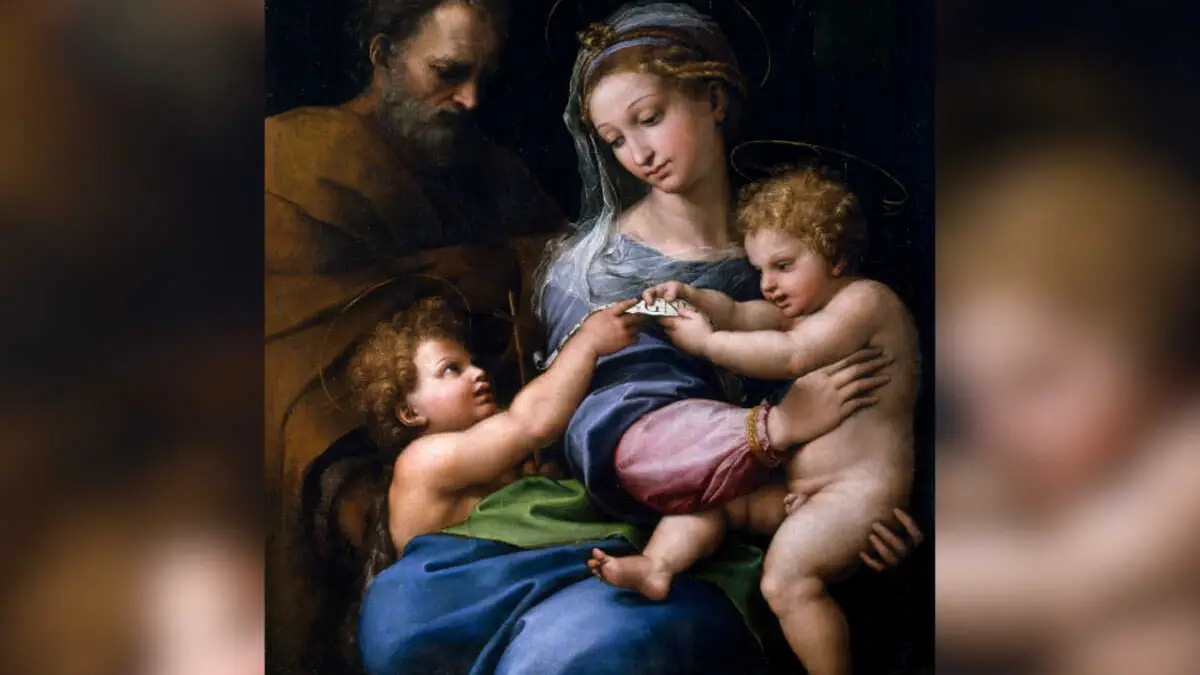
A prominent example of AI’s influence comes from a partnership between British and American researchers who focused their attention on a controversial Renaissance painting attributed to Raphael. By developing a tailored algorithm, scholars aimed to determine whether every figure in this artwork truly reflected the master’s own hand.
The team supplied the algorithm with a broad selection of confirmed Raphael paintings, allowing it to analyze signature aspects of his style—from subtle brushwork and color choices to his distinctive use of light. Importantly, rather than having the AI examine entire canvases, researchers directed it to scrutinize specific sections such as faces, hands, or backgrounds. This detailed approach was crucial for detecting subtle inconsistencies.
Results challenge conventional wisdom
The AI found that nearly all figures in the contested painting closely matched Raphael’s artistic fingerprint, supporting previous scholarly consensus for most elements. However, a striking exception emerged when analyzing the depiction of Joseph. According to the program, the likelihood that Raphael painted Joseph fell below 40%, much lower than for any other character studied.
Many art historians had already noted stylistic differences concerning this figure, suggesting that Giulio Romano, a known apprentice, might be responsible. While the AI’s results do not provide absolute proof, they offer data-driven support for theories developed through decades of visual analysis and critique.
New possibilities for attribution studies
This case illustrates how AI-powered analysis could resolve questions that have persisted for generations. Traditional attribution involves assessing origin, condition, iconography, and technique—a process often vulnerable to bias or incomplete evidence.
Machine learning methods enhance these steps with quantifiable evaluations based on mathematical models, potentially standardizing certain aspects of connoisseurship and enriching expert discussions.
As digital archives expand and computational models grow more sophisticated, future research may encompass broader datasets, including lesser-known works and interdisciplinary analyses previously unimaginable.
Beyond brushstrokes: how AI integrates into broader art authentication
Despite significant advances, AI alone cannot account for the full complexity of authenticating artworks. Attribution depends on a combination of factors such as material composition, documented history, physical state, and symbolic meaning. Digital methodologies primarily address visual characteristics, so they complement—but do not replace—traditional practices.
Leading academic voices stress that AI-generated results should be viewed as valuable yet non-definitive clues. The technology excels at highlighting irregularities and suggesting hypotheses, but final judgments still require collaborative evaluation involving conservators, curators, and archival investigators.
- Provenance research remains essential for tracing historical ownership.
- Scientific tests on pigments and substrates provide chemical fingerprints.
- Advanced imaging reveals hidden alterations or underdrawings.
- Machine learning accelerates style and pattern analysis for thousands of artworks.
| Method | Main contribution |
|---|---|
| Expert visual analysis | Identifies nuances in technique, subject, composition |
| Material science | Determines authenticity via dating and pigment analysis |
| Digital image analysis (AI) | Finds patterns, inconsistencies, and potential authorship links |
Future horizons for machine learning in the study of art
The ongoing expansion of image databases and improvements in machine learning capabilities promise to further refine art historical research methods. As algorithms train on ever-larger volumes of data, their ability to distinguish influence, collaboration, or forgery will continue to strengthen.
In the coming years, extensive computational resources may enable the analysis of workshops and artistic networks spanning continents and centuries, mapping creative processes with clarity unattainable by traditional means. Each new discovery—whether revealed through scientific testing or neural networks—adds another piece to the puzzle, deepening understanding of history’s greatest masterpieces.