
Best ai agents for customer relationship management in 2026

A man interacting with a holographic display showing CRM data like customer profiles and growth charts in a modern office.
Empower your business with next-gen AI CRM agents designed to optimize customer relationships and communication channels in 2026.
Key takeaway: Success in 2026 CRM deployment requires shifting from simple tool adoption to specialized AI agents prioritizing Model Context Protocol (MCP) standards. This integration ensures seamless data flow and high-speed processing. By balancing automated triage with human expertise, enterprises achieve tangible revenue growth, with sales ROI improvements reaching up to 20% through precise, real-time customer intelligence.

Gartner estimates that 60% of AI projects will be abandoned by 2026 due to inadequate data readiness. Selecting the best ai agents for customer relationship management requires a technical shift toward Model Context Protocol compatibility and real-time API scalability to ensure reliable autonomous performance.

Fragmented datasets across legacy silos often trigger costly model hallucinations and integration failures. This analysis evaluates top-tier agentic ecosystems to help organizations stabilize their infrastructure, reduce churn, and secure measurable revenue growth through high-fidelity automation.

  1. Selection Criteria for the Best AI Agents for Customer Relationship Management
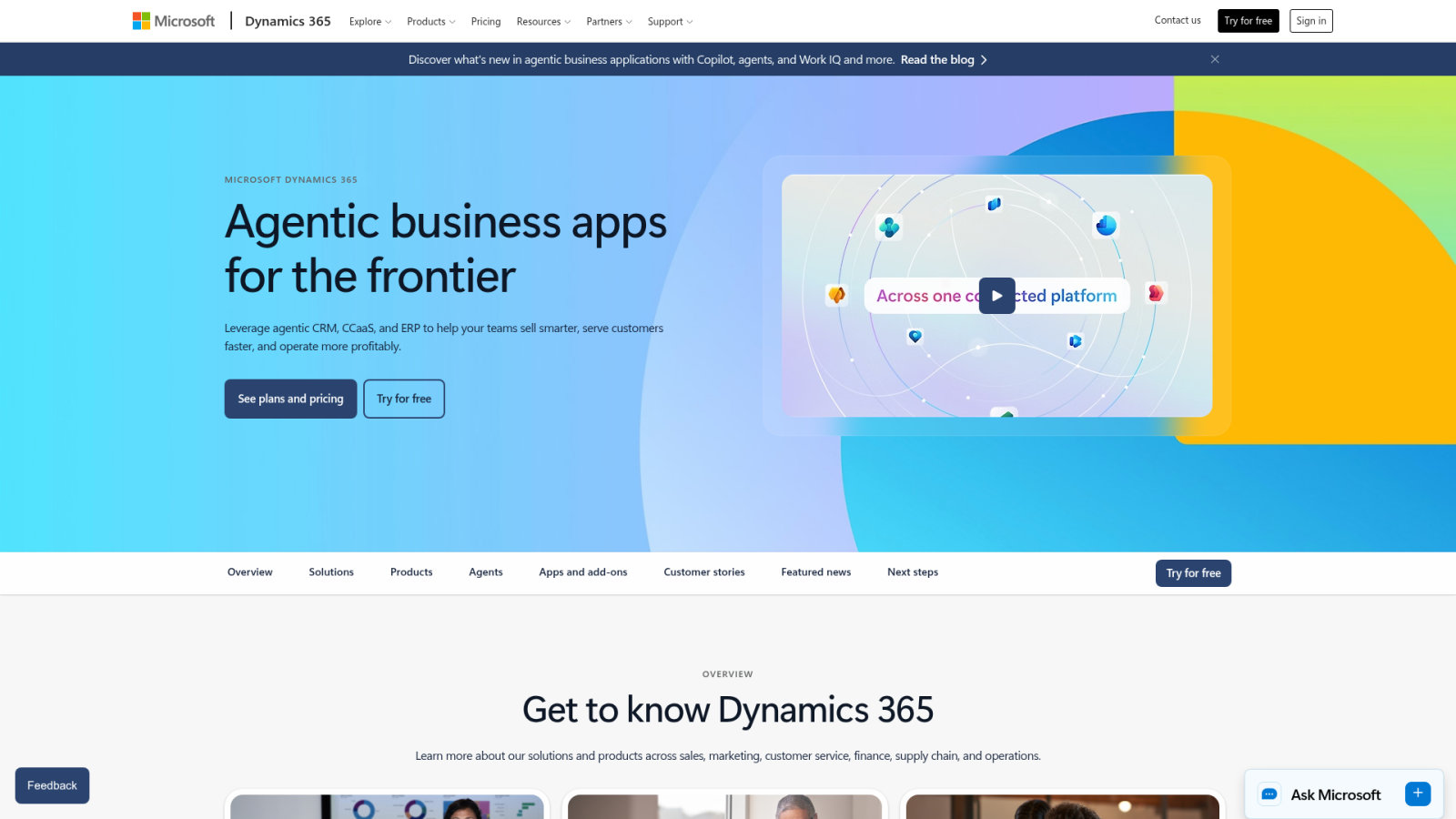
  2. Microsoft Dynamics 365: The Unified Agentic Ecosystem for Enterprises
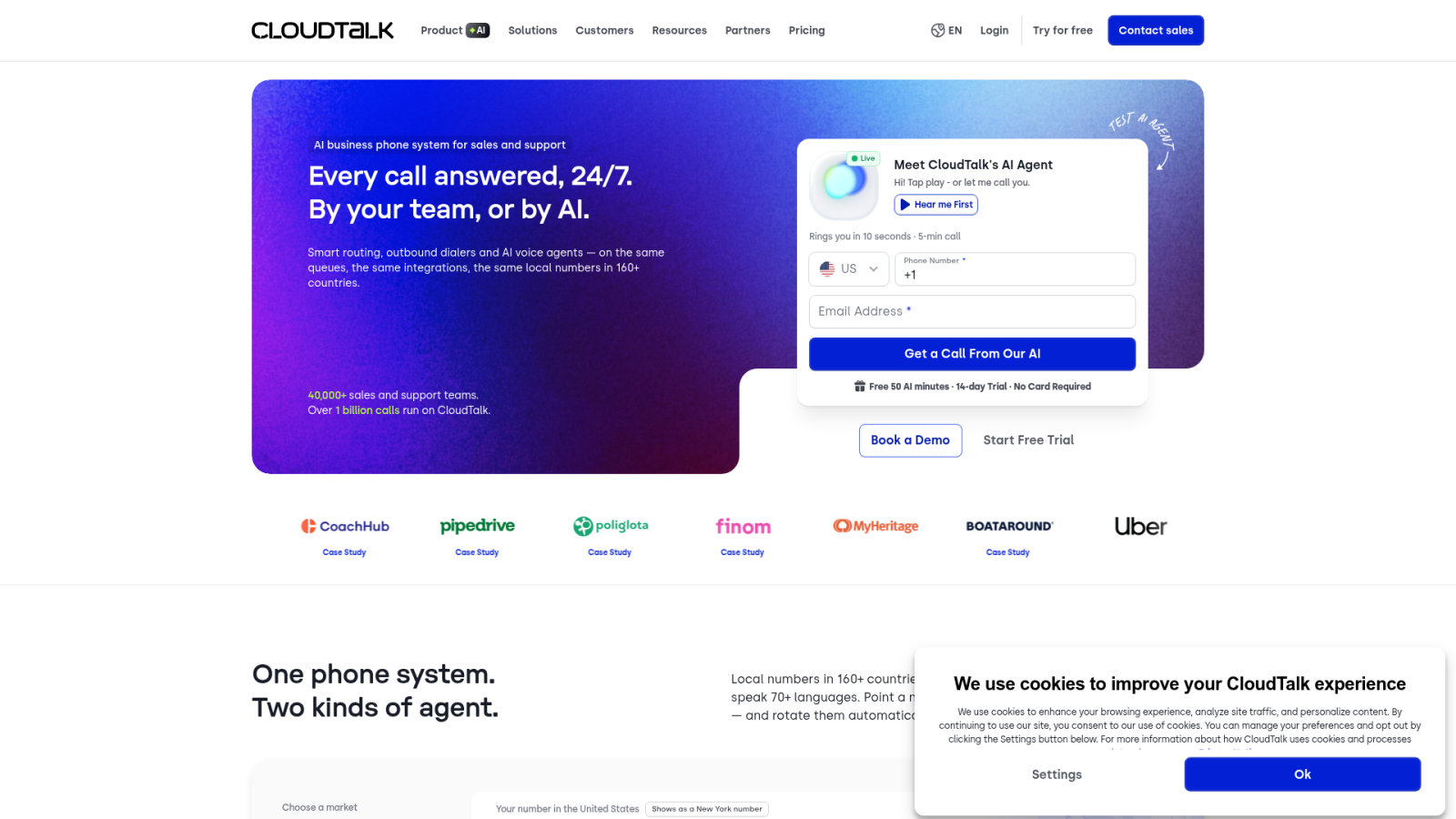
  3. CloudTalk AI: Specialized Voice Agents for Global Contact Centers
  4. Zapier AI: Orchestrating Autonomous Cross-Application Workflows
  5. Gemini Deep Research: Advanced Customer Intelligence and Synthesis
  6. ChatGPT Agentic Mode: Versatile Multimodal Support for CRM Teams
  7. Ajelix: Automating Business Deliverables and Complex Data Analysis
  8. Operational Strategy for Balancing Human Oversight and Data Privacy

Selection Criteria for the Best AI Agents for Customer Relationship Management

Top 2026 AI CRMs like Dynamics 365 and CloudTalk prioritize Model Context Protocol (MCP) compatibility and real-time API scalability. Success hinges on measuring conversion lift and churn reduction rather than simple tool adoption rates.

The transition from basic automation to autonomous intelligence requires a shift in how we evaluate underlying infrastructure and performance metrics.

Technical Readiness and MCP Integration Standards

Evaluate API quality and Model Context Protocol (MCP) compatibility. Ensure seamless data flow between agents. Avoid systems with closed architectures or legacy silos.

Assess existing data infrastructure to support autonomous agent requirements. High-quality inputs prevent hallucinations. Clean datasets are the foundation for reliable AI outputs in 2026.

Determine hardware or cloud scalability needed for real-time processing. Performance must remain stable during peak traffic spikes.

Mastering prompt engineering best practices ensures agents execute complex CRM workflows accurately. This technical foundation is non-negotiable.

Measuring ROI Beyond Simple Adoption Metrics

Analyze impact on conversion rates and customer lifetime value. Look for tangible revenue growth. Don’t settle for high login rates without sales improvement.

Track reduction in manual data entry hours for sales representatives. Automated logging saves hours weekly. This allows teams to focus on high-value negotiations and closing.

Calculate cost-to-serve improvements through automated triage systems. Agents handle basic queries instantly. Human staff only intervene for complex issues. This efficiency directly impacts the bottom line.

Budgetary Scalability for Enterprise and Mid-Market Needs

Compare seat-based pricing versus consumption-based AI token models. Token models offer flexible scaling for fluctuating volumes. Seat licenses provide predictable monthly costs for large teams.

Seat-Based Pricing

Predictable monthly costs. Ideal for large, stable teams requiring fixed overhead forecasting.

Token/Consumption Models

Flexible scaling. Pay-per-use structure suits fluctuating interaction volumes and rapid growth.

Identify hidden costs in training custom models for industry-specific data. Proprietary data requires secure fine-tuning environments. Budget for initial setup and ongoing data maintenance.

Forecast long-term maintenance expenses for autonomous workflow updates. Systems require regular tuning to stay accurate. Factor in API update costs and model versioning.

Scalability in 2026 is no longer about adding seats, but about managing the token economy efficiently.

Microsoft Dynamics 365: The Unified Agentic Ecosystem for Enterprises

Moving from general criteria, Microsoft provides a concrete example of a fully integrated agentic stack.

Copilot Integration Across Voice and Digital Channels

Integrated AI manages the entire customer journey from chat to call. Copilot tracks every interaction across multiple touchpoints. Data follows the user instantly. No context is lost during channel switches or agent hand-offs.

Consolidation eliminates data fragmentation issues. One platform handles CRM, ERP, and AI logic effortlessly. This unified approach simplifies complex operations for large-scale businesses.

Fewer third-party integrations mean lower maintenance fees. Centralized management improves overall security posture. Organizations witness a significant reduction in total cost of ownership.

Selecting the best ai agents for customer relationship management in 2026 requires evaluating how these ecosystems bridge communication gaps. Microsoftโ€™s stack ensures seamless transitions between automated assistance and human expertise.

Predictive Analytics for Proactive Churn Mitigation

AI scans emails and call transcripts for negative emotional cues. Sentiment analysis identifies at-risk customer accounts early. Early detection is vital. It flags accounts before they decide to leave.

The system sends personalized offers automatically. It triggers automated retention workflows based on specific behavior. It also schedules calls for account managers when human intervention is necessary.

Teams solve problems before customers complain. This shift from reactive support to predictive success management is essential. It creates long-term loyalty and ensures portfolio stability.

Microsoft Dynamics 365: The Unified Agentic Ecosystem for Enterprises
Feature Traditional CRM AI-Agentic CRM ROI Impact
Data Entry Manual Auto High
Lead Scoring Static Dynamic High
Churn Prediction Reactive Predictive Ultra-High
Customer Support Human-only Hybrid/Instant Ultra-High
Workflow Setup Code No-code High

CloudTalk AI: Specialized Voice Agents for Global Contact Centers

While Microsoft covers the ecosystem, CloudTalk masters the specific nuances of global voice communication. This distinction is vital for businesses prioritizing verbal interaction quality over broad software suites.

Multilingual Support and Automated FAQ Handling

CloudTalk AI manages inbound calls in over 60 different languages. These agents detect dialects and respond naturally to callers. Global reach becomes simple. You don’t need local offices in every single country.

CloudTalk AI: Specialized Voice Agents for Global Contact Centers

The system handles the resolution of common queries without human agent intervention. AI manages billing and tracking questions efficiently. This frees up staff for complex technical support.

Maintaining brand voice across diverse linguistic markets is a core feature. Tone remains consistent and professional everywhere. Cultural nuances are respected by the model during every interaction.

Effective communication bridges the gap between technology and user experience. In fact, Google’s smartest AI took 104 seconds to say hi, highlighting why specialized speed matters. Reliability is the new standard.

Key Performance Metrics
  • 60+ Languages supported
  • 24/7 Availability
  • 100% Automated logging

CRM Synchronization and Autonomous Appointment Setting

Real-time data logging occurs between voice interactions and the CRM. Every call is transcribed and summarized instantly. Sales reps see the full history. No manual notes are required after calls.

Agents manage calendar availability for high-value sales follow-ups autonomously. AI finds open slots for both parties. It sends invites and reminders automatically to reduce no-shows.

Efficiency gains are significant for growing PME teams with high call volumes. Small teams handle enterprise-level traffic without difficulty. Scaling doesn’t require massive hiring sprees anymore.

Integrating these tools ensures a seamless flow of information across the organization. The best AI agents for customer relationship management in 2026 prioritize this connectivity to eliminate data silos.

  • Benefits of voice sync
  • Reduced latency
  • Automatic tagging
  • Sentiment tracking
Advantages
  • Eliminates manual data entry
  • Instant lead qualification
  • Scalable 24/7 coverage
Inconvรฉnients
  • Requires initial prompt tuning
  • Voice-only specialization

Zapier AI: Orchestrating Autonomous Cross-Application Workflows

Voice and CRM data must flow, and Zapier acts as the central nervous system for these connections.

Natural Language Automation Construction for Operations

AI Copilot builds complex logic from simple text prompts. Describe the desired workflow in plain English. The AI generates every necessary step. Coding knowledge is no longer a bottleneck.

Connect over 8,000 applications for immediate data enrichment. Link your CRM to LinkedIn and Clearbit. Data updates happen silently in the background. Manual entry becomes a legacy process.

Technical barriers for non-coding CRM managers are gone. Operations teams move faster than ever. Experimentation with new workflows takes minutes, not weeks. Agility defines the modern enterprise.

Building these connections is easier than ever, especially when compared to using tools like ChatGOT for specific model aggregation needs. The focus remains on seamless execution.

Scaling Lead Follow-Ups via Multi-Step Autonomous Logic

Automate personalized outreach based on specific CRM triggers. New leads receive customized email sequences immediately. Timing is perfect every time. Engagement rates climb as delays disappear.

Agents handle critical data cleaning between disparate software tools. AI fixes formatting errors automatically. It merges duplicate records without human supervision. Data integrity remains constant across platforms.

Lead response times drop while initial engagement rates rise. Speed is the ultimate competitive advantage. Responding in seconds wins the modern customer. Conversion follows the path of least resistance.

“In the age of AI, the speed of your workflow is the speed of your revenue growth.”

Gemini Deep Research: Advanced Customer Intelligence and Synthesis

Effective market positioning requires more than standard workflows. Success in 2026 relies on deep intelligence to decode the specific market context of every lead. Gemini Deep Research provides this depth by synthesizing vast datasets into strategic clarity.

Automated Market Trend Analysis for Sales Strategy

Agents now generate detailed research reports on target accounts autonomously. Gemini scans financial filings and news to pinpoint organizational shifts. It identifies key pain points within seconds. Sales teams enter meetings fully briefed rather than guessing.

Gemini Deep Research: Advanced Customer Intelligence and Synthesis

The system excels at merging external market data with internal CRM profiles. It combines public trends with private interaction history. This creates a 360-degree view of every prospect. Contextual gaps that previously hindered conversions are effectively closed.

Speed remains the primary advantage of this agentic approach. Hours of manual browsing become seconds of processing. Strategic planning becomes a daily reality for teams. Efficiency gains allow for higher volume without sacrificing quality.

Modern connectivity is shifting how professionals gather intelligence. In fact, AI is quietly changing how we use the internet by automating information retrieval. This evolution makes best ai agents for customer relationship management in 2026 indispensable for competitive research.

Generating Actionable Data-Driven Customer Insights

Raw research is useless without structure. AI highlights critical decision drivers by filtering out irrelevant noise. It ignores the fluff typical of standard web searches. Leaders get the facts they need to act immediately.

These insights enable hyper-personalized sales pitches. You can reference specific recent events in your outreach to build rapport. Generic templates are replaced by relevance. Prospects respond better to messages that reflect their current reality.

Trust stems from the accuracy and citation of sources. Verification builds internal trust in AI outputs. Users always know where the data came from. This transparency is vital for high-stakes strategic decision-making.

To maintain a competitive edge, these agents provide continuous monitoring of the following areas:

  • Account news alerts
  • Competitor tracking
  • Executive moves
  • Financial health summaries

ChatGPT Agentic Mode: Versatile Multimodal Support for CRM Teams

While specialized tools handle deep research, ChatGPT provides the most flexible multimodal interface for daily customer operations. Its ability to act as a programmable agent allows teams to bridge the gap between static data and active engagement.

Custom GPTs for Internal Knowledge Management

Building specialized agents simplifies internal team onboarding and training significantly. New hires ask proprietary questions safely within a secure environment. Knowledge remains decentralized yet accessible to everyone. Training cycles are cut in half through this immediate interaction.

Teams integrate proprietary documentation for instant, accurate support answers. You can upload PDFs and spreadsheets directly into the agent’s knowledge base. The system understands your specific business rules without external searching. This ensures responses remain grounded in company-specific facts.

Multimodal capabilities allow for processing complex images and voice data effortlessly. Agents analyze screenshots of errors or handwritten whiteboard notes from strategy sessions. The interface adapts to how you work, not the other way around. It transforms visual chaos into structured CRM data.

Efficiency gains are measurable when using these tailored tools. For instance, understanding GPT-4.5 specs benchmarks why you shouldn’t use it 2026 helps teams select the right model. Choosing the correct version ensures internal tools remain reliable. High-performance agents require the best underlying architecture.

Omnichannel Integration via Flexible API Connections

ChatGPT serves as a polyvalent entry point for various CRM tasks. Users update deal stages via Slack using simple natural language. It is possible to create contacts through voice commands while on the move. The model acts as a universal bridge between disparate software.

Integration with existing communication platforms like Slack or Teams is seamless. This strategy meets the team where they live every day. Frictionless tools ensure high adoption rates across the organization. No one needs to open a new tab to log a lead.

The model scales effectively for various business sizes and sectors. It supports operations ranging from startups to conglomerates without losing performance. Customization remains the core strength here, allowing for niche industry applications. Every workflow can be tailored to specific departmental needs.

Retention of these tools depends on their perceived value and utility. Some reports suggest 1.5 million users are leaving ChatGPT should you quit too, but for CRM, the API value remains high. The utility for business automation often outweighs general consumer trends. Professional integration provides stability that casual use lacks.

Ajelix: Automating Business Deliverables and Complex Data Analysis

Moving from the general automation of workflows, Ajelix focuses on the final output by converting CRM data into professional, shareable business deliverables.

No-Code Dashboard Generation for Sales Performance

Raw CRM data undergoes a total transformation into visual management tools. Ajelix creates stunning charts automatically. No complex formulas are needed. Sales leaders see performance trends in seconds.

Users detail their logic in plain text to generate Excel-based reports. Advanced formula knowledge is not required. The AI writes the script for you.

Small businesses look like Fortune 500 companies through these tools. Professional reporting is now democratized. PMEs gain quick executive-level outputs without technical overhead.

Effective data visualization is part of a broader trend, much like using the best online certificate generator to scale professional documentation. Automation ensures these assets remain consistent and high-quality.

Transforming CRM Exports into Ready-to-Use Presentations

Export your data and receive a deck instantly. Automated generation covers client-facing reports and slides. Branding is applied automatically. This saves hours of manual formatting work.

Agents reduce the time spent on administrative formatting tasks. Teams focus on strategy and relationship building. Let the AI handle the pixels.

Accuracy is guaranteed through automation during the data translation process. Human error in copying numbers is eliminated. The final deliverable remains reliable and precise.

Data is useless if it stays in the CRM; Ajelix ensures it reaches the decision-makers in style.

Operational Strategy for Balancing Human Oversight and Data Privacy

Deploying the best ai agents for customer relationship management in 2026 requires a rigorous framework. Efficiency alone is insufficient. Organizations must prioritize ethics and human value to maintain long-term brand equity.

Managing High-Stakes Sales with Hybrid Human-AI Teams

AI agents manage initial qualification and triage. Humans focus on complex negotiations and final handshakes. This division ensures experts handle high-value tasks exclusively.

Context preservation is vital during every hand-off. Sales reps must know what the AI said previously. Smooth transitions prevent customer fatigue and repetitive questioning.

Technology should amplify empathy rather than replace it. Agents recall personal details to assist human reps. This approach makes every interaction feel genuine and personalized.

Many fear the AI jobpocalypse. Yet, hybrid models prove humans remain essential for trust.

Hybrid Interaction Flow
  1. AI Triage and qualification.
  2. Context preservation (transferring chat/voice transcripts).
  3. Human intervention for complex negotiation.
  4. Post-interaction automated logging.

Data Privacy Protocols in Autonomous Agentic Environments

Transparent consent is a fundamental requirement. Customers must know they are talking to an agent. Transparency builds the foundation of long-term brand trust.

Guardrails prevent data leakage during model training. Use private VPC instances for all sensitive data. Never train models on customer PII to avoid breaches.

GDPR and AI Act standards are mandatory for 2026 compliance. Audit your agents regularly for bias and safety issues. Regulatory adherence is now a baseline operational necessity.

Compliance Alert

Transparency is mandatory: customers must know they are interacting with an agent. Never train models on PII (Personally Identifiable Information). Ensure compliance with GDPR and the 2026 AI Act.

  • Encryption standards
  • PII masking
  • Consent logs
  • Audit trails

Industry-Specific Use Cases in Fintech and E-Commerce

Fintech CRM systems require bank-grade security for sensitive data. Compliance checks must happen in real-time. This rigor reduces fraud risks and heavy regulatory fines.

Retailers suggest products based on live browsing data. Hyper-personalization drives immediate decision-making. Conversion rates spike when offers align with real-time intent.

Operational Strategy for Balancing Human Oversight and Data Privacy

Legacy systems often clash with modern APIs during integration. Highly regulated sectors face unique technical hurdles. Plan for extended development timelines in these specific industries.

“Regulation is not a barrier to AI; it is the framework that makes enterprise AI possible.”

Success in 2026 requires transitioning to hybrid human-AI teams that leverage unified ecosystems and specialized voice agents. Prioritizing MCP-compatible infrastructure and automated data capture ensures reliable scaling and immediate ROI. Deploy these best ai agents for customer relationship management now to turn operational speed into your ultimate competitive advantage.

FAQ

How should organizations prepare their CRM infrastructure for AI agent deployment in 2026?

Technical readiness centers on data integrity. Systems must undergo rigorous auditing to eliminate duplicates and standardize fields before integrating agents. High-quality, clean datasets prevent hallucinations and ensure that autonomous workflows operate on a reliable source of truth.

Integration of the Model Context Protocol (MCP) is a critical standard for 2026. This protocol allows AI agents to securely interact with CRM data through natural language queries. It bypasses complex API management, facilitating seamless data flow between disparate applications and specialized agents.

What is the relationship between CRM adoption rates and measurable ROI?

ROI is fundamentally dependent on user adoption. High login rates alone are insufficient; teams must actively use the system to improve pipeline visibility and lead qualification. Effective adoption directly drives conversion lift and long-term revenue growth by optimizing sales interactions.

Measuring success requires moving beyond basic metrics to track tangible outcomes like reduced manual entry and improved cost-to-serve. AI influences this by automating data capture, which removes the friction of manual logging. This shift allows human staff to focus on high-value negotiations that impact the bottom line.

How do AI token models and consumption-based pricing impact budgetary scalability?

Scalability in 2026 shifts from traditional seat licenses to flexible token-based economies. Consumption models allow enterprises to scale costs based on actual interaction volumes, providing efficiency during traffic fluctuations. In contrast, seat-based pricing offers predictability for large, stable teams.

Budgeting must account for hidden costs, including secure fine-tuning for proprietary data and ongoing API maintenance. Managing the token economy efficiently is now the primary driver for maintaining a sustainable total cost of ownership in agentic environments.

Which AI agents are best suited for voice-heavy global contact centers?

CloudTalk AI excels in voice specialization, managing inbound and outbound calls in over 60 languages. These agents detect dialects and respond naturally, allowing PMEs to maintain a professional brand voice globally without local offices. They handle billing and tracking queries autonomously, freeing staff for complex issues.

These specialized agents synchronize all voice data with the CRM in real-time. Every interaction is transcribed and summarized, ensuring sales representatives have a complete history without manual note-taking. This automation supports enterprise-level traffic for growing teams.

How can enterprises maintain data privacy while using autonomous AI agents?

Privacy protocols require transparent consent and the implementation of strict ethical guardrails. Organizations must use private VPC instances to prevent data leakage during model training. It is mandatory to ensure that customer PII is never used for general model optimization.

Compliance with 2026 regulations, such as the AI Act and GDPR, remains a non-negotiable framework. Regular audits for bias and the use of encryption standards protect sensitive information. Transparency builds brand trust, ensuring customers are always aware when interacting with an autonomous agent.

What role does AI play in proactive churn mitigation and customer intelligence?

AI agents utilize sentiment analysis to scan transcripts and emails for negative emotional cues. This early detection allows systems to trigger automated retention workflows or schedule human intervention before a customer leaves. The shift from reactive support to predictive success management fosters long-term loyalty.

Tools like Gemini Deep Research provide advanced intelligence by synthesizing market trends with internal CRM profiles. These agents generate detailed reports on target accounts, identifying pain points through financial filings and news. Sales teams enter meetings fully briefed with actionable data-driven insights.

alex morgan
I write about artificial intelligence as it shows up in real life โ€” not in demos or press releases. I focus on how AI changes work, habits, and decision-making once itโ€™s actually used inside tools, teams, and everyday workflows. Most of my reporting looks at second-order effects: what people stop doing, what gets automated quietly, and how responsibility shifts when software starts making decisions for us.
