

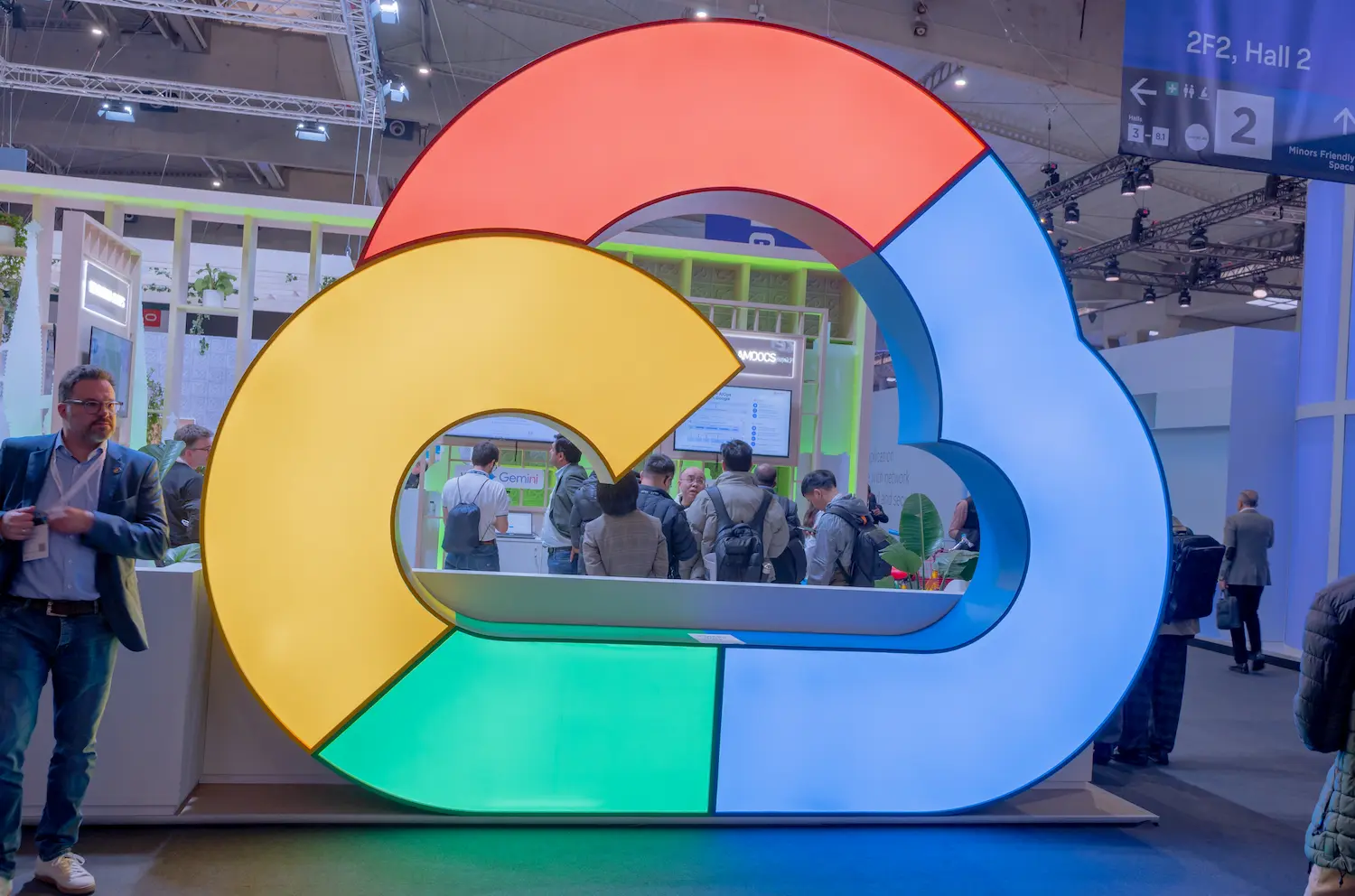
Google’s 2026 developer keynote was, on the surface, a firehose of product news: a new model family, a redesigned Gemini app, updates to Search, Maps, YouTube, and Docs, and a pair of audio glasses. Underneath the volume, the keynote had a single organizing idea, and it is worth naming up front. Almost every announcement was about the same shift: moving Gemini from a system that answers questions to a system that takes actions on your behalf.
This is the agent pivot, and Google just restructured a remarkable share of its product line around it. Here is what was announced, organized by what actually matters.
The new models: Gemini 3.5 Flash and Omni
The foundation of everything else is two new models.
Gemini 3.5 Flash is the headline release. Google positions it as the first in a series built to combine frontier intelligence with action. Compared to the previous Gemini 3.1 Pro, Flash is described as better across nearly every benchmark, with particularly large gains in coding and a notable jump on GDPVal, a benchmark built around real-world tasks with measurable economic value. The pitch is not only capability but speed. Google claims roughly four times the output tokens per second of other frontier models, placing it in what the company frames as its own quadrant on the intelligence-versus-speed tradeoff. It is available today across Google’s products and APIs.
Gemini 3.5 Pro was previewed as the heavier model, in internal use now, with a public release promised for next month.
Leading with Flash rather than Pro is deliberate. Google is betting that for agentic workloads, where a model runs many steps in the background, speed per token matters as much as raw intelligence. A fast, cheap, capable model is the better substrate for agents than a slow, expensive, slightly smarter one.
Gemini Omni is the other major model announcement, and it targets media generation. Omni combines Gemini’s reasoning with Google’s generative media models: Veo for video, Nano Banana for images, and Genie for interactive simulations. The emphasis is on world understanding. Google showed Omni simulating physical concepts such as kinetic energy and gravity with what it called a meaningful jump in intuitive physics over previous systems. In practice, Omni lets users generate video from a plain text prompt and then edit it conversationally, including restyling footage, adding elements, and changing camera angles. Google’s framing was direct: this is the “Nano Banana moment for video.”
Gemini Spark: the always-on personal agent
If the keynote had a single headline product, it was Gemini Spark.
Spark is a personal AI agent that acts on your behalf under your direction. The detail that matters most is where it runs. Spark does not run on your device. It runs on dedicated virtual machines on Google Cloud, which means it is always available and keeps working when your laptop is closed. It is powered by Gemini 3.5 and Google’s Antigravity system, and it is designed for long-running background tasks.
In the demo, a user dictated three tasks in a single voice message: highlight all upcoming meetings with a specific person in bright pink, draft a note inviting a new neighbor to a block party, and build a categorized document of end-of-school-year tasks. Spark captured the full request, split it into individual tasks in the background, and the user put their phone away while it worked.
Spark will integrate with tools through MCP, starting with Google’s own and expanding to third-party tools in the following weeks. It will be reachable from the Gemini app and, soon, by email and chat. Google is rolling it out cautiously: trusted testers this week, then beta access for US Google AI Ultra subscribers the following week. Later in the summer, Spark moves into Chrome as an agentic browser, and Android gets a dedicated home space for agents.
Spark is the clearest expression of the agent pivot. The product is not a chatbot you visit. It is a worker you delegate to, running on cloud infrastructure, measured by what it completes while you are not watching.
Antigravity 2: the platform underneath the agents
Spark and the other agents need a foundation, and that foundation is Antigravity.
Antigravity 2 is a new autonomous desktop application that Google describes as agent-first: built around agent conversations, agent-produced artifacts, and multi-agent orchestration. The release also includes a full CLI experience, an SDK, native voice support through Gemini audio models, and integrations with Android, Firebase, and Google AI Studio.
The technical substance is in what Google calls the agent harness, the invisible framework that lets Gemini complete real-world tasks. It gains new primitives: sub-agents, hooks, and asynchronous task management. Gemini 3.5 Flash was co-optimized with this harness, which is the connective tissue between the model news and the agent news.
As a demonstration of scale, Google said its engineers used Antigravity and Gemini 3.5 Flash to build a functional operating system from scratch, complete enough to run Doom. Antigravity 2 is available globally today.
Search becomes an agent
The changes to Search were among the most consequential, because Search is where most people will encounter all of this first.
Google announced a redesigned intelligent search bar that accepts multimodal queries across text, images, files, and video, and runs reasoned search over all of them. It also unified AI Overviews and AI Mode into a single AI search experience, so a query, its answer, and follow-up questions live in one continuous flow with preserved context. That unified experience is available today worldwide on desktop and mobile.
Two larger shifts follow. Information agents let users set up persistent agents that monitor the web continuously. An apartment search with specific criteria, or alerts for a favorite athlete’s sneaker releases: the agent scans sites, social media, and forums, then surfaces results when they appear. They arrive this summer.
Generative UI brings Antigravity and Gemini 3.5 Flash’s coding ability directly into Search. Instead of returning links, Search can build a custom interface for your question on the fly: dynamic layouts, interactive widgets, entire mini-experiences. Google’s example was a student asking how black holes affect spacetime and receiving an interactive visual, then refining it with a follow-up about binary black holes and gravitational waves. This rolls out this summer, free for everyone.
Generative UI is a quiet but significant change to what a search result is. For two decades a result was a list of links. Google is now proposing that a result can be a purpose-built application, generated per query. That reframes Search from a directory into a software factory.
There is also Universal Cart, an intelligent shopping cart that works across merchants. Items can be added while browsing Search, chatting with Gemini, watching YouTube, or reading Gmail. Once added, the cart works in the background to find deals, monitor price drops, show price history, and alert on restocks. It rolls out in the US this summer.
Conversational AI spreads into Maps, YouTube, and Docs
Three established products gained conversational agents.
Ask Maps is part of what Google called Maps’ biggest update in a decade, built for longer and more complex questions. The example given was a parent needing to buy a child a new dress on foot within 30 minutes before a wedding.
Ask YouTube rethinks how people search the platform. It gives a digestible overview of a topic, surfaces the videos that best match your interest, jumps directly to the most relevant part of a video, remembers context for follow-up questions, and can present comparisons in a table. It is testing now, with broader US rollout this summer.
Doc Live lets users build and edit documents by voice, with Gemini pulling in context from Drive and Gmail as needed. It rolls out to Pro and Ultra subscribers this summer, with the same voice capabilities coming to Gmail and Google Keep.
The creative suite: Pix and Flow
Beyond Omni, Google expanded its creative tools.
Google Pix is a new Workspace product for image creation and editing. It understands the objects in a composition and how they interact, so users can hover to select and delete elements, resize objects to fit a frame, and edit or translate text. Its output is watermarked with SynthID, and it rolls out this summer.
Google Flow gained an agent that can run multiple actions at once, turning a single image into 16 distinct videos, or applying large-scale edits such as shifting every scene from dawn to night. Flow Tools lets creators code custom creative tools directly inside Flow, and Flow Music extends the same control to original song creation. The Flow updates are available today.
Hardware: audio glasses
Google announced its first audio glasses, arriving this fall. They deliver Gemini privately through audio rather than a screen, keeping hands free for music, photos, calls, and phone apps. They pair with both Android and iOS, and ship as the first two models in a larger collection. The live demo showed glasses-driven walking navigation, a coffee order placed through DoorDash by voice, and integration with a connected watch for a glanceable display.
Trust, safety, and science
A few announcements rounded out the keynote.
On provenance, Google is expanding SynthID and content credential verification to Search and Chrome, letting users circle or right-click content and ask whether it was AI-generated. The system can distinguish camera-captured from AI-generated content and flag generative edits. Google said NVIDIA adopted SynthID last year, and announced that OpenAI, Kakao, and ElevenLabs are now adopting it as well. That participation matters, since watermarking only works at scale when many providers take part.
On security, CodeMend is a security agent that automatically fixes critical software vulnerabilities. On science, Gemini for Science bundles research-acceleration tools, AlphaEarth Foundations was presented as a digital twin of the planet aimed at problems like deforestation and food security, and Isomorphic Labs reported reaching preclinical stage on multiple drug-discovery projects, including potential treatments for immune disorders and cancer.
Pricing and rollout
Google adjusted its plans. A new Ultra tier launches at $100 per month. The top-tier Ultra plan drops from $250 to $200 per month. That is a notable cut at the high end, and a sign Google wants its heaviest agentic features in more hands.
| Timing | What lands |
|---|---|
| Available now | Gemini 3.5 Flash, redesigned Gemini app, unified AI Search, Antigravity 2, Flow updates, Gemini Omni (in-app for paid subscribers), Daily Brief (US) |
| Next month | Gemini 3.5 Pro public release |
| This summer | Gemini Spark (broader access and Chrome), generative UI in Search, Universal Cart, Ask YouTube, Doc Live, information agents, Google Pix, Android agent home space |
| This fall | Audio glasses |
The takeaway
Strip the keynote down and the message is consistent. Google is not adding AI features to its products anymore. It is rebuilding its products as surfaces for agents. Search generates software per query. Maps, YouTube, and Docs answer in conversation. Spark runs on cloud machines whether or not your computer is on. Antigravity is the platform that makes all of it programmable.
The competitive context is hard to miss. This is Google answering the agent-first direction that Anthropic and OpenAI have been pushing, and doing it with the advantage Google uniquely holds. It owns the products where billions of people already are: Search, Maps, YouTube, Gmail, Android, Chrome. The open question is execution and trust. An always-on agent acting on your behalf is only as valuable as it is reliable, and Google’s own cautious, tester-first rollout of Spark suggests the company knows it.
The center of gravity in consumer AI is shifting from the model to the agent harness around it. Google’s bet is that whoever owns the everyday surfaces, and the orchestration layer that runs tasks across them, wins the next phase, regardless of which model is marginally smarter this quarter.
Frequently Asked Questions
What is Gemini Spark and how is it different from a chatbot?
Spark is a personal AI agent that performs tasks on your behalf rather than just answering questions. It runs on dedicated virtual machines on Google Cloud, so it continues working in the background even when your laptop is closed. You delegate tasks to it by voice, text, or email, and it executes them across connected tools.
When can I use these features?
Gemini 3.5 Flash, the redesigned Gemini app, and the unified AI search experience are available now. Gemini Spark begins with trusted testers and then US Google AI Ultra subscribers. Generative UI in Search, Universal Cart, Ask YouTube, Doc Live, and information agents roll out over the summer. Audio glasses arrive in the fall.
What is the difference between Gemini 3.5 Flash and 3.5 Pro?
Flash is the faster model, released first and available now, optimized for speed and for agentic workloads where a model runs many steps. Pro is the heavier model, currently in internal use, with a public release expected next month.
How much do the new Google AI plans cost?
Google introduced a new Ultra tier at $100 per month. The top-tier Ultra plan was reduced from $250 to $200 per month.
What is Antigravity 2?
Antigravity 2 is Google’s autonomous, agent-first desktop application and the platform layer beneath products like Spark. It includes a CLI, an SDK, native voice support, and new agent primitives such as sub-agents, hooks, and asynchronous task management. It is available globally now.
Can the AI content detection tools really tell if something is AI-generated?
Google is expanding SynthID and content credential verification to Search and Chrome, which can identify whether content came from a camera or an AI model and whether it was edited with generative tools. The caveat Google itself raised is that this works reliably only at scale, when many AI providers watermark their output. NVIDIA, OpenAI, Kakao, and ElevenLabs are listed as participating.
