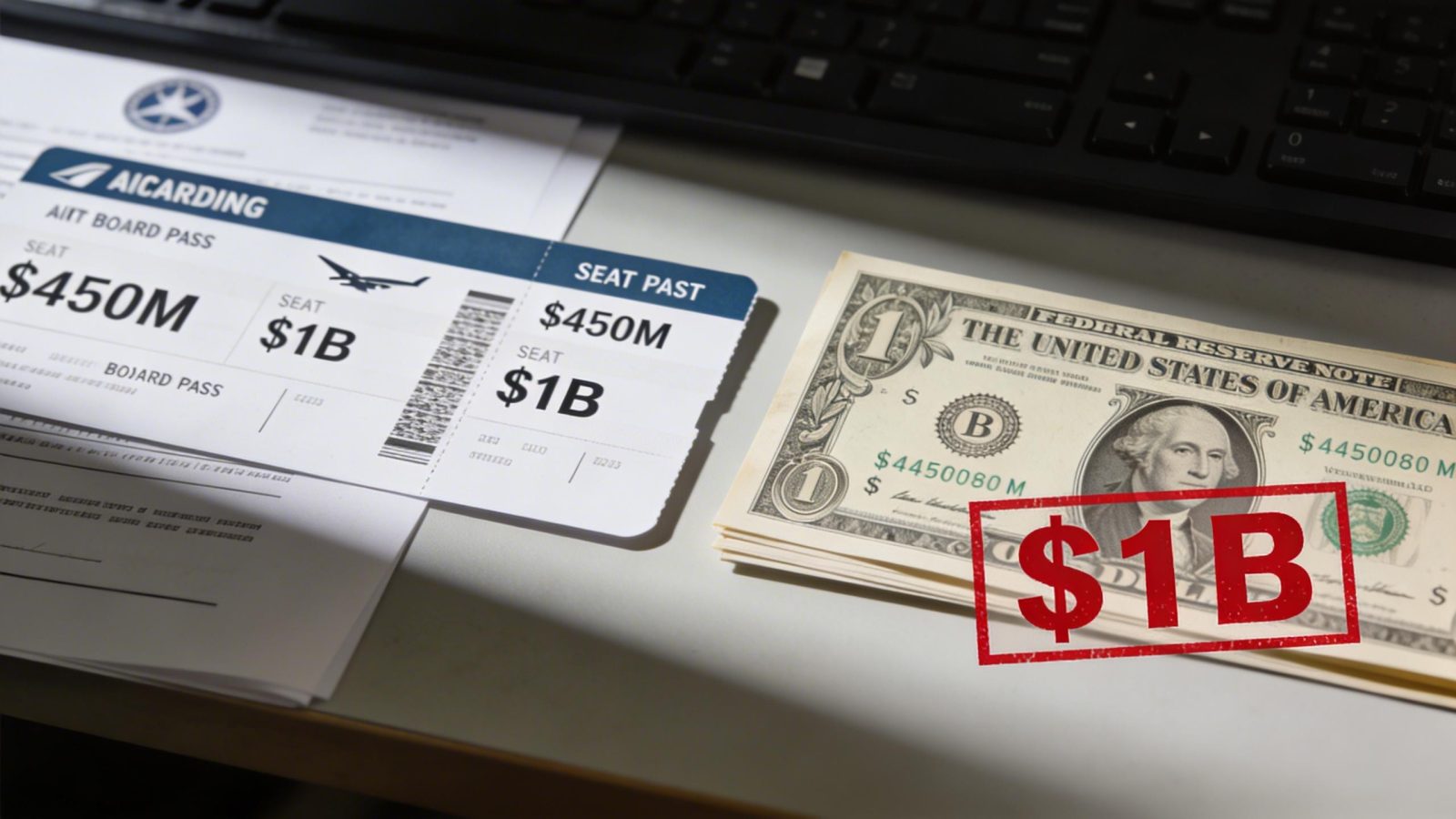
Aaru just became a unicorn. Most of its equity sold for half that.
The AI startup hit a $1 billion valuation in its Series A round this March, according to TechCrunch’s investigation — but lead investor Redpoint paid just $450 million for most of its stake. The firm then kicked in a smaller check at the billion-dollar mark, letting latecomers join at the inflated price. Same equity. Two prices. Instant unicorn status.
This isn’t creative accounting. It’s the new normal in AI funding, and it’s a ticking time bomb for anyone who isn’t a lead investor.
The AI funding arms race just invented a new kind of unicorn — and it’s fake
Call it airline pricing for equity. Wesley Chan of FPV Ventures told TechCrunch: “You cannot typically sell identical products at different prices simultaneously… this represents new territory for equity markets.” But in a market where Anthropic’s $30B round at a $380 billion valuation hit on February 12, 2026, VCs are desperate enough to pay premiums just to get in the room.
Aaru isn’t alone. Serval pulled the same move in December: Sequoia Capital secured its lead position at a $400 million valuation, then the company announced a $75 million Series B at $1 billion when the round closed. The pattern is clear — manufacture scarcity, charge latecomers a tax, claim unicorn status before you’ve earned it.
And the market is eating it up. The AI funding frenzy has created a seller’s market where founders can dictate terms. ElevenLabs raised $500 million at $11 billion on February 4. Fundamental closed $255 million at $1.4 billion the next day. When every competitor is raising at eye-watering numbers, dual-pricing becomes the shortcut to staying relevant.
Why VCs are calling it “airline pricing” — and why that should terrify you
The airline metaphor is perfect. You’re not buying a better seat — you’re buying the same equity at different prices based on when you showed up. Early birds get the discount. Stragglers pay full fare. Except in this version, the “stragglers” are institutional investors with billions under management, and the “discount” is baked into the cap table forever.
Jason Shuman of Primary Ventures sees the trap: dual-pricing forces startups to raise their next round above the headline number — not the blended reality. That means Aaru’s Series B needs to clear $1 billion, even though most of its Series A equity priced at $450 million. Miss that mark, and you’re staring at a down round that triggers preference stacks, ratchets, and brutal dilution.
The data backs him up. According to industry analysis, 38% of 2025 AI unicorns already have blended valuations sitting 30% or more below their headline numbers. These aren’t outliers — they’re the new baseline. And when the music stops, someone’s holding a valuation that was never real in the first place.
The employees who’ll pay the price when this bubble pops
Here’s the honest trade-off. VCs who paid $450 million can exit profitably even if the next round prices at $600 million. They got in cheap. But employees with stock options priced at the $1 billion headline? They need the company to raise at $1.2 billion or higher, or their equity gets shredded by dilution.
No dual-pricing startup has faced a down round yet — the model is too new. But the structural risk is undeniable. AI layoffs are already accelerating across tech, and dual-pricing ensures the next wave will hit employees hardest. VCs negotiated their discounts. Founders got their headlines. Early team members? They’re holding options priced at a fantasy.
The first major AI unicorn to exit below its stated valuation will be the test case that proves or disproves the entire model. Until then, we’re watching a game of musical chairs where VCs know exactly how many seats are left — and employees don’t.
VCs need to keep the valuation game running to justify their own portfolios. But physics eventually wins. Someone’s holding a $1 billion valuation that cost $450 million to create, and nobody knows who’ll be left standing when the music stops.