


When a simple web address draws both tech insiders and the public into speculation mode, something unusual is clearly at play.
The purchase of ai.com, rumored to have topped $70 million, has captured more attention than many product launches.
The intrigue is not just about the price tag or the two-character simplicity—it is fueled by what is (and is not) happening on the site itself.
Even after a splashy appearance during Super Bowl LX, the destination currently offers more questions than answers for those visiting with curiosity or investment-minded intentions.
Why does owning ai.com matter so much?
Short, memorable domain names have always carried weight in the online world. Now, with artificial intelligence transforming everything from business workflows to personal schedules, having the definitive “.com” attached to AI signifies enormous potential.
The digital real estate market sees bidding wars regularly, but the scale reached by this acquisition sends an unmistakable signal about industry expectations.
Beyond its brevity, “AI” embodies an entire sector’s promise. Companies aspiring to global influence see the value in aligning their brand with such universal shorthand. Essentially, securing ai.com positions its owner at the center of high-stakes technology conversations, attracting investors, partners, and millions of curious users.
The twists and turns of ownership
The saga surrounding ai.com quickly became more than just another story of a pricey online purchase. High-profile brokers and discreet negotiations suggest that heavyweight players circled the opportunity.
For a period, evidence pointed toward a major generative AI company as the operator. Later, redirects linked the domain to entrepreneurial efforts by another tech titan known for shaking up multiple industries.
This revolving door approach is far from common for such valuable domains. Each change hinted at strategic maneuvers within the competitive world of artificial intelligence—sometimes reflecting rivalries, sometimes signaling shifting ambitions.
From AI chatbot links to new frontiers
Initially, those tracking domain redirects witnessed connections between ai.com and leading providers of conversational AI. As leaders in automated text generation and virtual assistance gained media buzz, speculation ran rife that they might be making a play for wider recognition through the coveted URL.
Not long after, the story took another turn. Soon, ai.com directed visitors toward the latest endeavor of a figure shaping the future of electric vehicles, space exploration, and now—artificial intelligence startups of his own. This move seemed to highlight escalating competition and perhaps a desire to outpace more established players.
Market value: how does ai.com compare?
To put things in perspective, most domain sales—even involving significant buzzwords—rarely breach eight-figure territory. Famous past deals like insurance.com and voice.com set records in their time but still ranked below this new summit. The sale of ai.com outpaces previous purchases and establishes a benchmark that will likely push up valuations for comparable names across other sectors.
Industry experts note that this sum reflects both current excitement around AI and predictions that it will shape the coming decades. A further layer to consider: whoever controls ai.com can command a unique kind of authority and attention in a crowded landscape.
What exactly greets visitors at ai.com?
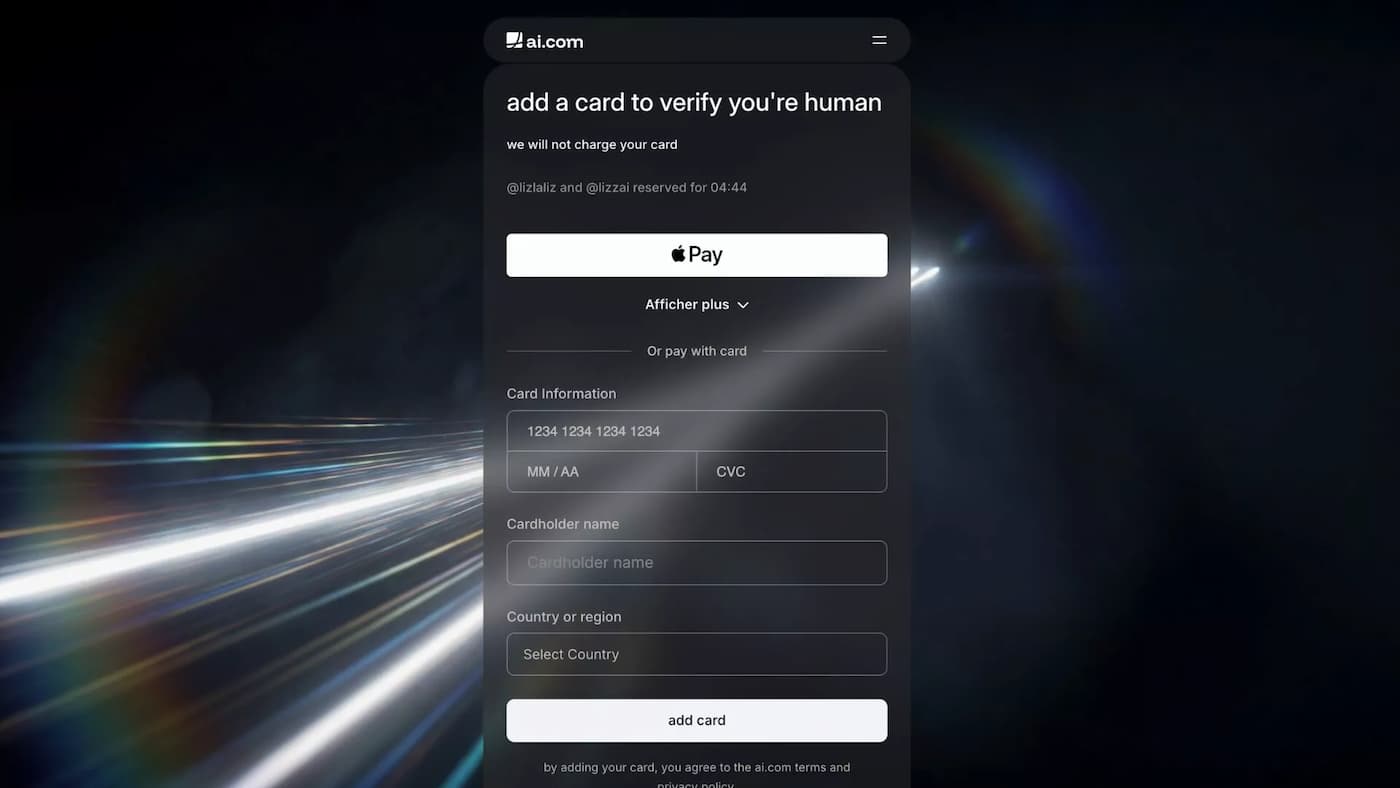
A carefully designed homepage greeted those arriving after the Super Bowl announcement, yet there was no detailed product demonstration or downloadable software on display. Instead, prospective users encountered an unusual request: enter credit card details to prove legitimate intent, despite assurances that no payment would actually occur.
Such practice triggered concern among analysts and cybersecurity enthusiasts. Asking for financial details upfront, especially without transparent rationale, goes against conventional wisdom for building user trust. Lacking clear purpose or definitive communication about next steps, the cautious were left puzzled—or even alarmed.
Promises and ambitions highlighted in promotions
A slick promotional campaign suggested big plans. The teaser described a service where AI-powered agents could handle tasks ranging from financial investing to day-to-day scheduling—all simplified for ordinary individuals rather than reserved for advanced programmers.
The goal, according to available materials, seems to be a platform promising robust automation abilities, all funneled through an experience streamlined enough for the general population. Delivering on such ambitions, though, requires bridging not only technical gaps but also overcoming skepticism built by the unconventional onboarding requests.
Controversy and caution: who stands behind the scenes?
Adding to speculation are references to figures with checkered histories in other tech and crypto ventures. Such background colors perceptions around the project and accentuates why some urge vigilance. When large sums change hands and familiar names surface, stories from prior initiatives—successful, failed, or controversial—fuel further scrutiny.
Transparency therefore becomes central. Without clear leadership disclosure, understandable processes, and a genuinely useful end-product, investors and ordinary users alike may prefer a wait-and-see approach before becoming involved or entering sensitive details.
Comparing ai.com’s launch style with other tech rollouts
Technology companies often chase grand unveilings and massive ad placements, especially at events watched by millions. Yet, most provide tangible information, actual demos, or beta signups immediately afterward. In contrast, ai.com’s campaign generated buzz through anticipation and mystery—leveraging curiosity instead of practicality.
Reviewing recent examples demonstrates that transparency usually wins more early adopters. Many headquartered in Silicon Valley or beyond typically describe the scope of their services or provide clear opt-ins, enabling feedback and gradual improvement over time. Deviating from these norms puts additional pressure on the teams behind ai.com to rapidly deliver substance matching the initial hype.
- Domain name acquired for an unprecedented sum
- Mysterious ownership transitions between industry giants
- Homepage requires credit card validation to proceed
- Promised features: task automation, trading, calendar management via AI agents
- Skepticism rooted in both secrecy and previous controversies
Could ai.com live up to its immense expectations?
As anticipation persists, those following developments continue to weigh the bold claims hinted at in promotional material against the uncertain realities on display. Ultimately, delivering meaningful utility and fostering confidence remains the only way to transform speculative interest into lasting value for everyone drawn to the idea behind those two iconic letters.
With the spotlight fixed firmly on every move, the true impact of this record-breaking domain acquisition will only become clear as real services—and genuine transparency—replace speculation and secrecy.
