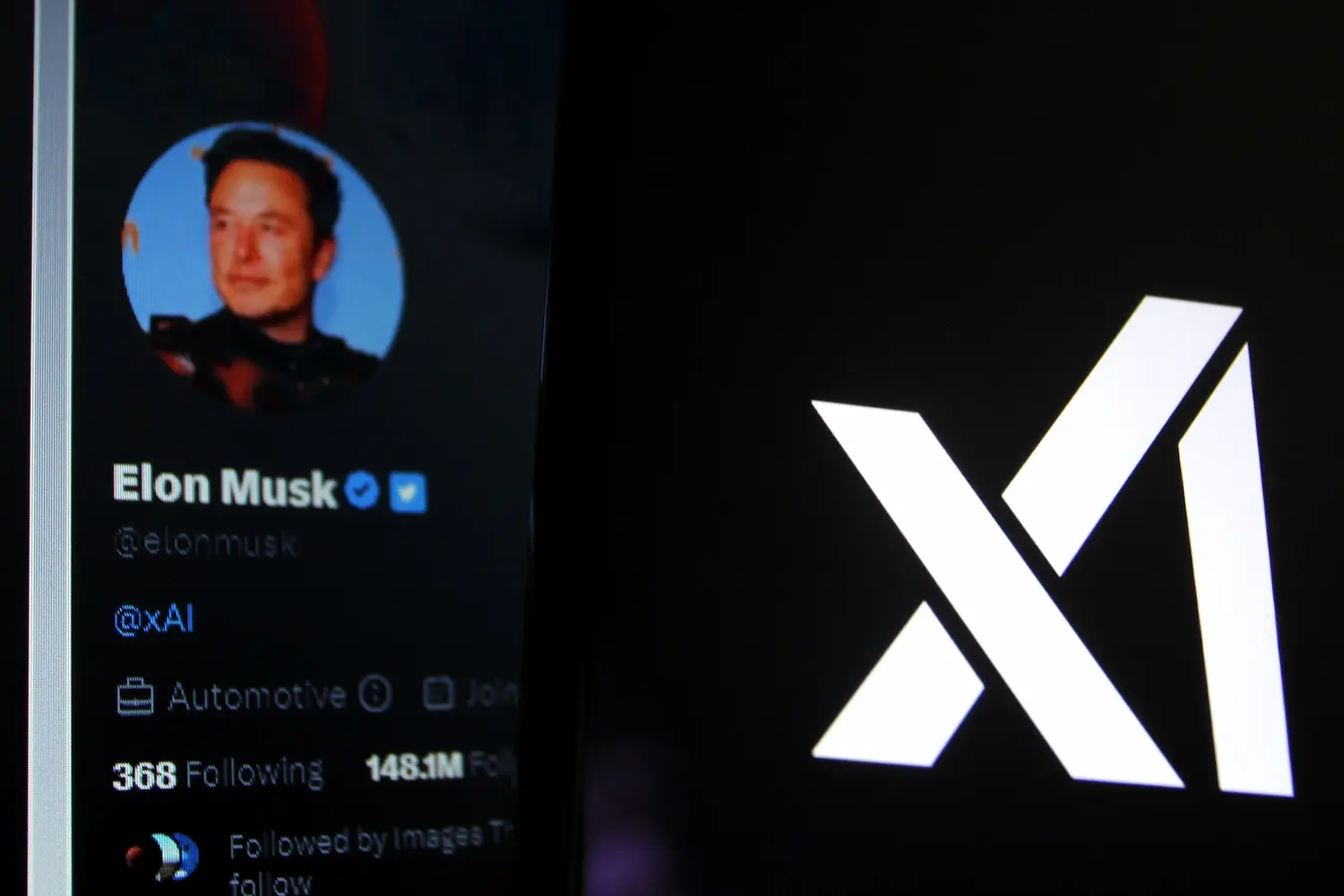
xAI lost half its founding team in twelve months. The other half is supposed to sell investors on a $250 billion valuation in four months.
Six of the company’s twelve original members have now departed — including cofounders Jimmy Ba and Tony Wu, who left last week. That’s 50% attrition in the year leading up to a June 2026 IPO that will test whether investors value institutional knowledge or just believe the Musk narrative. The exodus isn’t slowing down. It’s accelerating.
The June 2026 IPO will force that question into the open. And xAI doesn’t have an answer yet.
The reorg that cost xAI its institutional memory
Eleven engineers exited in one week this February. The list reads like the credits on Grok’s original architecture: Ba and Wu (cofounders), plus Igor Babuschkin, Manuel Kroiss, Kyle Kosic, Christian Szegedy, and Greg Yang. These aren’t replaceable mid-level hires. They’re the people who designed the system from scratch.
Musk framed the departures as “push not pull” in an internal memo — company-initiated cuts to make room for what he called “later-stage fits.” But ex-staff tell a different story. They cite a desire for “more autonomy and smaller teams” — the exact conditions xAI’s reorg eliminated.
The tension is structural. Musk says he fired them to scale. They say they left because scale killed what made xAI work in the first place.
Why the June 2026 IPO makes this exodus existential
xAI merged with SpaceX days before the February reorg. The combined entity valued SpaceX at $1 trillion and xAI at $250 billion in a stock transaction that set up the June IPO. That’s the forcing function. The company is scaling up — headcount reportedly passed 1,000 employees — while simultaneously bleeding the people who built its flagship product.
The IPO pitch requires proving xAI can execute without its founding team. But no investor has seen that proof yet.
Musk’s track record buys credibility. But frontier AI talent isn’t rockets. You can’t just hire “later-stage fits” when the product is still being invented. The institutional knowledge walking out the door — how Grok’s voice capabilities were architected, why certain training decisions were made, what didn’t work in early experiments — doesn’t transfer through Slack channels and onboarding docs.
It lives in the people who built it. And half of them are gone.
The talent war xAI can’t win by outspending
This isn’t an xAI problem. It’s an industry-wide structural crack. AI researcher turnover has spiked across major labs since late 2024. OpenAI disbanded its mission team in February 2025, then fired a policy executive over opposition to “adult mode” features a month later. The pattern repeats: founding researchers thrive in early chaos, then bail when commercial AI reality demands operational discipline.
xAI’s catch is timing. You can’t IPO a chaos lab. But you can’t build frontier AI without one.
Some departing engineers are reportedly planning new AI ventures focused on smaller, more autonomous research teams. Destinations unknown, but the intent is clear — they’re optimizing for the conditions xAI just eliminated. Musk might be right that the company needs later-stage talent for an IPO. But that talent didn’t build Grok. And investors betting $250 billion on June 2026 will have to decide whether they’re buying the product or the mythology.
xAI’s June 2026 IPO will test a thesis no one has proven — that you can scale a frontier AI lab without the people who invented it. Musk has four months to show the math works. The six founders who left aren’t waiting to find out.