

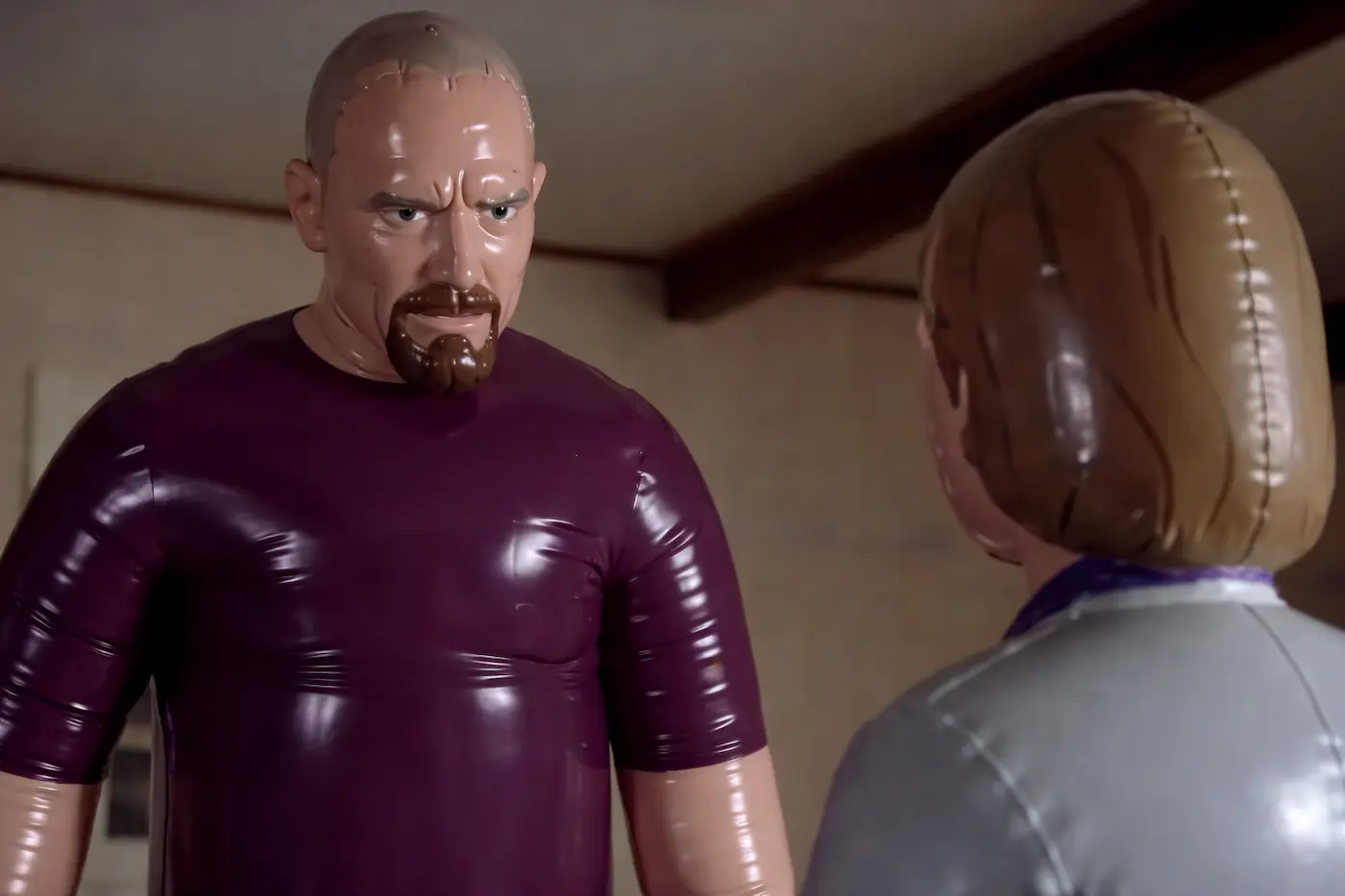
That Breaking Bad balloon remix going viral isn’t a glitch — someone paid AI to mess it up on purpose, and it’s selling better than anything polished.
The AI art market just hit a weird inflection point where perfection became the problem.
As the industry races toward $10 billion by year-end, the stuff actually moving is intentionally broken.
Dreamcore surrealism — fever-dream distortions of nostalgic TV shows, warped liminal spaces, pixelated chaos — is 2026’s dominant style because we’re exhausted by algorithmic perfection.
We’re rejecting AI polish because it feels dead inside
Voir cette publication sur Instagram
65% of consumers now prefer “human imperfections” in art over AI’s flawless output, according to 2026 data. That’s not an aesthetic preference — it’s a psychological rejection.
After two years of hyper-polished AI imagery flooding every platform, our brains started treating perfection as a red flag for soullessness.
Dreamcore’s intentional glitches (pixelation, color bleeding, warped proportions) trigger the opposite response: something alive made this.
Reddit threads on the Breaking Bad balloon piece reveal the appeal: “nostalgic yet wrong, I can’t stop staring.” The discomfort is the point.
AI surrealism unnerves in ways photorealism can’t, because it feels like peeking into a glitchy subconscious rather than a corporate render farm.
This mirrors how AI is quietly changing the internet — the shift isn’t about features, it’s about what feels human versus what feels generated.
Designers are embracing imperfection to add warmth and authenticity to work that would otherwise read as algorithmic. Relief mixed with unease — finally art that doesn’t feel like a stock photo, but also… what are we actually looking at?
The numbers prove imperfection is the new premium
Dreamcore pieces generate 3x more engagement than photorealistic AI on major platforms. Engagement translates to sales: surreal minimalism is up 40% in digital marketplaces this January alone.
Professional adoption exploded: 78% of digital artists now use AI as a co-creator for surreal styles, versus 45% in 2025. That’s a 73% jump in under a year.
Artists aren’t just experimenting — they’re rebuilding workflows around intentional distortion. Understanding how to curate AI chaos is becoming one of the AI skills that matter in 2026 — not just prompting, but knowing which malfunctions to keep. The technique: prompt AI models to “misfire” with conflicting instructions, then curate the chaos.
A Breaking Bad scene becomes helium balloons because the AI was told to render “weightless nostalgia” and “chemical transformation” simultaneously. The collision creates something neither human nor machine could plan. Two out of three Photoshop users in the beta use generative AI daily — this isn’t fringe behavior anymore.
But those glitches hide something darker
Intentional AI malfunctions don’t just distort images — they amplify training data biases. When you warp a cultural icon through dreamcore filters, you’re also warping the stereotypes baked into the model’s training.
Marginalized creators’ cultural symbols get remixed without consent, and the “artistic distortion” excuse makes it harder to trace or challenge.
A warped Día de los Muertos scene isn’t just surreal — it’s potentially reinforcing caricatures the AI learned from biased datasets. The same technology that AI solved a 500-year-old art mystery with is now being deliberately broken to create new ones.
This is why 700 artists are fighting AI art — the consent problem doesn’t disappear just because the output looks intentionally weird.
92% of 2026 graphic trends now incorporate AI-assisted distortion effects. That’s mainstream adoption before anyone solved the bias problem. We’re industrializing the glitch before understanding what it amplifies.
If dreamcore becomes the default visual language of 2026, are we just swapping one AI problem for another?
The market has spoken: imperfection sells. But nobody’s checking what those imperfections are hiding. Artists are programming chaos into systems we don’t fully understand, and calling it liberation. Maybe it is. Or maybe we’re just getting better at romanticizing the mess we can’t control.
