

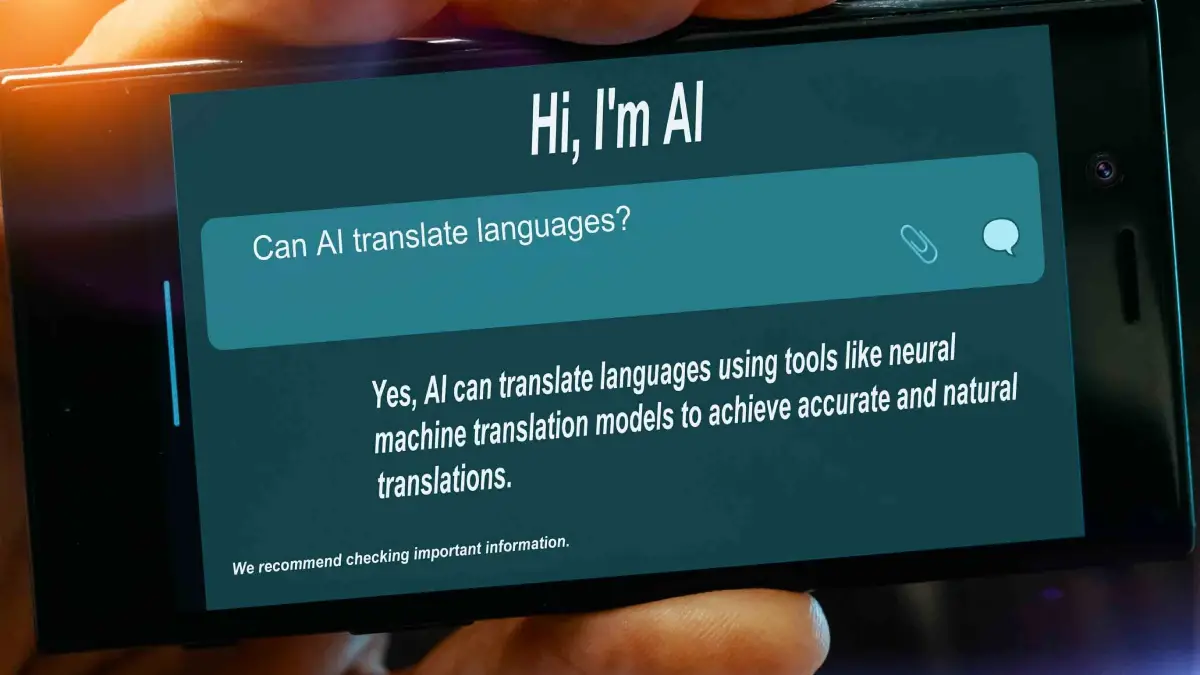
For years, automatic translation tools have been a daily companion for travelers, language learners and professionals navigating foreign texts. Historically, one solution stood out thanks to its speed and extensive data coverage.
Yet, recent advances have seen ChatGPT shift the landscape, offering not only rapid translations but also an unmatched adaptability and contextual awareness. Here is a closer look at how this artificial intelligence is redefining real-time translation.
A stealthy rollout
This discovery took everyone by surprise. Although no conference was held, a new page quietly appeared on the OpenAI website. Initially spotted by keen observers such as leaker Tibor Blaho and reported by our colleagues, this new feature is accessible via a specific URL.
The interface is radically different from the usual chat. It features the classic layout for tools of this type: a block for the source text on the left (or at the top on mobile) and a block for the result on the right.
Language detection is automatic, and the sleek design is clearly aimed at capturing users in a hurry who reflexively turn to Google or DeepL.
For now, the tool appears to be in a gradual rollout or testing phase, but it is fully functional for the general public.
Why are traditional translators losing ground?
Until recently, most users relied on established platforms for their instantaneous results and vast linguistic databases. Whether handling documents, news articles or email drafts, these tools provided quick answers that were generally understandable.
Their interfaces were typically simple—a text box for input and another for output—designed for those seeking immediate solutions.
However, as expectations for accuracy and localization increased, shortcomings became evident.
Literal translations could work for everyday phrases, but for nuanced or professional needs, they often missed the mark. Users began noticing awkward wording or misinterpretations, as these engines primarily used word-for-word methods rather than true contextual understanding.
What makes ChatGPT’s translation stand out?
A genuine breakthrough has emerged with ChatGPT’s approach. Rather than delivering a single fixed answer, it evaluates context, intent and subtle cues in user input. The AI goes beyond mere language detection—it seeks to understand the purpose behind each request.
This advance leads to smoother phrasing, richer vocabulary choices and the ability to adjust tone upon demand.
For example, when given a passage, ChatGPT allows effortless switching between formal, natural, simple or academic styles. Such flexibility proves invaluable when drafting business correspondence, tailoring essays or preparing marketing materials for varied audiences.
Precision beyond surface meaning
In practice, selecting a different style triggers a specialized prompt within the AI, so the content is rewritten as if crafted by a human expert. A straightforward instruction can turn clinical writing into engaging prose or simplify complex explanations for better accessibility. Most traditional programs offer only limited adjustments, rarely allowing such deep customization.
The strength of context-driven translation stands out even more when dealing with regional expressions or industry-specific terms. In these scenarios, ChatGPT adapts idioms and vocabulary according to the request, reducing risks of cultural missteps or misunderstood references.
Dynamic conversation versus one-off solutions
Another key advantage is the interactive nature of ChatGPT. Instead of static web forms, it enables an ongoing dialogue. If the first draft does not meet expectations, requesting changes is easy—there is no need to start from scratch. It is possible to clarify specific words, suggest alternatives or focus on regional preferences, all within a single session. This conversational flow sets ChatGPT apart from approaches where clicking “translate” always delivers just one result.
Adaptability becomes even more apparent with specialized tasks: translating technical jargon, poetic passages or legal terminology. Nuances can be fine-tuned, rather than settling for the closest match initially suggested.
How does ChatGPT compare with other major players?
To better understand the differences, several criteria deserve attention: speed, precision, personalization, user experience and language support. Based on available insights, here is a comparative overview:
| Feature | Traditional Tool | Alternative Competitor | ChatGPT Translate |
|---|---|---|---|
| Main strength | Rapid processing, broad database | Linguistic nuance | Contextual awareness, tonal control |
| Personalization | Very limited | Selectable tone options | Advanced (multiple styles and prompts) |
| Languages covered | 130+ | 30+ | 50+ (with regional variations) |
| User interface | Streamlined, basic | Modern, pro-oriented | Blends clarity and professional features |
What stands out immediately is the versatility and adaptability brought by ChatGPT. While some competitors may offer a greater number of supported languages, none provide such refined customization without a complete restart.
Which use cases benefit most from AI-powered translation?
Professionals adapting communications for international partners receive responses tailored to their needs instead of generic templates. Academic writers gain clear, precise interpretations suitable for global publications, while students working on essays can choose the right level of formality effortlessly.
- Business correspondence adapted to cultural expectations
- Technical documentation using precise field-specific vocabulary
- Localized marketing campaigns that resonate authentically
- Learning and teaching resources improved for clarity and accessibility
Frequent travelers and individuals maintaining cross-border friendships also benefit, adjusting translations as conversations develop to keep exchanges personal and meaningful.
What does the future hold for digital translation?
The evolution driven by generative AI like ChatGPT signals deeper integration into everyday work and learning. As language models become more adept at detecting subtleties, industries from publishing to customer service will enjoy increasingly effective workflows.
Each innovation brings automated translation closer to authentic fluency, overcoming previous barriers. With versatility, continuous dialogue and adaptive tone management, this technology feels less mechanical and far more responsive to real-world needs.
