

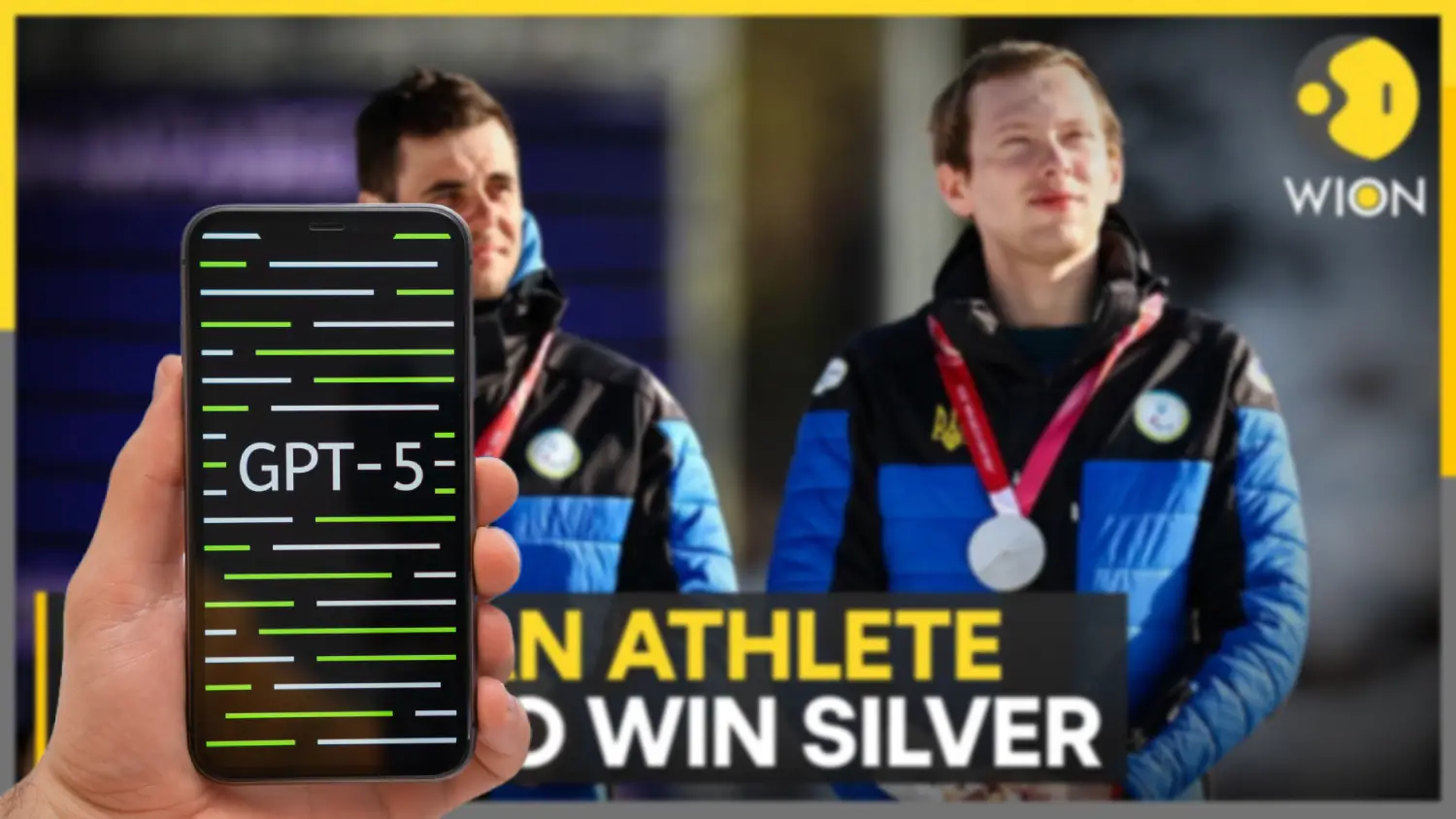
Athletes are always searching for new ways to push their limits, but rarely does an AI assistant take center stage at the highest level of sport. This is precisely what occurred with Maksym Murashkovskyi, a 25-year-old biathlete from Ukraine who claimed a silver medal and openly credited his training partnership with ChatGPT as a crucial factor in reaching such heights.
His unusual journey underscores how rapidly artificial intelligence is embedding itself into daily routines—even those as demanding and personal as professional athletics.
Surpassing traditional methods: why Murashkovskyi turned to AI
Rather than simply following the instructions of a human coach, Murashkovskyi chose to experiment by integrating ChatGPT into his physical and mental regimen over six months. While many athletes rely on tried-and-tested programs handed down by professionals, this bold move set him apart from his competitors.
He soon discovered that interacting with AI brought far more than basic workout plans.
The conversational approach allowed him to refine not only his physical strategies but also his psychological preparedness and problem-solving skills—key elements that can directly impact performance on race day.
This shift went well beyond conventional coaching. AI became a tool for feedback, data analysis, and motivational support. Unlike working with a coach whose time and energy are limited, AI delivered instant responses and seemingly endless patience.
This enabled Murashkovskyi to try new approaches, rethink setbacks, and avoid becoming stuck in a single mindset.
- Developing personalized strategies outside standard programs
- Turning setbacks into learning opportunities through simulation and analysis
- Receiving motivation and insights at any hour
From digital advisor to multi-dimensional coach
What began as curiosity about AI tools evolved into reliance on ChatGPT as a multi-faceted advisor. Murashkovskyi described the chatbot’s versatility: part coach, part psychologist, and even motivator.
Long hours of intense solo preparation can breed self-doubt in athletes, especially under the chronic stress created by global competition and personal hardship back home in Ukraine. In these moments, having an AI “partner” offered fresh perspectives and bolstered resilience.
While real coaches provide warmth and nuanced understanding, an AI system can process vast libraries of sports science literature, recall previous sessions instantly, and deliver technical or supportive guidance tailored to immediate needs.
For Murashkovskyi, this meant customizing routines based not only on conventional wisdom but also on cutting-edge research—resources that often remain overlooked during a typical season.
Enhancing mental preparation
The immense pressure at world events is now widely acknowledged among elite athletes. Achieving peak mental readiness frequently determines whether one stands on the podium or finishes outside the top ranks. With tailored visualization exercises and mindfulness dialogues provided by ChatGPT, Murashkovskyi navigated anxiety, focus challenges, and motivation dips with greater efficiency.
In contrast to classical preparation—with scheduled consultations and static paper guides—AI’s flexibility empowered him to address uncertainty as it arose. By simulating race conditions or offering stress management techniques on demand, his AI partner gave crucial support in the mental dimension that modern sports demand.
Building a bridge between knowledge and action
Embracing innovation allows athletes to streamline the path from planning to execution. Instant access to exercise explanations, nutrition advice, and tactical adjustments through ChatGPT quickly closed gaps in understanding.
Murashkovskyi did not depend solely on the model; he continued to verify strategies with trusted experts. Yet the ability to explore new ideas without endless searches or scheduling conflicts generated momentum and boosted confidence.
The outcome? A strategy perfectly calibrated to his strengths and race-day realities, freeing up energy for critical tasks like performance and recovery.
The wider potential—and pitfalls—of AI in sports environments
Murashkovskyi remains clear-eyed about the broader uses of AI beyond the sporting arena. On one hand, he highlights its positive contributions: education, language learning, project design, scientific research, and continuous improvement of athletic routines.
These benefits extend well beyond sports professionals. Students, workers, and hobbyists globally are increasingly turning to AI-powered tutors to simplify projects, learn languages, or experiment across different fields.
However, he also cautions against less positive uses—especially those emerging amid ongoing conflict in Ukraine.
As technology assumes a larger role in strategic decision-making, its adoption sometimes outpaces ethical standards. While Murashkovskyi recognized the tremendous value of generative AI for growth and learning, he did not overlook the darker implications raised by military applications.
Could AI eventually replace human coaches?
According to Murashkovskyi, AI has not yet replaced the unique expertise and empathy of a seasoned coach. He estimates that it may take five to ten years before digital advisors could surpass humans in every respect. Factors slowing this transition include context sensitivity, subtle emotional cues, and deep trust-based relationships—qualities difficult for code alone to replicate.
Nonetheless, change is underway. Sports organizations are investing in hybrid models that combine algorithmic precision with irreplaceable human judgment. As training data sets expand and platforms become more sophisticated, future generations may develop alongside powerful digital assistants designed to collaborate—not compete—with coaches, unlocking both athletic and educational potential.
