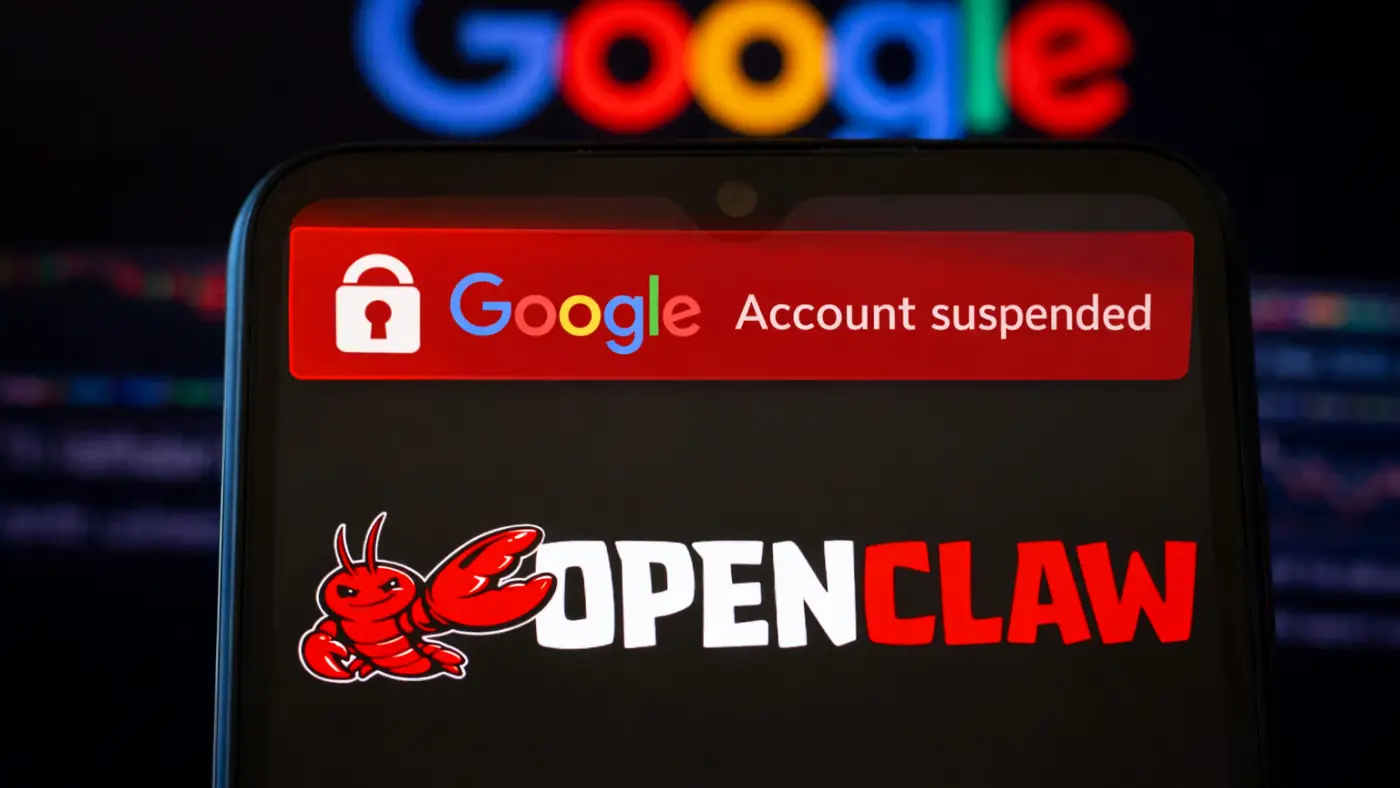
The abrupt suspension of accounts has left many subscribers to Google AI Pro and Ultra plans both surprised and frustrated. Despite paying substantial monthly fees, a number of developers found themselves suddenly locked out of their accounts.
The only apparent link? They had connected to a tool known as OpenClaw. This incident has sparked lively debate about platform control, consumer expectations, and the actual freedom enjoyed by those investing heavily in advanced tech subscriptions.
How did connecting to third-party assistants trigger mass account restrictions?
Subscribers who believed they were maximizing value from their premium AI access unexpectedly discovered that integrating with certain external assistants could lead to a complete lockout—no prior warning and no straightforward appeals process.
In February 2026, this scenario became reality for hundreds of Google AI Ultra customers. News of these sudden suspensions quickly spread on developer forums, with many describing how their access vanished shortly after linking their subscriptions to outside platforms through OAuth authentication, particularly via OpenClaw.
OpenClaw makes it possible for non-experts to automate workflows like email management or code generation using large language models from various providers. For many, leveraging such capabilities seemed perfectly reasonable—especially when already making a significant financial investment each month.
Zero tolerance approach
Rather than simply blocking the assistant, Google adopted a strict zero-tolerance policy. Those who used their credentials with OpenClaw faced immediate account lockouts, often receiving only brief notifications citing policy violations. While Google cited protection against abuse and safeguarding infrastructure, many affected users criticized the lack of transparency and felt the enforcement failed to differentiate between malicious exploitation and legitimate attempts to enhance an expensive subscription.
This approach offered little opportunity for dialogue. Most appeals were reportedly disregarded, and some individuals continued to be billed even after losing access. Developers expressed deep frustration at seeing years of loyalty erased overnight, especially without advance notice or any meaningful recourse.
The logic behind the enforcement
From Google’s perspective, the rationale involved both economic interests and security concerns. Fixed-rate subscriptions allow regulated usage within proprietary systems, while API access is metered and significantly more expensive for high-volume operations.
OpenClaw worked by routing traffic through authentication tokens tied to personal subscriptions. Power users, perhaps unknowingly, could consume resources valued at thousands of dollars per month while paying only a fraction. Developer estimates suggested that heavy workloads run through agentic tools might incur costs ten times higher under per-token pricing—posing a real threat to profitability if left unchecked.
Comparing industry responses: different philosophies emerge
Google is not alone in facing challenges around the balance between integration openness and resource management. Other major AI providers have encountered similar issues regarding compatibility with third-party tools and user behavior, though their strategies differ considerably.
A key contrast lies in the technical versus administrative response. Instead of cutting off subscriber access entirely, some competitors choose to specifically block problematic integrations. This allows users to retain core service functionality, even if extra features become unavailable. Critics argue that Google’s more aggressive actions reflect a defensive posture against tools that threaten to make its services too interchangeable, thereby reducing customer dependence.
A delicate balance for platforms
For companies like Google, which oversee vast interconnected ecosystems—including mail, cloud storage, and app marketplaces—even targeted bans can ripple across multiple products. Forum discussions revealed concern among those whose main credentials were linked to everything from video streaming to mapping services.
Some developers now opt to fragment their digital identities, maintaining separate accounts for distinct services as a precaution. However, former insiders caution that sophisticated tracking methods can still connect these accounts, so achieving true isolation remains challenging.
The nuance of contract terms
The controversy partly arises from ambiguous communication about contractual boundaries. Subscribers rarely examine terms of service before running assistant apps, and explaining why “all you can eat” does not cover technical workarounds continues to be a challenge for vendors.
Service providers justify these rules as essential for preserving fair use and ensuring stable quality for all customers. Meanwhile, users contend that steep subscription fees should entitle them to utilize the full capacity, not just what official applications permit. This tension highlights broader questions around value, control, and rights in the context of subscription-based AI access.
Anatomy of account suspensions and user risk management
Being banned under these circumstances exposes the surprising fragility of digital lives. For both enterprise clients and solo developers, the risks extend far beyond mere inconvenience—they can disrupt business communications, project hosting, and even routine personal organization.
Developer conversations increasingly reflect anxiety over wider consequences. Losing a primary account can mean forfeiting access to entire digital ecosystems, including productivity tools and purchased content. Some respondents shared mitigation strategies, such as:
- Using alternate emails and logins for different important services
- Steering clear of automation tools not explicitly authorized by the provider
- Regularly backing up data outside cloud environments linked to vulnerable credentials
This wave of suspensions has led many to rethink how freely they connect new integrations, especially when dealing with organizations capable of enacting instant and irreversible measures.
The mechanisms driving these bans often rely on precise behavioral tracking across platforms. Patterns of API activity, unusual account behaviors, or timing anomalies can serve as triggers. While these safeguards are intended to bolster system stability, they also place ordinary subscribers at risk if detection lacks sufficient nuance or transparency.
| Action | Effect on user | Platform motive |
|---|---|---|
| Integration blocked (competitor) | User retains access to the main service, loses feature connection | Technical rule enforcement, limited blowback |
| Account suspended (Google) | Total loss of access, billing sometimes continues | Economic protection, strong deterrence |
What does this mean for the future of premium AI subscriptions?
The recent events surrounding OpenClaw raise unresolved questions for every enthusiast of powerful AI tools: How much ownership truly comes with a subscription? When do automation shortcuts cross into violation rather than innovation? As providers strive to balance monetization, legal considerations, and customer trust, subscribers must stay vigilant and attuned to evolving terms and policies.
This episode stands as a cautionary reminder of the blurred boundaries between individual ownership, reliance on the cloud, and corporate authority. As platforms exert ever tighter control, only greater transparency and mutual understanding will determine whether these arrangements can thrive—or collapse—under growing pressure.