

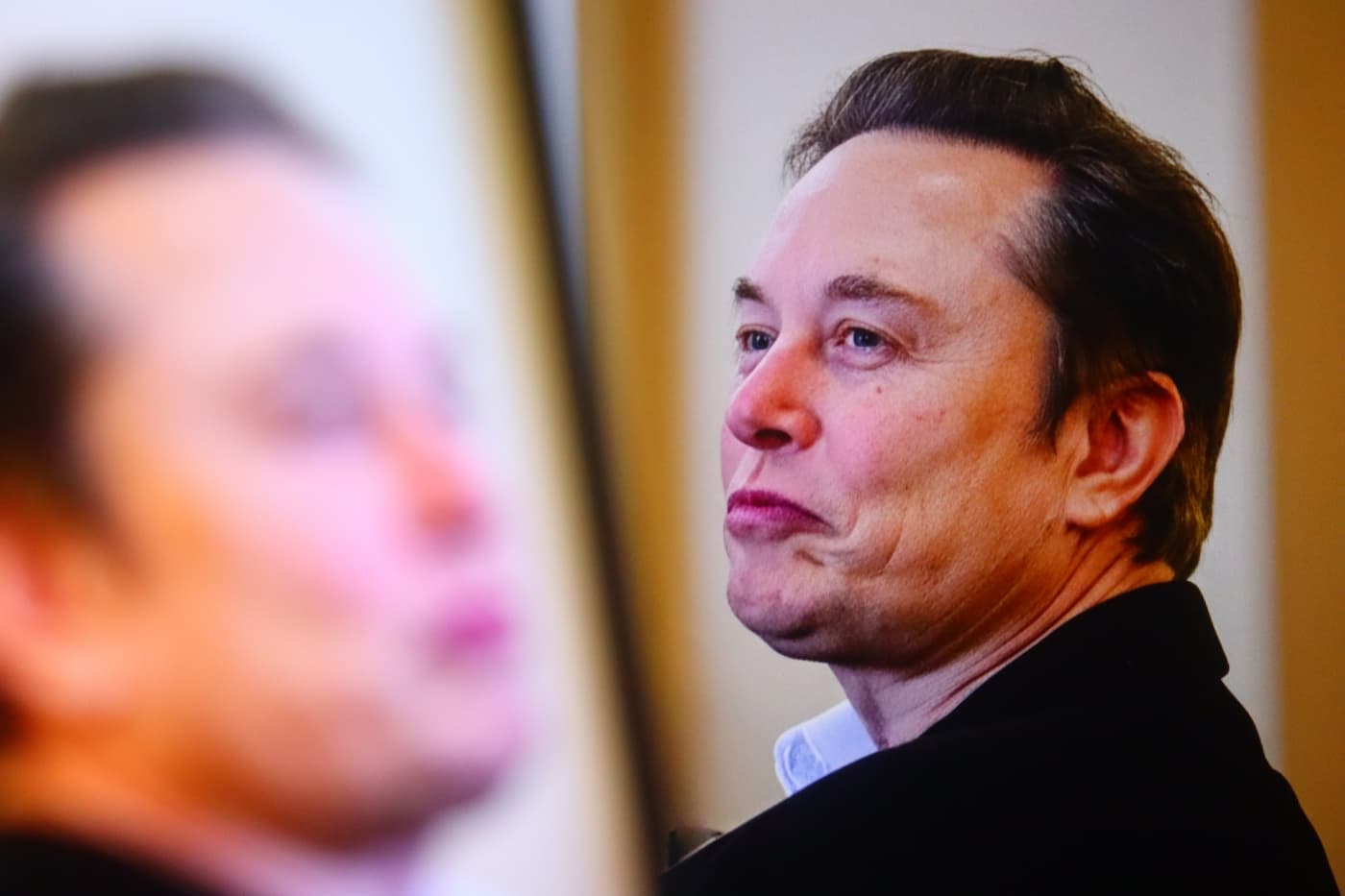
Speaking at the World Economic Forum in Davos, the Tesla and SpaceX CEO laid out an ambitious (and unsettling) timeline: AI surpassing individual human capability within months, followed by mass-market humanoid robots later this decade.
During a roughly half-hour appearance in Davos, Elon Musk delivered a rapid-fire set of forecasts that, if accurate,
would reshape technology, labor, and daily life in a very short window. He argued that artificial intelligence is nearing
a critical threshold—and that robotics will be the next domino to fall.
“Superintelligence” on a fast track
Musk claimed that AI could soon outperform any single human being. In his view, that moment could arrive before the end
of 2026, or at the latest in 2027. He then pushed the horizon further: by 2030–2031, he suggested, AI may become smarter
than humanity collectively.
The comments landed amid ongoing controversies around generative AI systems and the risks of misuse.
They also echo a broader debate in the AI community, where many researchers and public figures have called for stronger safeguards—and, in some cases, pauses on the most advanced “superintelligence” work—because of potential catastrophic outcomes.
Humanoid robots for homes: the 2027 promise
Musk tied these predictions to Tesla’s humanoid robot project, Optimus, which has been tested in industrial settings.
He said he expects robots to handle more complex tasks as early as this year, with consumer availability potentially following—provided the systems reach a very high standard of reliability and safety.
He painted a future where robots become widespread enough to outnumber people, driving what he described as an unprecedented expansion of the global economy.
Among the use cases he mentioned: childcare monitoring, elder care support, and routine household chores—framed as a response chronic shortages in caregiving labor.
The constraint Musk says could slow everything down: electricity
Alongside the futuristic timelines, Musk highlighted a less glamorous bottleneck: energy. He argued that the scaling of AI won’t be limited only by chips and compute, but by electricity generation and grid capacity.
Even if hardware production accelerates, he suggested that power growth in many Western countries remains relatively modest compared with the pace required for aggressive AI expansion.
He contrasted this with China’s rapid buildout of energy capacity—particularly solar—implying that the race to scale AI may increasingly depend on who can grow power infrastructure the fastest.
Optimism, track records, and the question that remains
Musk closed on a philosophical note, arguing it’s better to be optimistic and wrong than pessimistic and right. Still, his schedule raises the obvious question: are these deadlines a clear-eyed forecast—or another example of the overly aggressive timelines that have often accompanied his past announcements?
Either way, the direction is clear: faster, more capable AI—and a push to bring humanoid robots out of labs and factories and into everyday life. The debate now is less about if these systems will arrive, and more about how quickly society can build the guardrails to handle them.
