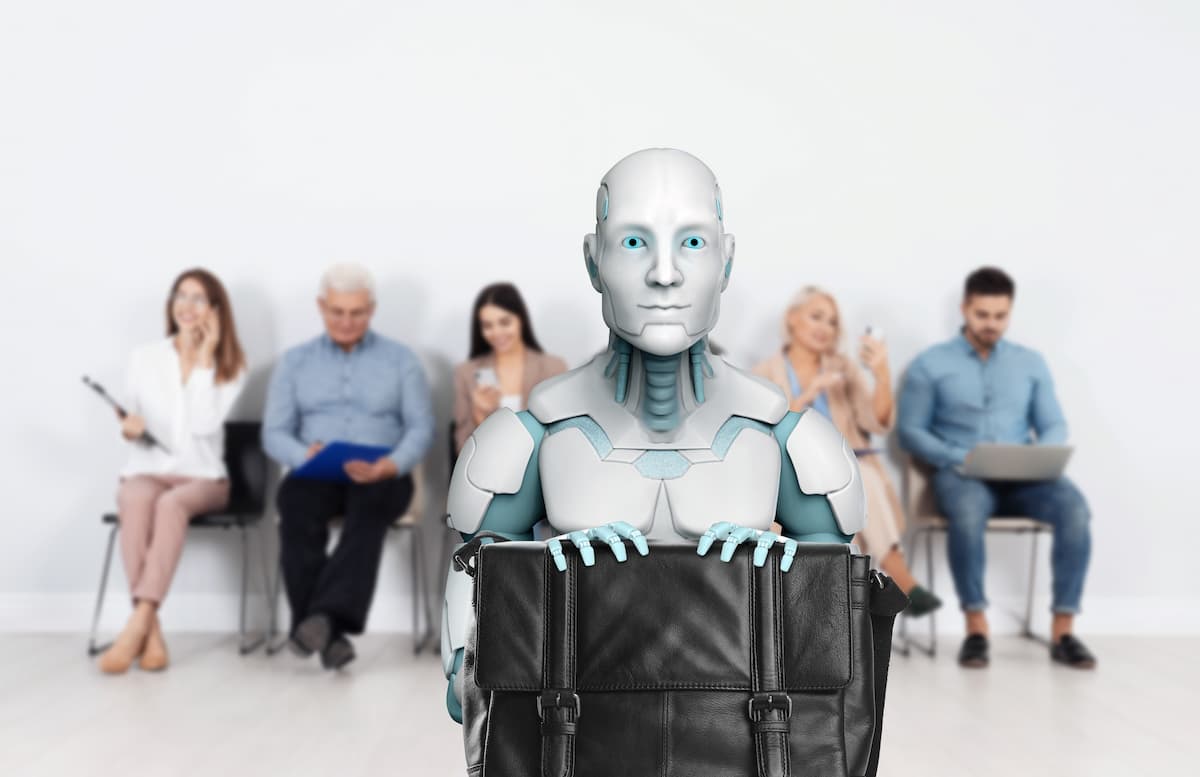
Artificial intelligence has rapidly evolved from a futuristic idea into a powerful force reshaping today’s workforce. As its capabilities expand, many professionals are questioning whether their career paths might soon be threatened by automation. Contrary to common belief that only low-skilled roles are at risk, recent research reveals that even highly specialized fields may face significant exposure to digital transformation.
Why AI is changing vulnerability among professions
The professional landscape is undergoing a major shift as AI systems become adept at managing increasingly complex tasks. By analyzing thousands of patents and workplace trends, researchers have pinpointed which careers are most susceptible to this wave of change. The findings introduce an unexpected perspective: even positions requiring advanced expertise are not immune to disruption.
For example, medical technology demonstrates just how deeply AI can impact specialized sectors. Technical proficiency no longer ensures protection against automation, as recent advancements prove that high-level qualifications alone do not guarantee safety from sweeping changes brought by digitalization.
Professions facing high levels of automation risk
Looking closer at current studies, several healthcare and technology occupations stand out for their heightened vulnerability to AI-driven automation. Medical technicians, responsible for precise diagnostics and intricate patient data management, now see nearly half or more of their duties subject to replacement by algorithms. Automation is moving beyond repetitive routines, reaching procedures that once demanded human precision.
In the tech sector, roles such as software developers and programmers also encounter substantial risks. Advanced AI tools can generate code, resolve bugs, and optimize solutions, placing 40–50% of these professionals’ daily responsibilities within reach of machine assistance. This marks a significant transition, even in industries that fuel technological progress.
- Cardiology technicians: Almost 60% of tasks at risk
- Magnetic resonance imaging technologists: About 48% of assignments potentially automatable
- Software development: 47% of regular coding tasks under threat
- Programming roles: Up to 40% could be managed by AI systems
Unexpectedly exposed technical careers
Industrial workplaces are also on the verge of transformation. Operators of large vehicles, such as industrial trucks and water drilling machines, could witness nearly half their workload being automated. This extends well beyond simple driving: AI can coordinate logistics, monitor safety standards, and optimize resource distribution during operations.
The influence of automation is expanding quickly, erasing traditional boundaries between manual and cognitive labor. Tasks like problem-solving and adaptation—once viewed as uniquely human—are increasingly achievable by evolving software solutions.
Comparing healthcare with industrial roles
A key difference remains in the value of human interaction. In medical environments, while diagnostic work and administrative duties may be automated, direct patient care still relies on emotional intelligence and interpersonal skills. These attributes continue to protect certain aspects of healthcare from full automation.
Conversely, physical operation tasks performed by drivers or site managers often involve standardized routines. Such predictability makes them more accessible to AI intervention, though some forms of specialization still present challenges that delay total replacement.
Are any jobs safe from AI substitution?
Despite growing concerns, not all professions are equally threatened by artificial intelligence. Some jobs require judgment, adaptability, and nuanced problem-solving—areas where current technology continues to lag behind human capability. These limitations leave space for valuable human input in specific operational roles.
Operators of pile-driving equipment and air freight supervisors illustrate this resilience. For instance, construction machinery drivers remain less vulnerable because unpredictable field conditions and the need for real-time situational awareness keep machines reliant on experienced operators.
Core elements shielding these professions
Certain characteristics make some careers more resistant to automation. Responsibilities rooted in critical thinking, empathy, immediate decision-making, and leadership maintain an essential human dimension. Because these qualities depend heavily on context and social cues, they are difficult for AI to replicate.
Supervisory roles in construction or air transport frequently require instant evaluation of safety, workflow, and team dynamics—domains where algorithms face notable constraints. As long as these complexities exist, human presence will remain indispensable in these sectors.
A look at task automation percentages
| Profession | Percentage of tasks at risk |
|---|---|
| Cardiology technicians | 60% |
| MR imaging technologists | 48% |
| Software developers | 47% |
| Programmers | 40% |
| Industrial truck operators | 45% |
| Water drilling specialists | 40% |
Transform or disappear: what does the future hold?
The spread of automation does not necessarily mean the elimination of entire professions. In many cases, AI complements rather than replaces human expertise. Affected roles may evolve, blending adaptive learning and advanced analytics with established practices.
Take neurological care providers as an example: while technology supports analysis, authentic patient engagement and nuanced decisions remain firmly in the hands of humans. Ultimately, specialization is likely to be redefined—not erased—as industries adapt to smarter digital tools.