

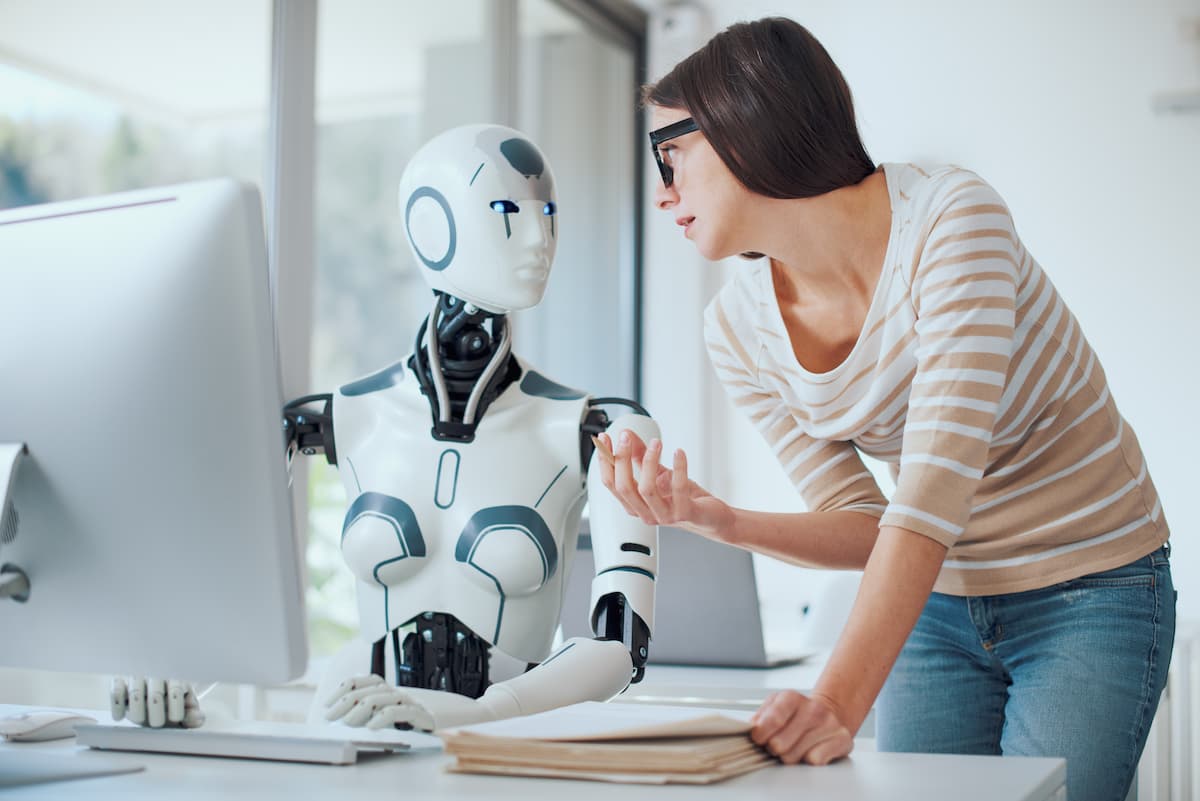
Imagine entering an era where artificial intelligence operates not as a mere assistant summoned on demand, but as a full partner in thinking, deciding, and acting. The emerging concept of “intelition” captures this new relationship—a dynamic flow where human intent and machine capability join forces in real time. This article explores how evolving ontologies, advanced memory mechanisms, and personalized AI interfaces are redrawing the boundaries of collaboration between humans and intelligent systems.
What does ‘intelition’ mean for human-AI partnerships?
The term “intelition” bridges cognition—how individuals process information—and the novel dynamic that unfolds when people collaborate directly with AI agents. Rather than framing individuals strictly as end-users or operators “in the loop,” intelition positions them as co-creators alongside machines. Together, they build understanding, shape decisions, and carry out actions through constant interplay.
This shift transforms interaction from isolated requests to ongoing collaboration, where AI contributes context, insight, and initiative. The result is faster, richer outcomes grounded in continuous feedback and adaptation. Recognizing these new dynamics prompts a rethink of longstanding definitions about intelligence, learning, and agency.
Building the foundations: ontologies in the enterprise
In enterprise environments, digital tools have long operated with their own models and rules describing objects and processes. The challenge for organizations lies in unifying these disparate elements into a single structure known as an ontology—a comprehensive map of data entities and their relationships.
Most businesses struggle with fragmentation. Data warehouses promise consolidation, yet few companies achieve true integration. Redundancies, gaps, and complex legacy systems persist, making consistency elusive. Still, federating these ontologies unlocks a crucial advantage: it enables agentic AI systems to reason across vendor, regulatory, customer, and operational domains, rather than being limited by siloed applications.
Why is unified ontology so transformative?
A unified ontology acts like a common language for both human and machine participants. It provides structured meaning to objects, actions, and outcomes. By connecting artificial intelligence to real-world relationships and assets, enterprises create smarter workflows that better mirror reality. This approach paves the way for cross-functional reasoning and decision-making unattainable under previous architectures.
With such clarity, AI agents can operate confidently within intricate systems, automating multi-step tasks and even anticipating needs based on patterns found across environments that were previously isolated.
Examples of ontology-driven improvements
- Streamlined supply chain coordination among diverse partners
- Automatic compliance verification across changing regulations
- Enhanced customer personalization as profiles update seamlessly
- Reduced redundancy in reporting and analytics pipelines
Each area benefits from tighter integration, clearer definitions, and more effective automation powered by intelligence woven throughout organizational knowledge.
Rethinking machine learning: world models and continual adaptation
Holding data is one thing; genuinely learning from it over time is another. Current AI models excel at incorporating vast swaths of information at once, but often forget old lessons each time retraining occurs. True ongoing improvement requires durable memory—a faculty machines have only recently begun to develop.
Innovative approaches, such as hierarchical joint embedding and nested learning, introduce ways for AIs to organize and update knowledge without repetitive resets. These methods help systems accumulate understanding, build predictions, and recognize changes within their environment.
Impact on AI capabilities
AI empowered with continuously updated world models becomes more capable and reliable. For instance, image and video analysis can reflect new realities without losing touch with foundational knowledge. Language-based models gain nuance as they learn from ongoing interactions, rather than starting fresh after every training cycle.
Durable memory allows AI partners to remember preferences, corrections, and goals, refining their support each time they interact with a person or system.
Comparing traditional AI and continual learning models
| Traditional AI | Continual Learning AI |
|---|---|
| Forgets learned lessons upon retraining | Retains and integrates prior experience |
| Updates only when re-trained | Adapts in response to new information instantly |
| Often struggles with context changes | Handles evolving scenarios smoothly |
The rise of personal intelition interfaces
The prevalent model treats AI as something accessed through windows or APIs on demand. The evolution of personal intelition interfaces brings a marked change: these agents stand alongside individuals throughout the day, remaining aware of context, evolving goals, and shifting circumstances.
Such interfaces serve not only as passive tools but as permissioned gateways. They mediate access to sensitive information, act on behalf of their users, and negotiate preferences across a federation of services—all while respecting privacy by design.
Changing the data landscape
Bringing intent recognition and user profiling onto personal devices disrupts today’s digital economy, which relies heavily on centralized data collection for revenue generation. When device-level intelligence handles most interpretations, personal data remains local and secure, reducing opportunities for third parties to exploit behavioral insights.
New open standards and protocols for managing private data emerge in step with this transformation. Individuals gain control, deciding when and how their information fuels broader ecosystem applications.
Emerging benefits and challenges
- Improved responsiveness as latency drops without external server dependency
- Greater alignment between actions taken and true user intentions
- The need for robust security frameworks to guard local data stores
- Opportunities for unforeseen consequences—both positive innovations and unexpected risks
Ongoing development focuses on balancing utility and privacy, ensuring that machines work for humans, and not the other way around.
How collaboration is evolving toward continuous co-creation
The integration of federated ontologies, ever-learning AI, and proactive personal interfaces signals a decisive move away from transactional usage. Entering the era of intelition, humans and machines co-create solutions and share influence on how decisions unfold. Each component reinforces the whole: ontologies provide the structure, advanced models handle learning, and personal interfaces empower individual participation and protection.
Rather than serving merely as tools, AI systems are becoming thoughtful partners—continuously tuned, deeply contextual, and attentive to genuinely human priorities. As collaboration deepens, organizations and individuals alike begin to realize benefits that transcend productivity, reaching into trust, autonomy, and shared growth.
