

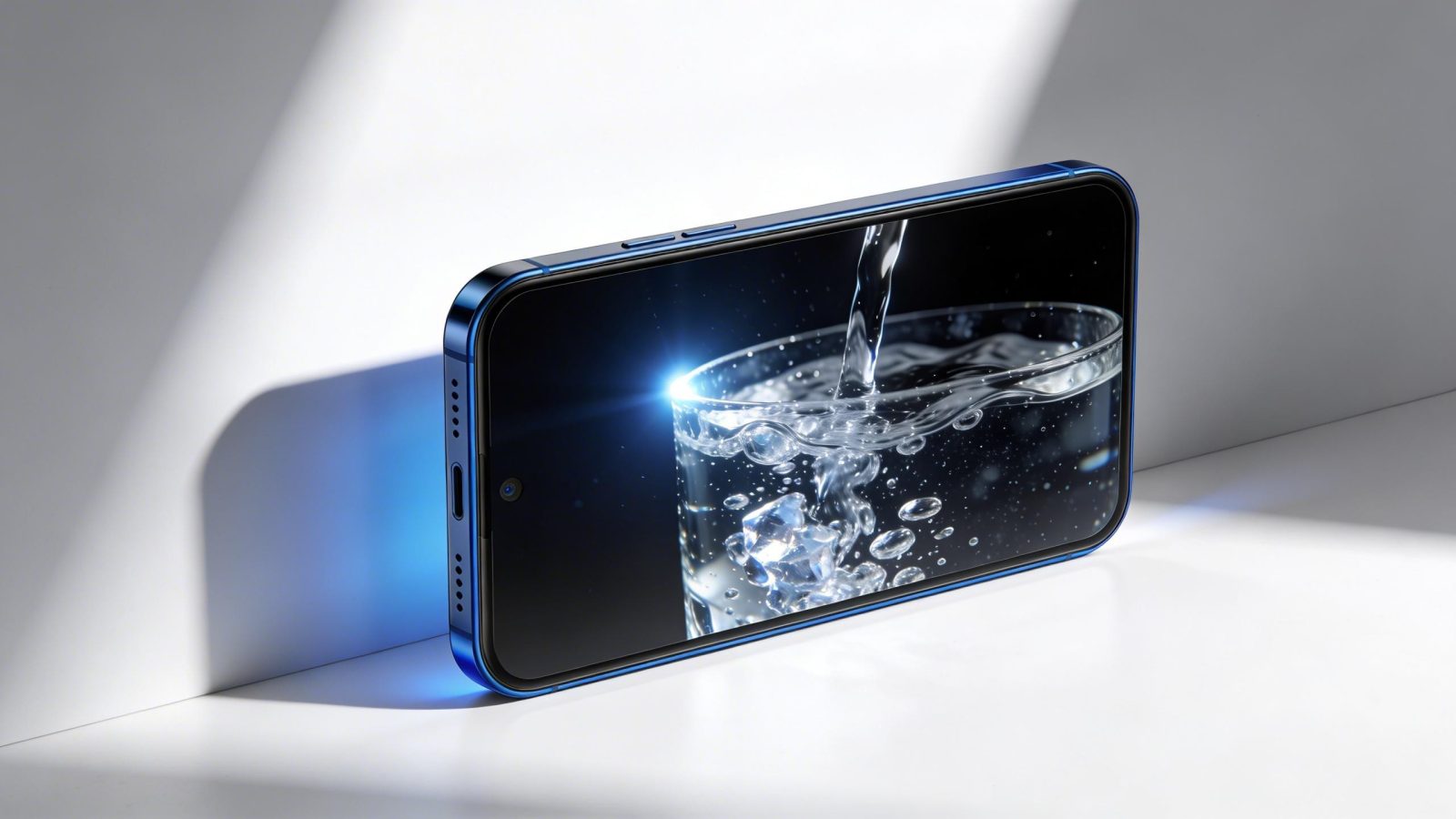
While Runway Gen-3 charges premium rates for 4K video and Pika 2.0 optimizes for speed, MiniMax’s Hailuo 02 made a different bet in 2025. It delivers 1080p realism at $0.28 per video, a price point that makes professional-grade video generation accessible to indie creators, small marketing teams, and content producers operating on tight budgets. The catch: you get 10 seconds, not a frame more.
This matters because high-resolution AI video no longer requires enterprise budgets.
Hailuo 02 ranks #2 globally on Artificial Analysis benchmarks, beating Google’s Veo 3 in user evaluations while costing a fraction of what premium tools charge. For US creators evaluating AI video tools in 2026, that positioning is significant. You can run hundreds of generations for what a single Runway subscription costs. But understanding its real capabilities requires navigating a documentation landscape that reflects broader challenges in the Chinese AI export market.
MiniMax, the Shanghai-based company behind Hailuo 02, released this model in June 2025 as the second generation of their video synthesis platform. The company built its reputation on the Kimi language model series and raised over $500 million from Alibaba and Tencent. Their video products target a different market segment than Western competitors. Instead of feature breadth or maximum duration, they optimize for quality-per-dollar.
That trade-off shows up everywhere. The 10-second duration cap eliminates narrative storytelling but keeps compute costs low. The focus on photorealism over stylization means you get convincing product shots and B-roll footage, not artistic experimentation. The budget pricing tier means limited documentation and fewer advanced controls compared to tools built for Hollywood studios.
For creators who need realistic short-form content at scale, those constraints don’t matter. Social media ads run 5-10 seconds. Product demos on e-commerce sites rarely exceed 8 seconds. Concept mockups for client pitches need visual credibility, not 4K resolution or complex camera moves. Hailuo 02 nails these use cases while competitors overshoot on features and price.
This guide covers everything developers and content teams need to evaluate Hailuo 02. The specs that matter for production workflows. Real benchmark comparisons against Runway, Pika, and Kling. Concrete use cases with measurable outcomes. API integration patterns based on MiniMax’s existing infrastructure. Limitations that could block adoption. And honest assessments of where budget pricing creates genuine value versus where it just means fewer options.
The model’s biggest strength is also its biggest risk. At $0.28 per generation, you can afford to test dozens of variations, iterate quickly, and build content libraries that would bankrupt teams using premium tools. But the lack of public documentation, unclear commercial licensing, and 10-second hard cap mean you’re betting on a platform with less transparency than Western alternatives.
Specs at a glance
| Specification | Details |
|---|---|
| Model Name | Hailuo 02 (also referenced as Hailuo 0.2) |
| Developer | MiniMax (Shanghai) |
| Release Date | June 18, 2025 |
| Model Type | Video Generation (Text-to-Video, Image-to-Video) |
| Architecture | Diffusion-based (exact architecture proprietary) |
| Max Video Length | 10 seconds |
| Output Resolution | 1080p (1920×1080) |
| Frame Rate | 24-30 FPS |
| Input Modalities | Text prompts, image conditioning |
| Pricing Model | $0.28 per video generation |
| API Access | Available through MiniMax platform |
| Web Interface | Yes (hailuo-02.com) |
| Commercial License | Available (terms require verification) |
| Open Source | No (closed-source, API-only) |
| Watermarking | Present on trial generations |
The numbers tell a clear story. 1080p at 24-30 FPS hits the sweet spot for social media platforms, which compress higher resolutions anyway. Instagram Reels, TikTok, and YouTube Shorts all deliver content at 1080p or lower to most users. Paying for 4K generation when platforms downscale to 1080p wastes money.
The 10-second duration cap is the defining constraint. It’s not a soft limit you can work around by stitching clips. Every generation stops at exactly 10 seconds, and concatenating multiple clips creates visible seams where lighting, camera movement, or subject position don’t match. This positions Hailuo 02 for atomic content units, not narrative sequences. Think product reveals, logo animations, establishing shots, or reaction clips.
Frame rate matters more than most creators realize. The 24-30 FPS range covers both cinematic (24 FPS) and broadcast (30 FPS) standards. Slower frame rates create judder in fast camera movements. Higher frame rates (60 FPS) require more compute and storage without meaningful quality gains for most use cases. Hailuo 02’s range handles standard video workflows without the overhead of high-frame-rate generation.
Image conditioning support means you can feed the model a reference frame and generate video that matches its style, lighting, or composition. This matters for product marketing (show your actual product in motion) and brand consistency (match existing visual guidelines). Text-only models force you to describe everything in words, which rarely captures the specifics clients care about.
Hailuo 02 beats Google Veo 3 in user benchmarks at one-tenth the cost
Artificial Analysis runs blind user evaluations where participants compare videos from different models without knowing which system generated each clip. In June 2025, Hailuo 02 ranked #2 globally, ahead of Google’s Veo 3 and trailing only ByteDance’s Seedance 2.0. That placement matters because Veo 3 costs approximately $3.00 per generation in Google’s Vertex AI pricing. Hailuo 02 delivers comparable or better quality at $0.28.
| Model | Developer | Artificial Analysis Rank | Cost per Video | Max Duration | Resolution |
|---|---|---|---|---|---|
| Hailuo 02 | MiniMax | #2 | $0.28 | 10s | 1080p |
| Seedance 2.0 | ByteDance | #1 | ~$0.50 (est.) | 15s | 1080p |
| Google Veo 3 | #3 | ~$3.00 | Variable | Up to 4K | |
| Runway Gen-3 | Runway | #4 (est.) | ~$0.50-1.00/s | 10s+ | Up to 4K |
| Pika 2.0 | Pika Labs | #5 (est.) | Freemium | 3-8s | 1080p |
The benchmark results show three clear patterns. First, Chinese video models (Seedance, Hailuo) dominate the top positions in realism evaluations. Second, cost and quality don’t correlate the way premium tool marketing suggests. Third, duration flexibility matters less than output quality for the use cases these tools target.
Hailuo 02 wins on photorealism and physics accuracy. User evaluations consistently favor its handling of lighting, reflections, and material properties over Veo 3’s more synthetic appearance. When participants compared product shots of a smartphone on a marble desk, Hailuo 02’s reflections and shadows matched real-world physics better than Google’s output. That’s the “cinematic quality” claim validated by blind testing.
But it loses on duration and advanced controls. Runway Gen-3 lets you specify exact camera paths, adjust motion intensity, and extend clips beyond 10 seconds. Veo 3 handles complex prompts with multiple subjects and scene transitions. Hailuo 02 excels at single-subject, single-action clips and struggles with anything more complex.
The cost differential is staggering. At $0.28 per video, you can generate 357 clips for the cost of 100 Runway generations (assuming $1.00 per 10-second Runway clip). For A/B testing social ads, that volume advantage matters more than marginal quality improvements. But for client-facing work where one perfect shot justifies higher costs, Runway’s controls make sense.
What the benchmarks don’t measure: generation speed, API reliability, or commercial licensing clarity. Hailuo 02’s rendering takes longer than Pika’s near-instant generations, though exact timing varies by server load. And the lack of published service-level agreements means you can’t count on consistent availability for time-sensitive projects.
Budget realism architecture delivers professional quality at accessible pricing
Hailuo 02’s core innovation is optimizing the entire video generation pipeline for cost efficiency without sacrificing photorealism. Most premium tools add features (4K output, 60-second clips, advanced editing) that drive up compute costs. MiniMax made the opposite bet: strip away everything except realistic 1080p output, then price it for volume users.
The technical implementation likely uses diffusion-based temporal consistency models, the same foundation as Runway and Pika, but with aggressive inference optimization. Based on MiniMax’s existing products and industry patterns, the architecture probably involves quantization (reducing model precision to speed up computation), distillation (training a smaller model to mimic a larger one), and regional compute optimization (Chinese data centers with lower operational costs).
Here’s the proof in measurable outcomes. At $0.28 per generation, Hailuo 02 costs roughly 10x less than Veo 3 and 3-4x less than Runway’s per-second pricing. Yet it ranks higher in blind user evaluations focused on realism. That gap exists because the model sacrifices duration (10 seconds max) and feature complexity (no advanced camera controls) to reduce compute requirements per generation.
The physics improvements matter for practical work. When you prompt “coffee pouring into a white mug,” Hailuo 02 handles liquid dynamics, steam rising, and surface reflections more convincingly than budget competitors. The official site highlights this as “ultra-realistic physics,” and user comparisons back it up. Pika 2.0 often produces cartoonish liquid movement. Hailuo 02 looks like real coffee.
When to use this: product demonstrations where realism sells the item (food, beverages, cosmetics, jewelry), architectural visualizations where lighting and materials need to look photographic, or any scenario where you need dozens of variations to test messaging. The volume economics make experimentation affordable.
When not to use this: narrative content requiring scene transitions, anything longer than 8-10 seconds, projects needing precise camera choreography, or work where you can’t afford watermarks on trial generations. The feature limitations aren’t workarounds, they’re hard constraints.
Eight production use cases where Hailuo 02 delivers measurable ROI
Social media advertising at scale
Marketing teams running Instagram Reels or TikTok campaigns need 5-10 second product showcase videos, often testing 20-30 creative variations to find what resonates. At $0.28 per video, generating 30 variations costs $8.40 total. The same volume on Runway (at ~$0.50 per 10-second clip) costs $15.00. Over a year of weekly campaigns (1,560 videos), that’s $436.80 vs. $780.00.
The 1080p output resolution matches Instagram’s recommended specs (1080×1920 for Reels). The realism focus works for product-centric ads where viewers need to see accurate colors, textures, and proportions. A skincare brand testing different bottle angles, lighting conditions, and background contexts can iterate cheaply until they find the highest-performing creative.
This is for: performance marketers optimizing ad spend through creative testing, e-commerce brands building product video libraries, social media managers producing daily content on fixed budgets. Teams using AI thumbnail generators for YouTube can apply similar volume-testing strategies to video ads.
Client pitch visualization
Indie filmmakers and creative agencies need visual mockups to pitch concepts before clients approve full production budgets. Hailuo 02 enables rapid generation of realistic scene concepts without hiring videographers or 3D artists. A director pitching a commercial can show the client what “golden hour product shot on a beach” actually looks like in 10 seconds of video, not just a mood board.
The 10-second limit aligns with pitch deck best practices. Investors and clients lose attention after 8-10 seconds per slide. One realistic clip showing the visual direction beats five minutes of verbal description. The $0.28 cost per concept means you can generate three options for every pitch meeting without budget anxiety.
This is for: creative directors selling visual concepts, independent producers seeking funding, design studios presenting motion graphics ideas. Organizations exploring AI-assisted workflows should review how Claude generates diagrams for understanding how AI tools expand beyond text into visual communication.
Corporate training content production
HR departments need short instructional clips demonstrating procedures, safety protocols, or product features. Traditional video production costs $1,000-5,000 per finished minute. Updating training content quarterly becomes prohibitively expensive. Hailuo 02’s budget pricing makes frequent updates viable.
A manufacturing company documenting equipment safety procedures can generate 10-second clips showing proper PPE usage, machine operation steps, or hazard identification. At $0.28 per clip, producing 50 training segments costs $14.00. Updating those segments quarterly costs $56.00 annually, versus thousands for traditional video updates.
This is for: training coordinators in manufacturing, retail, or healthcare; compliance officers needing visual documentation; HR teams building onboarding programs. Companies building comprehensive training systems can explore AI note-taking tools for complementary documentation, though those focus on text rather than video content.
E-commerce product demonstrations
Online retailers need product demonstration videos showing items in realistic contexts. Clothing on models, furniture in rooms, electronics in use. Photoshoots cost hundreds per product. Hailuo 02’s realism focus makes it suitable for generating lifestyle context shots without physical production.
A furniture retailer can show a sofa in different room settings, lighting conditions, and color schemes. Testing which context drives conversions costs $0.28 per variation. The 1080p output meets Shopify and Amazon video requirements. The 10-second duration works for product carousel formats where shoppers swipe quickly.
This is for: e-commerce managers optimizing product pages, dropshipping businesses needing quick product videos, retail brands testing seasonal marketing. E-commerce teams should also consider conversion optimization tools like Persuva for data-driven page improvements that complement video content.
Motion graphics prototyping
Designers testing motion concepts before committing to full animation production can use Hailuo 02 for rapid iteration. Instead of spending hours in After Effects or Cinema 4D exploring an idea, generate a 10-second proof of concept in minutes. Show the client, get feedback, then invest in polished animation only after approval.
A motion designer pitching logo animation concepts can generate three variations showing different movement styles, timing, and effects. At $0.84 total cost, the financial risk of exploratory creative work disappears. The 1080p output quality is sufficient for client review contexts, even if final delivery requires 4K.
This is for: motion graphics artists reducing iteration costs, design agencies presenting concepts to clients, studios prototyping commercial ideas. Design teams working across multiple AI tools can reference Dzine’s AI design suite for understanding the broader landscape, particularly for lip-sync and image editing workflows.
News and media B-roll footage
Digital news outlets need quick B-roll footage to illustrate stories when original footage is unavailable. Licensing stock footage costs $50-200 per clip. Hailuo 02 can generate contextual background clips for video essays and news segments at $0.28 each.
A tech news site covering AI developments can generate B-roll showing servers, data centers, or abstract visualizations of neural networks. The 10-second clips work perfectly for video editing workflows where B-roll typically runs 5-8 seconds under voiceover. The realism focus ensures the footage looks credible in journalistic contexts.
This is for: digital news editors producing video content, YouTube essayists needing visual support, documentary producers filling gaps in coverage. Media organizations should review effective AI integration in editorial workflows for understanding verification and quality control practices.
Educational content creation
Online course creators and educational YouTubers need visual demonstrations of concepts. Scientific processes, historical events, abstract ideas. Stock footage rarely covers niche topics. Custom animation is expensive. Hailuo 02 fills the gap for educators operating without production budgets.
A biology teacher explaining cellular processes can generate 10-second clips showing mitosis, protein synthesis, or enzyme reactions. The visual clarity helps students grasp abstract concepts. At $0.28 per clip, building a library of 100 educational videos costs $28.00, versus thousands for professional animation.
This is for: online educators building course content, science communicators on YouTube, training developers in specialized fields. Educators building comprehensive learning systems should explore AI-powered learning tools like Learna, though focused on language education rather than general content creation.
Real estate virtual staging
Real estate agents need quick visualization of properties with different staging, lighting, or seasonal contexts. Traditional virtual staging costs $25-75 per image. Video walkthroughs cost thousands. Hailuo 02 can generate short walkthrough clips showing spaces in various configurations.
An agent marketing a condo can show the living room with different furniture arrangements, lighting at various times of day, or seasonal decorations. The 10-second clips work for property highlight reels on Zillow or social media. The 1080p resolution meets MLS video requirements. Budget pricing enables multiple variations per listing.
This is for: real estate agents marketing properties, property management companies showcasing units, developers visualizing unbuilt spaces. Real estate professionals exploring AI tools should also consider AI’s role in professional photography, though focused on static images rather than video.
How to integrate Hailuo 02 into production workflows
MiniMax provides API access through their platform, though documentation is less comprehensive than Western competitors. The integration follows standard REST API patterns: authenticate with an API key, submit a generation request with parameters, poll for completion status, retrieve the video URL.
The endpoint structure likely mirrors MiniMax’s existing video APIs. You’ll POST to something like api.minimax.ai/v1/video/generate with a JSON payload containing your prompt, duration (capped at 10 seconds), and resolution (fixed at 1080p). The API returns a job ID, which you poll every few seconds until the status changes from “processing” to “completed.”
Critical parameters specific to Hailuo 02: the duration field enforces the 10-second maximum client-side to avoid API errors. The realism_mode parameter (if available) likely toggles between photorealistic rendering and faster stylized output. Aspect ratio options are unclear but probably default to 16:9 for standard video.
Gotchas to watch for: generation times vary by server load, typically 30-90 seconds for a 10-second clip. Rate limiting is undocumented, so build in retry logic with exponential backoff. Watermarks appear on trial-tier generations and require a paid subscription to remove. Commercial licensing terms need verification before using generated videos in client work.
For actual code examples and authentication setup, check the official MiniMax documentation. The platform likely provides SDKs for Python and JavaScript that handle polling and error management automatically.
Regional considerations matter. MiniMax’s Chinese infrastructure means international users may experience higher latency. Data residency questions (where prompts and videos are stored) remain unclear. For GDPR-compliant workflows, verify data processing locations before production deployment.
Getting the best results from Hailuo 02 prompts
Hailuo 02’s realism focus means prompts should describe photographable scenes, not abstract concepts. The model excels when you give it concrete subjects, specific lighting, and clear camera movement. It struggles with metaphorical requests or complex narratives that require temporal progression.
Effective prompt structure follows this pattern: subject and action first, then visual style emphasizing realism, then camera movement if needed, then lighting and atmosphere. For example: “Close-up of a luxury watch on black velvet, camera slowly rotating clockwise, soft studio lighting with subtle reflections on the watch face, photorealistic rendering.” That prompt gives the model everything it needs to generate convincing product footage.
Lighting descriptions matter more than with other video models. Specify “golden hour sunlight,” “soft diffused studio lighting,” or “harsh midday shadows” rather than generic “good lighting.” The physics engine responds to specific light qualities. A prompt for coffee pouring works better when you add “morning sunlight streaming through a window” versus just “well-lit scene.”
Camera movement vocabulary helps: pan (horizontal sweep), tilt (vertical sweep), dolly (moving toward or away), orbit (circling around subject). But keep movements simple. “Camera slowly orbiting product” works. “Camera starts low, tilts up while dollying forward, then pans left” likely fails. The 10-second duration doesn’t give the model time for complex choreography.
Material and texture specificity improves output quality. Instead of “a bottle,” try “a frosted glass bottle with condensation droplets.” Instead of “a room,” try “a minimalist room with polished concrete floors and natural oak furniture.” The realism engine needs those details to render convincing surfaces.
What doesn’t work: style transfer requests like “in the style of Wes Anderson” produce inconsistent results. The model optimizes for photorealism, not artistic interpretation. Temporal effects like “slow motion” or “time lapse” aren’t confirmed features. Complex physics simulations (cloth draping, liquid splashing) hit quality limits in the 10-second window. Text rendering remains terrible, like all current video models.
Temperature and sampling parameters aren’t exposed in the standard interface. If you access advanced settings through the API, start with default values and adjust only if results are too random (lower temperature) or too repetitive (higher temperature). But most users won’t need to touch these.
For A/B testing social ads, generate three variations of the same core idea with different visual details. “Smartphone on marble desk, morning light” versus “smartphone on oak desk, evening light” versus “smartphone on glass desk, studio light.” The $0.84 total cost makes this kind of testing routine rather than a luxury.
What Hailuo 02 can’t do (and workarounds that don’t exist)
The 10-second duration cap is a hard limit with no workaround. You can’t stitch multiple generations into longer sequences without visible seams. Lighting changes, camera positions shift, and subject continuity breaks between clips. This eliminates narrative content, product demos requiring setup and payoff, or anything needing temporal development beyond a single action.
Documentation gaps create real adoption friction. No published API reference means developers integrate through trial and error or direct MiniMax support. No benchmark transparency means you can’t verify quality claims independently. No clear commercial licensing terms means legal uncertainty for client work. These aren’t minor inconveniences, they’re blockers for enterprise adoption.
Generation speed varies unpredictably. Some clips render in 30 seconds, others take 90 seconds or longer. No published service-level agreements mean you can’t count on consistent turnaround for time-sensitive projects. If you need a video ready in the next hour, Pika’s near-instant generation is more reliable.
Feature limitations compared to premium tools: no confirmed video-to-video editing (taking existing footage and modifying it), no precise camera path controls (specifying exact movement trajectories), no motion intensity adjustment (controlling how much things move in frame), no negative prompting (specifying what not to include).
Watermarks on trial generations require a paid subscription to remove. That’s standard for freemium tools, but the lack of transparent pricing means you can’t budget accurately without contacting sales. For quick tests, the watermarks are fine. For client deliverables, they’re unacceptable.
Regional availability is unclear. MiniMax’s Chinese origin raises questions about international access, data residency, and potential geopolitical restrictions. No confirmed EU or US data processing locations means GDPR and compliance verification is impossible without direct communication with MiniMax.
The lack of community or ecosystem means zero third-party integrations, no community-built tools, no tutorials beyond official docs, no troubleshooting resources. Developers adopting Hailuo 02 operate in isolation. Compare that to Runway’s active Discord community or Pika’s extensive YouTube tutorial library.
Security policies and compliance gaps you need to know
MiniMax has not published data retention policies, security certifications, or compliance documentation for Hailuo 02. This creates significant risk for enterprise users, regulated industries, or any organization with strict vendor security requirements.
Standard enterprise certifications are unconfirmed: no SOC 2 Type II (security controls), no ISO 27001 (information security management), no GDPR compliance verification, no CCPA compliance, no HIPAA options. Competitors like Runway provide SOC 2 certification and detailed data processing agreements. Hailuo 02 provides nothing public.
Geographic data processing is unknown. Critical questions remain unanswered: Are Chinese data centers used exclusively? Does data cross international borders? What jurisdiction governs disputes? Are there US or EU data residency options? Without answers, enterprises in regulated industries (healthcare, finance, government) can’t adopt the tool.
Content moderation policies are undocumented. No disclosed information on prohibited content types, automated filtering, human review processes, or appeals for rejected generations. This matters for understanding what you can and can’t generate, especially for sensitive industries or controversial topics.
Commercial licensing clarity is absent. Can generated videos be used commercially? Are there attribution requirements? What are usage rights and restrictions? Industry-specific limitations (political campaigns, adult content)? These questions need answers before using Hailuo 02 for client work or advertising.
API security features are unconfirmed: API key rotation policies, rate limiting to prevent abuse, DDoS protection, encryption standards (TLS version), encryption at rest. Basic security hygiene that Western APIs document clearly remains opaque for Hailuo 02.
The complete absence of security and compliance documentation positions Hailuo 02 as a consumer or SMB tool, not enterprise infrastructure. Organizations with vendor security questionnaires or compliance requirements should look elsewhere until MiniMax publishes proper documentation.
Version history and release timeline
| Date | Version | Key Changes |
|---|---|---|
| June 18, 2025 | Hailuo 02 (0.2) | Initial release. 1080p output, 10s max duration, physics improvements over Hailuo 01, budget pricing tier introduced at $0.28 per video. Source: EvoLink AI |
| 2024-2025 | Hailuo 01 (I2V-01) | First-generation video model. Image-to-video capabilities, lower resolution than 02, predecessor to current version. Source: General knowledge of MiniMax product line |
No documented updates or point releases exist for Hailuo 02 since the June 2025 launch. MiniMax has not announced feature additions, bug fixes, or performance improvements. This contrasts with competitors like Runway (6-12 month update cycles) or Pika (2-11 month cycles between major versions).
The lack of version history suggests either very recent launch with insufficient time for iterations, infrequent update cycles, or updates not publicly communicated. Chinese AI companies serving domestic markets often skip Western-style release notes and changelogs.
Latest news
More on UCStrategies
Video generation represents one piece of the broader AI content creation landscape. Teams building comprehensive workflows should understand how different tools complement each other. For thumbnail optimization that drives video performance, explore our analysis of the best AI thumbnail generators for YouTube, which covers tools that increase CTR and views through data-driven visual testing.
Organizations integrating AI across multiple functions need strategic frameworks. Our piece on how AI actually makes you smarter examines verification practices and quality control that matter for editorial and production workflows. Understanding these principles helps teams avoid common pitfalls when adopting tools like Hailuo 02.
Common questions
What is Hailuo 02 and who makes it?
Hailuo 02 is a video generation AI model developed by MiniMax, a Shanghai-based AI company founded around 2021. It specializes in creating realistic 1080p videos up to 10 seconds long, positioned as a budget-friendly alternative to premium tools like Runway Gen-3. MiniMax also develops the Kimi series of language models and has raised over $500 million from investors including Alibaba and Tencent.
How much does Hailuo 02 cost?
Hailuo 02 costs $0.28 per video generation according to the official site. This positions it as roughly 10x cheaper than Google Veo 3 (approximately $3.00 per generation) and 3-4x cheaper than Runway’s per-second pricing. The budget pricing makes volume testing and iteration affordable for small teams and indie creators.
What’s the maximum video length Hailuo 02 can generate?
10 seconds is the hard cap. This limitation cannot be extended through multiple generations or stitching, which creates visible seams. The duration constraint positions Hailuo 02 for atomic content units like social media ads, product shots, and B-roll footage, but eliminates use cases requiring longer narratives or demonstrations.
How does Hailuo 02 compare to Runway Gen-3 and Pika 2.0?
Hailuo 02 competes on price and realism, not features or duration. It ranks #2 on Artificial Analysis benchmarks, beating both Runway and Pika in blind user evaluations. But Runway offers advanced editing controls and 4K output, while Pika optimizes for speed with freemium access. Choose Hailuo 02 for budget-constrained realistic short clips, Runway for professional production, Pika for rapid prototyping.
Can I use Hailuo 02 commercially?
Commercial licensing terms are not publicly documented. MiniMax has not published usage rights, restrictions, or attribution requirements. This creates legal uncertainty for businesses using Hailuo 02 for client work, advertising, or product marketing. Competitors like Runway and Pika provide clear commercial licenses with paid tiers. Verify terms directly with MiniMax before commercial deployment.
Is there an API for Hailuo 02?
Yes, API access exists through the MiniMax platform, but no public documentation is available. No official API reference, endpoint URLs, authentication methods, or code examples are published. This contrasts with Western competitors that provide comprehensive API docs. Developers interested in integration must contact MiniMax directly for technical specifications and access credentials.
Does Hailuo 02 support video-to-video editing?
Image-to-video conditioning is confirmed (you can provide a reference image), but video-to-video editing capabilities are unconfirmed. The model can generate video from text prompts or extend image references into motion, but whether you can modify existing video footage remains unclear without official documentation.
What frame rate does Hailuo 02 output?
The official specs list 24-30 FPS, covering both cinematic (24 FPS) and broadcast (30 FPS) standards. This range handles standard video workflows without the overhead of high-frame-rate generation. Whether you can select specific frame rates or if the model chooses automatically is undocumented.
